Secondary tabs
Submission information
Sugarbush Road Demonstration Area
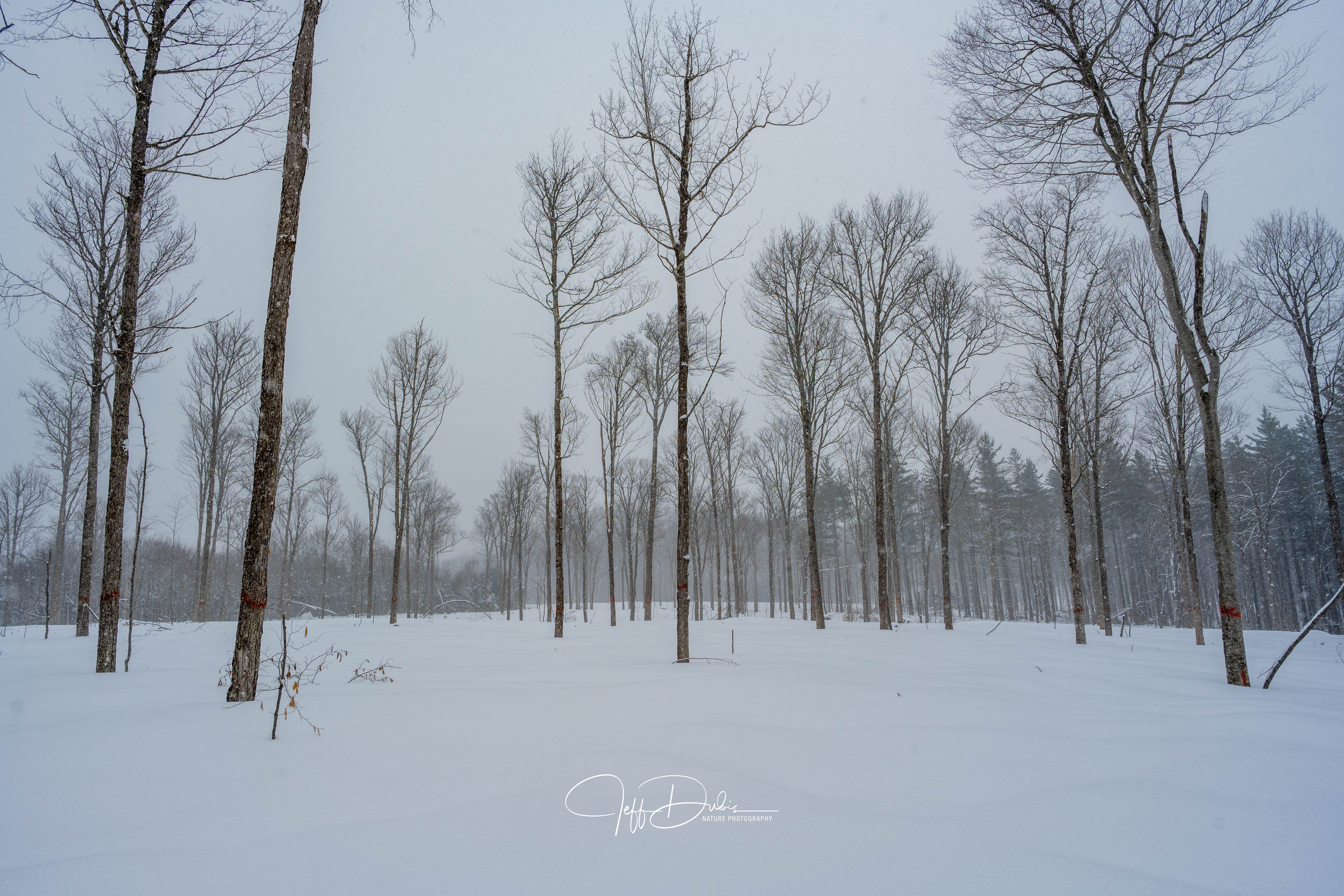
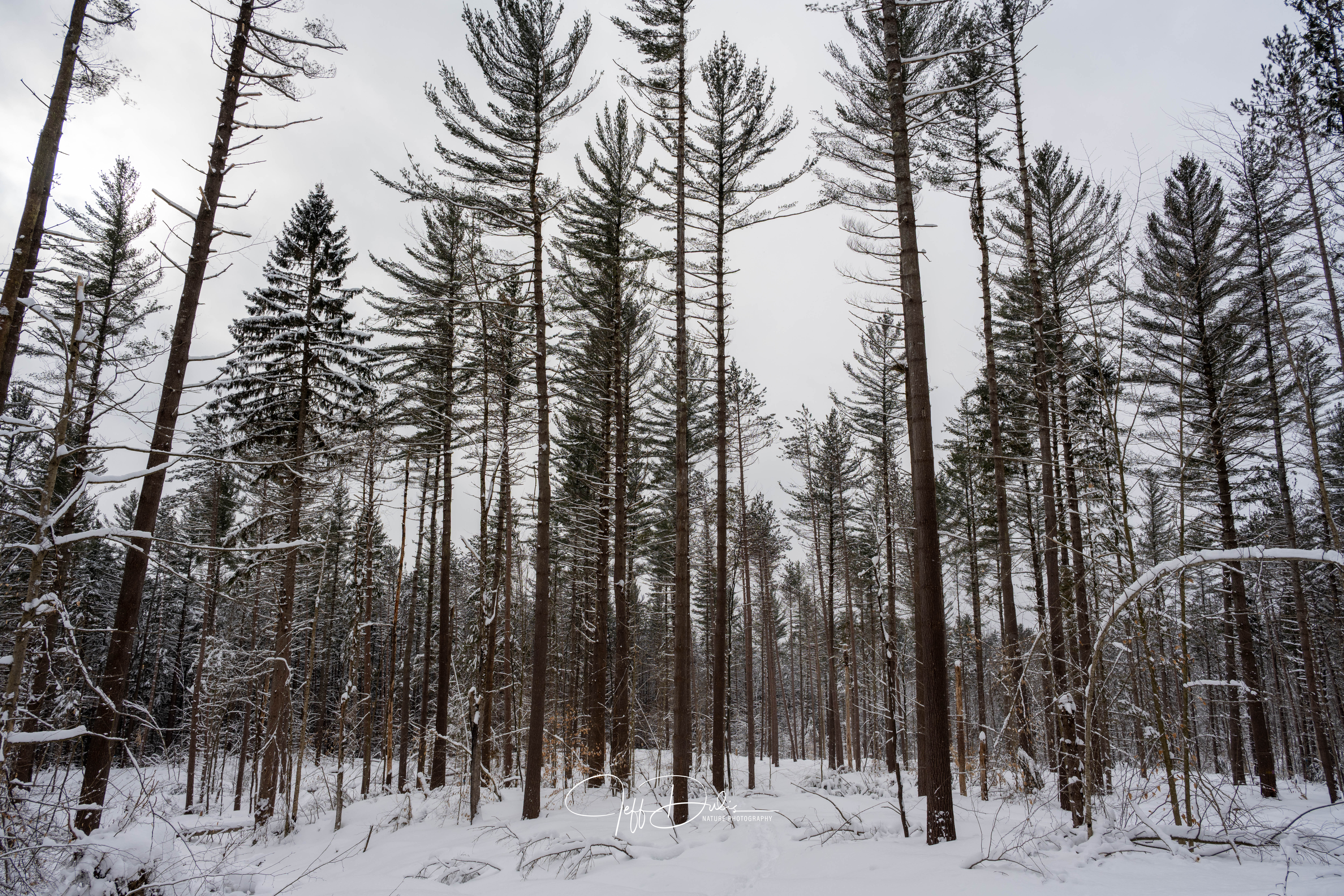
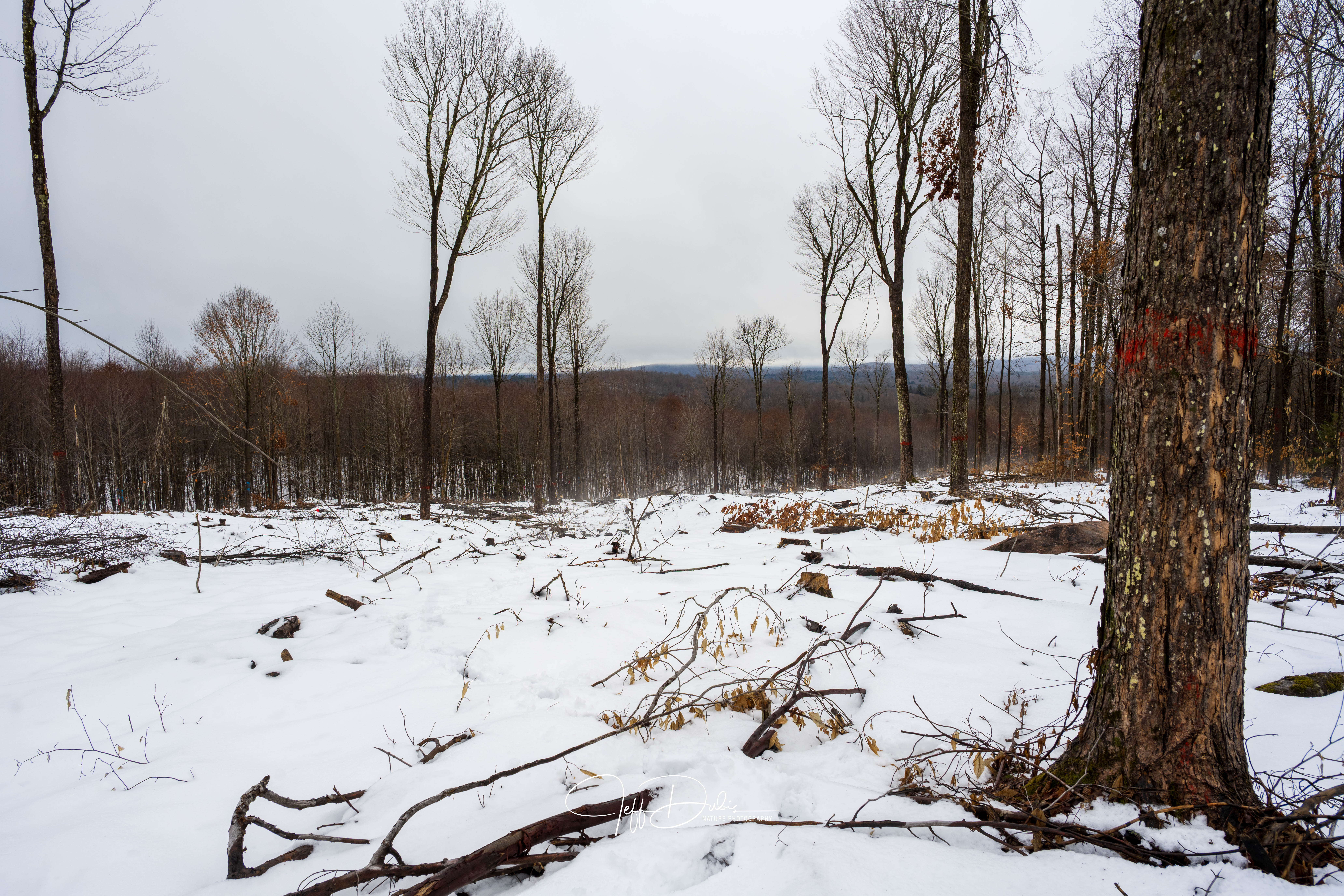
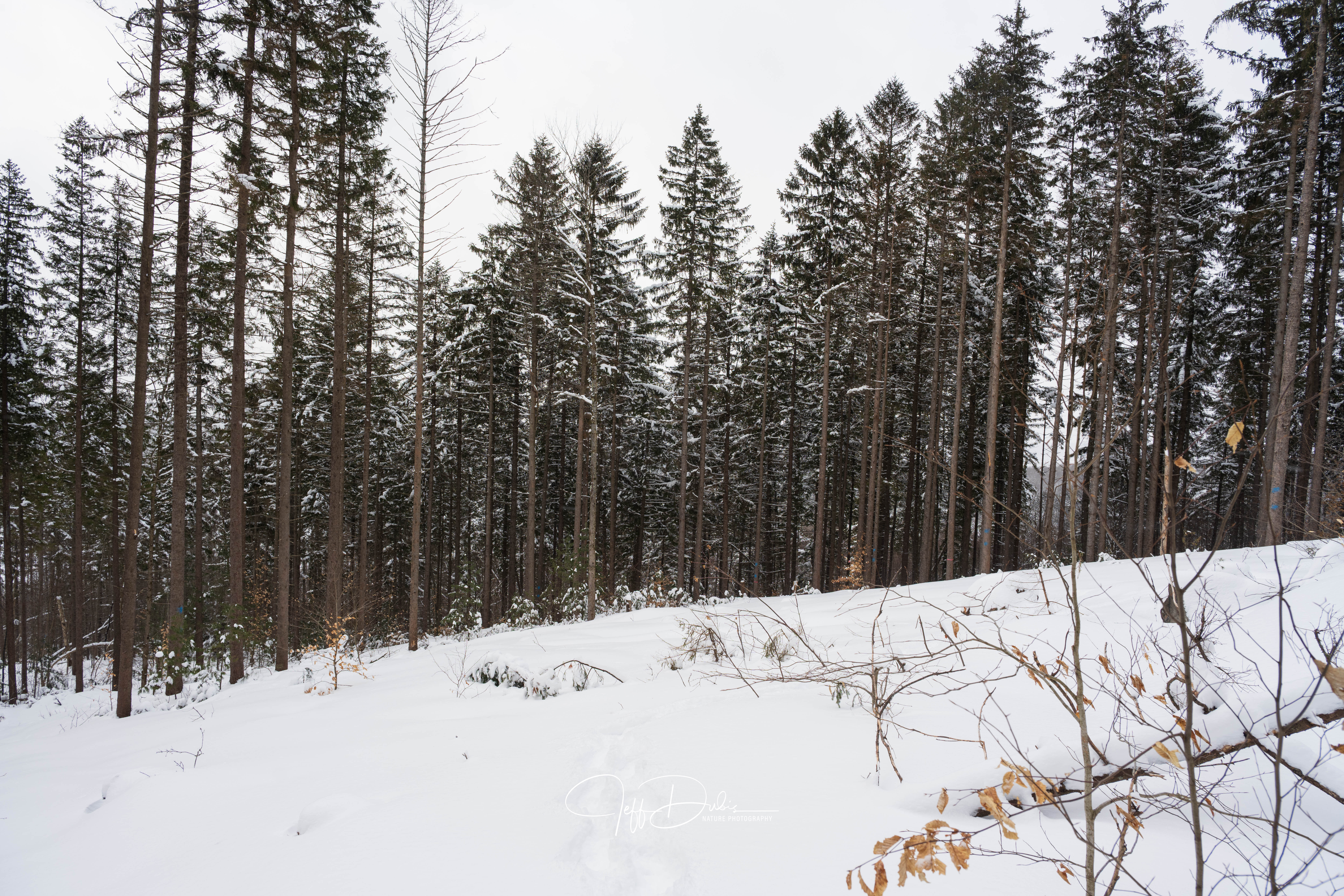
This project is unique in the way that it uses a diverse range of silvicultural techniques while managing multiple different species and age classes. Using single and multi-aged regeneration techniques, our goal is to get a diverse selection of regeneration while maintaining and managing the retained mature overstory trees. For this project, diversity is key.
Site Location
Fine, New York
Sugarbush Road intersects with State Route 3, just north of the hamlet of Wanakena.
The nearest large towns to this sale would be Tupper Lake to the east, and Harrisville to the west. Leaving Tupper Lake, you would travel west on State route 3 for approximately 32 miles until you come to the intersection of Sugarbush Road which would be on the rest (right) side of the road. Leaving the town of Harrisville, you would travel east on State route 3 for approximately 30 miles until you run into the intersection of Sugarbush Road on the west (left) side of the road.
All of the timber sale is easily accessible from Sugarbush Road. There are portions of the sale that require a short hike with some minor elevation change.
SUNY College of Environmental Science and Forestry
Stand Information
103 Acres
Northern Hardwoods, White/Red Pine, Spruce/Fir
Other (Forested)
Stem exclusion, mature forest
beech bark disease
beech bark disease
forest tent caterpillar
Loam and sandy loam soils throughout the harvest area some with glacial erratic’s. There are shallow soils with ledge in block 6 (Spruce irregular shelterwood). There are wet organic soils at the south end of the harvest, given the multiple riparian area
1934 for the hardwood areas. 1915 for the softwood areas.
Softwood plantation areas (Blocks 1,2,3) originally planted White and Red pine in 6x6 ft spacing. Spruce plantation area (Blocks 5,6) originally planted with Norway spruce at 3x3 ft to 6x6 ft spacing. Hardwood areas (Blocks 4,7,8,9) were thinned and cle
Pre-treatment Conditions
The stands that contain the Sugarbush Road Timber Sale were originally established between 1933-34, mostly by the CCC (Civilian Conservation Corp). Blocks 1,2 and 3 were established in 1934 when these areas were cleared and replanted with softwood species, mostly White and Red pine with Norway and Red Spruce mixed in. From then the stand underwent a series of pruning's by students in the early 50’s and early 60’s. After that multiple thinning's occurred, one in 1977 and one in 1980. Since then, these stands have had little to no entry. Block 4 was established in 1933 when the first documented entry was a thinning done by the CCC. Between 1953 and 1959 this stand underwent a chemical thinning, mostly on aspen. Block 6 was also logged by the CCC in 1933, clearing the entire stand area. Blocks 7,8 and 9 were also thinned by the CCC in 1933.
Pinus strobus (eastern white pine)
63%
Picea abies (Norway spruce)
14%
Acer saccharum (sugar maple)
12%
This area, like most in the northern Adirondacks has beech bark disease present. This area also had a major Forest tent caterpillar defoliation in 2007. It was intense enough for the college to have a salvage cut implemented in adjacent stands. A good portion of the overstory still has wounds from the 1998 ice storm, which affected most this region.
Silviculture Prescription
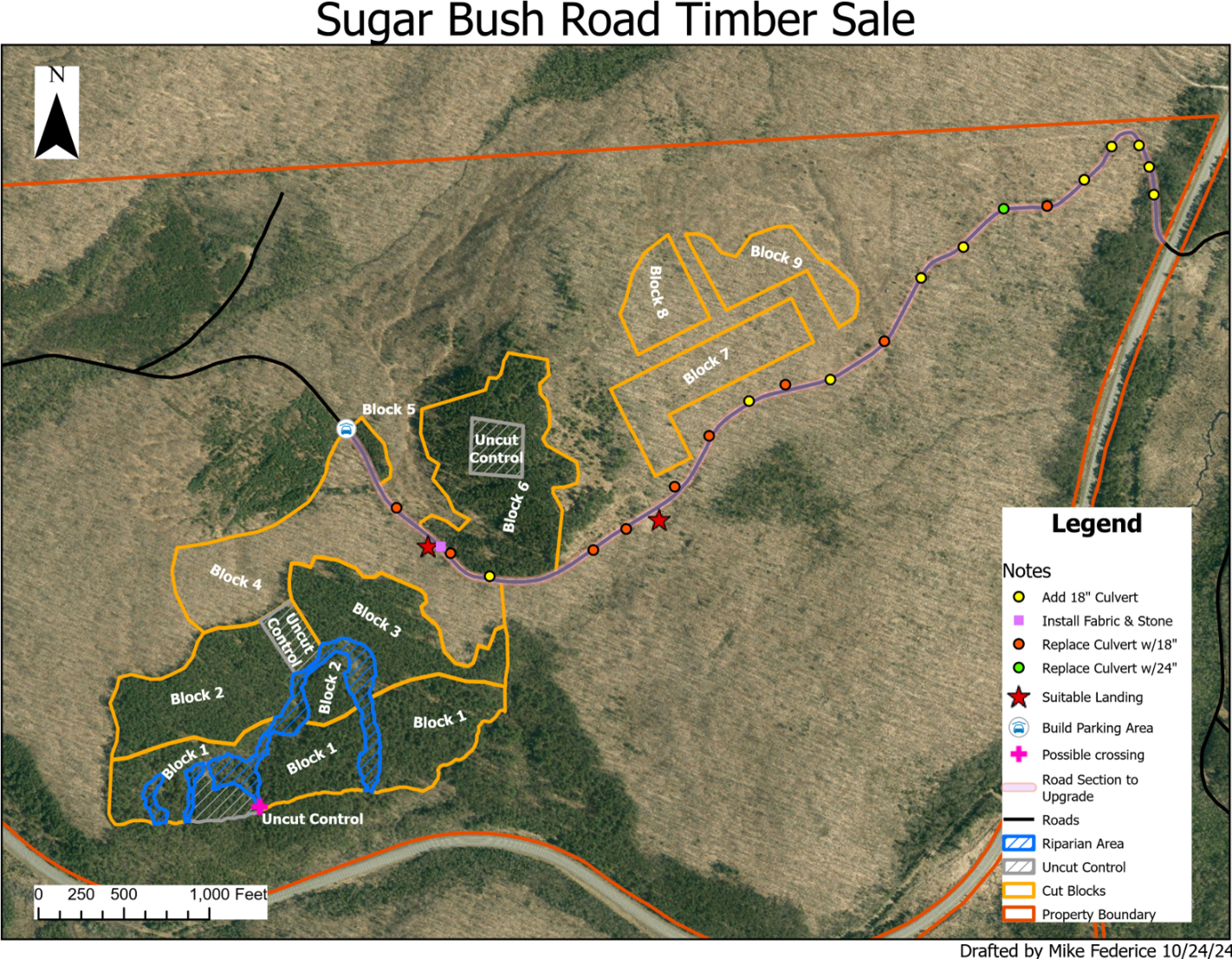
The purpose of this project is to enhance the demonstration potential of the Dubuar Memorial Forest. With the SUNY ESF Ranger School on property, it is the perfect setting to demonstrate a working forest. By applying a wide range of silvicultural techniques through timber harvesting, this project has very high potential for hands-on teaching and demonstration within this project. Working closely with Professors and Staff of the Ranger School, there is a very diverse range of prescriptions represented on this site. This project will demonstrate different silvicultural techniques in northern hardwood stands that have issues with Beech bark disease , forest tent caterpillar defoliation and ice storm damage. As well as tending to mature declining softwood plantations in effort to enhance health and vigor of retained mature trees while promoting desired regeneration This project also included upgrades to the property's infrastructure , the winning contractor of this job is also required to upgrade the eastern portion of Sugarbush Road, this is required for access to logging but also for continued use by Ranger School students and staff for years to come. The road must be upgraded to meet NYS BMP’s standards for forest roads (another demonstration opportunity), while improving the access for the Ranger School.
Promote Sugar maple and other hardwoods into softwood plantation areas which were originally hardwood sites. Promote the health of quality hardwood regen over beech regen.
To promote research and demonstration opportunities on ESF Ranger School’s Dubuar Forest
Block 1 – Low Density Shelterwood, 19 acres (Target BA: 80-100 sq ft/ac) Block 2 – Uniform Shelterwood, 14 acres (Target BA: 100-120 sq ft/ac) Block 3 – Group Shelterwood, 11 acres (Target BA: 110-130 sq ft/ac) Block 4 – Rehabilitation Cut, 21 acres (Target: Retaining quality tree every 40 ft (at 30 TPA) Block 5 – Clearcut, 1 acre Block 6 – Irregular Shelterwood, 17 acres (Target BA: 90-100 sq ft/ac) Block 7 – Standard Shelterwood, 9 acres (Target BA: 40-50 sq ft/ac) Block 8 – Clearcut, 5 acres Block 9 – Seed Tree Cut, 6 acres (Target: Retaining 12-15 high quality trees per acre)
Aiming for desirable hardwood regeneration, pine, spruce, possibly hemlock in some areas. Aspen and Grey birch would be acceptable from a wildlife standpoint.
Shelterwood, Clearcut, Seed tree
- forest health
- species or ecosystem restoration
- climate change
- browse pressure
- wildlife habitat
Enhancing biodiversity, promoting black cherry
Whole tree mechanized crew,
Feller Buncher/Skidder
Flail and Drum Chipper
Conditions were very dry during treatment. Allowing maximum efficiency for the contractor who took advantage of the good weather. The whole job took approximately 8 weeks, everything went according to plan, the job was done faster than expected by both the contractor and landowner.
Post-treatment
yes
yes
Objective: To acquire post-harvest data to compare to the pre-harvest inventory collected back in the spring of 2023. This data will show how much of the BA/ac, TPA, etc., was removed from harvesting. This data will be very valuable for future research opportunities on this site. This area is also planned to be re-inventoried for regeneration in approximately 7 years. Method: Species and DBH to the nearest inch for each tree in the plot at 4.6” DBH and greater. AGS and UGS were evaluated for each tree in the plot. In addition to calling AGS/UGS, we also used the V/Q scale (see below) for each tree in the plot. For each tree in the plot, cavities and residual damage were recorded (see below). Merchantable height was collected using 16 ft logs, while products included veneer, sawlogs, pallet logs, pulp wood, growing stock, and cull. Blocks 4, 5,7, 8 and 9 were cruised using a 10 BAF angle gauge. Blocks 1, 2, 3 and 6 were cruised using a 20 BAF angle gauge. V/Q Scale: 1=high vigor, high quality. 2=Low vigor, high quality. 3=High vigor, low quality. 4=Low vigor, low quality. Cavity: Yes/No Residual Damage: Skidding/Felling/Both
The contractor took advantage of the dry weather and moved equipment and trucks very efficiently and effectively. The feller did an excellent job limiting residual damage on this project. Skidder operators also did a good job limiting bumper scarring. The contractor also took the time to fill in rutting during treatment in blocks 1,2 and 3, if conditions were wet during operation these blocks would be highly prone to rutting. Close out work was done exceptionally well, erosion should not be a big issue. Overall, the contractor did an impressive and exceptional job.
Miscellaneous
8 weeks
Plans are being developed for beech treatments in Block 7.
riparian areas/BMPs
road construction/maintenance
This project (as mentioned before) will also involve upgrading the eastern portion of Sugarbush Road (about 1.2 miles). It included replacing and installing new culverts, adding new top dress material, adding geotextile fabric in some areas, creating a small parking area at the western landing, and reshaping the road. This was written into the contract to be completed by the winning bidder of the sale.
yes
Statistics
172
68
feet squared per acre
208
53
15.3 inches
Contact Information
Joseph Rupe
Field Forester
SUNY ESF Adirondack Properties

Supplementary Content