Secondary tabs
Submission information
Bud Leavitt WMA, SAP-Ne Demonstration Site (Charleston, ME)
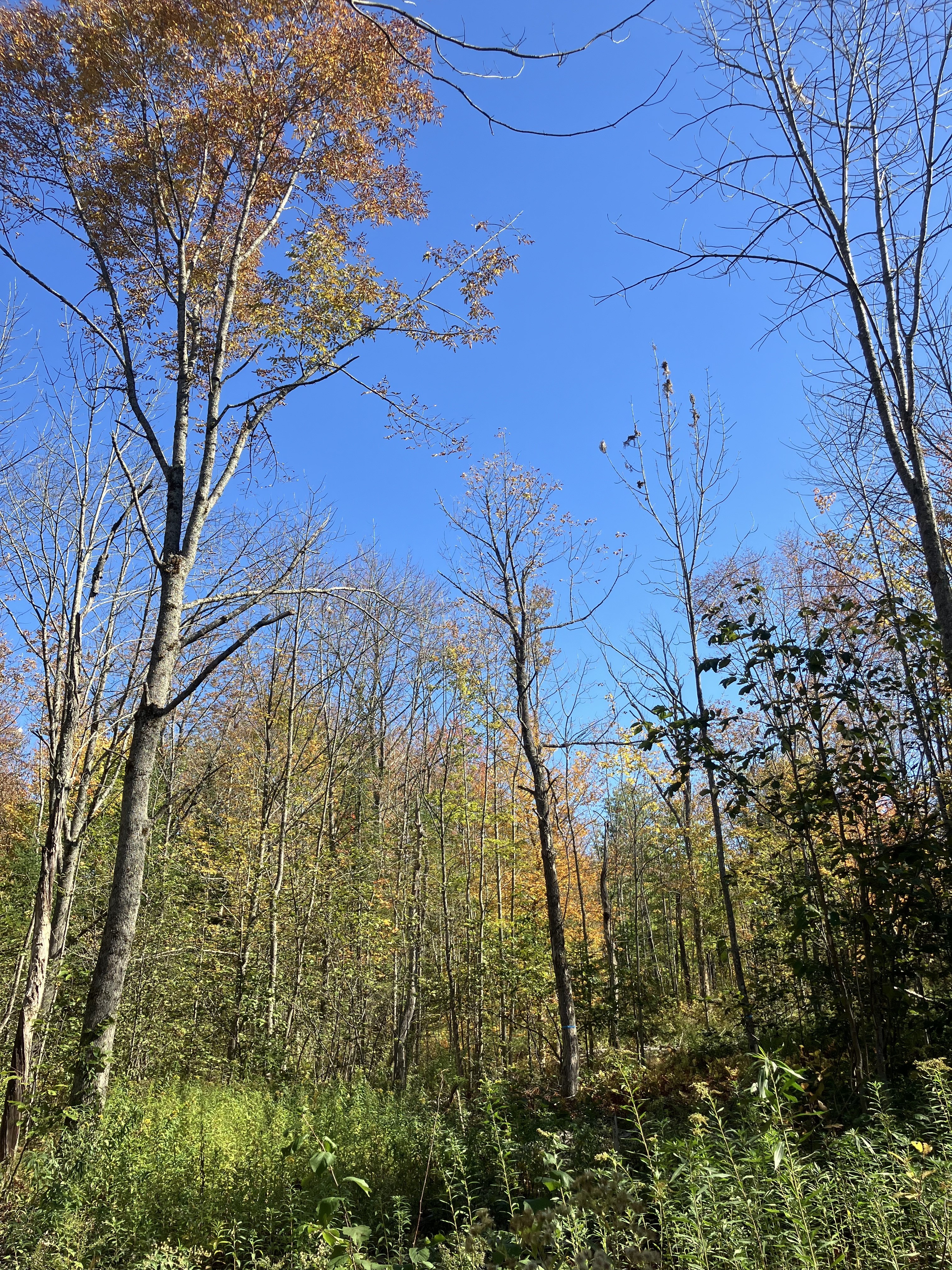
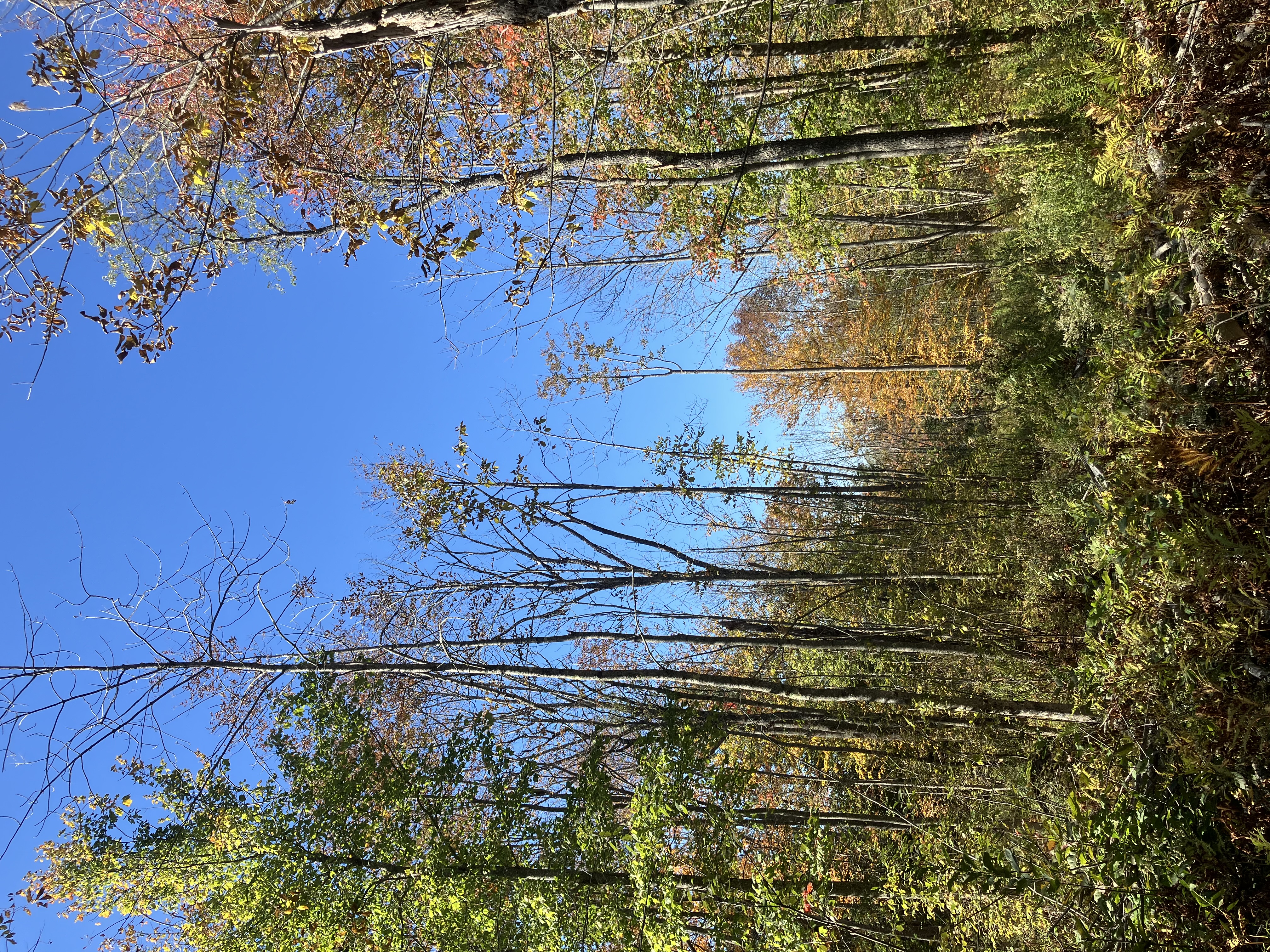
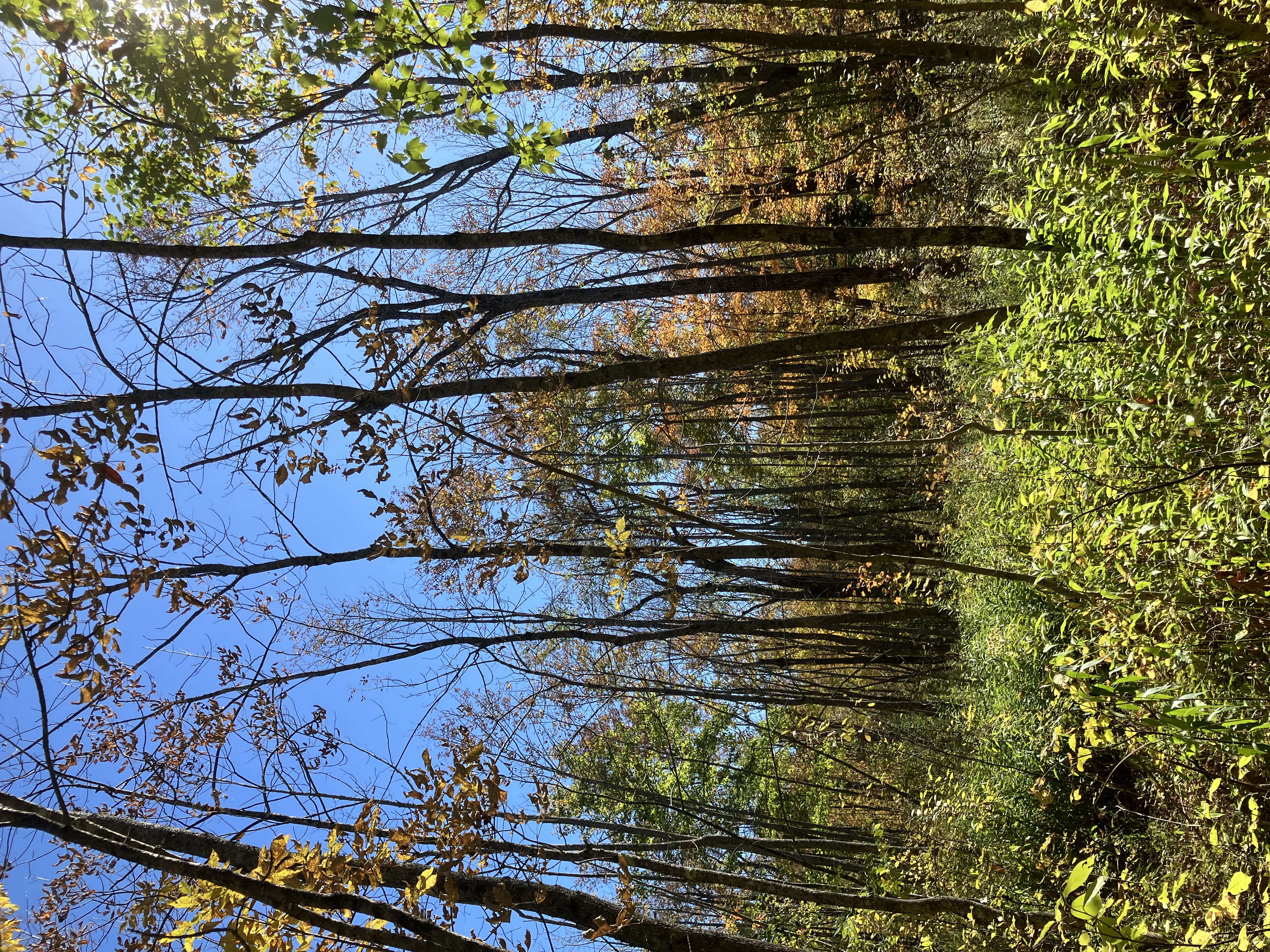
The Maine Department of Inland Fisheries and Wildlife is deploying a variety of treatments for the purpose of regenerating new age cohorts of ash and protecting them from the emerald ash borer. There has been invasive plant control, silviculture, brown ash seed collection, and stem injections of pesticides to achieve this goal Forest stewardship practices at this site are supported in part by the Sustaining Ash Partners Network (SAP-Ne), through a demonstration site network showcasing effective approaches for preserving future generations of ash in the face of emerald ash borer.
Site Location
Charleston, Maine
The site is located on the east side of Rt. 15 in Charleston, Maine at the bottom of Bull Hill approximately 0.5 miles north of the Charleston Correctional Facility.
45.099860
-69.099749
Head north on Rt. 15 out of Bangor heading to Dover-Foxcroft. Travel about 25 miles until you reach the Charleston Correctional Facility at the top of Bull Hill. Continue about 0.5 mile and turn right onto an unmarked dirt road near the bottom of the hill.
The site can be driven to by vehicle.
Maine Dept. of Inland Fisheries & Wildlife
+1 207-592-3225
Stand Information
7.2 acre
Ash
emerald ash borer
emerald ash borer
Pre-treatment Conditions
Site was cleared for pasture and began to revert back to forest about 80 years ago.
Invasive honeysuckle was establishing in the understory. Overstory consists primarily of white ash exhibiting dieback.
Silviculture Prescription
A continuous cover irregular shelterwood is being employed in a stand to release and regenerate a mixed wood stand to create an uneven age structure. Within the stand is a 3.8 acre ash inclusion in need of release and regeneration.
Objectives include regenerating new ash and increasing biodiversity by regenerating and releasing non-ash tree species for stand resiliency.
The stand is to provide wildlife habitat by providing food and cover for a variety of species through structural and biological diversity.
A continuous cover irregular shelterwood is being used to thin, release and regenerate ash within a white ash inclusion. Targets for removal are balsam fir, paper birch, and low quality male ash. All female ash are to be retained. Ash saplings are to be released for continued growth along with red maple and black cherry for biodiversity. 70 sqft residual basal area target.
- forest health
- invasive species
- wildlife habitat
- Emerald ash borer
Feller buncher, processor, forwarder
Harvesting occurred during the winter for better ground conditions as to not further impact the wet compacted soil even more. Stump sprouting on the ash is intended as another avenue for regeneration.
Post-treatment
yes
We plan to monitor the success of regenerating ash over the coming years along with the health of residual ash stems and continued treatment of selected ash trees for injection.
Miscellaneous
Invasive plant management=3 days, Silviculture=1 week, Stem injection=1 day
- Monitor and retreat invasive plants yearly - Reinject pesticide into ash trees in 3 years - Considering further release of ash regen in 10 years
Statistics
Contact Information
Jack Chappen
Maine Dept. of Inland Fisheries & Wildlife
Supplementary Content