Secondary tabs
Submission information
| Study Title | Cornwall Swamp WMA - SAP-Ne Demonstration Site (Cornwall, VT) |
|---|---|
| Case Study Type | Forest type, Forest health |
| Site Photo |
|
| Lay Summary | The Vermont Department of Forests, Parks, and Recreation observed a high density of black ash at the site that is threatened with becoming infested with EAB. Injections of emamectin benzoate were conducted in 2026 on black ash (male and female) at the site. Treatments occurred to maintain ash in the landscape at this important Wildlife Management Area. 18 trees were injected in 2026; 20 trees will be treated in 2027 followed by another 12 trees in 2028. Injected trees will be monitored for canopy health annually and will be re-treated as needed. |
| Location | Cornwall, Vermont |
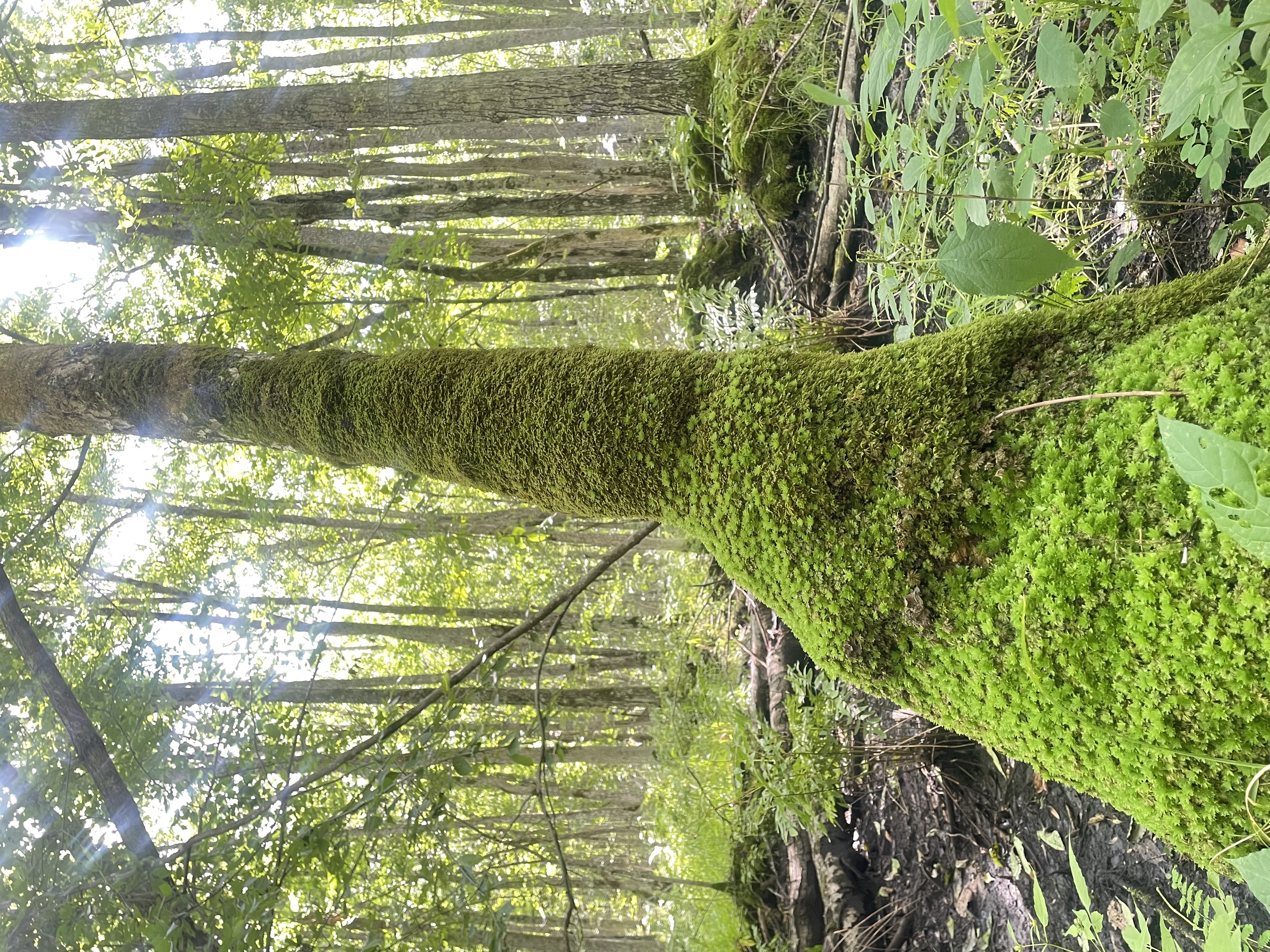
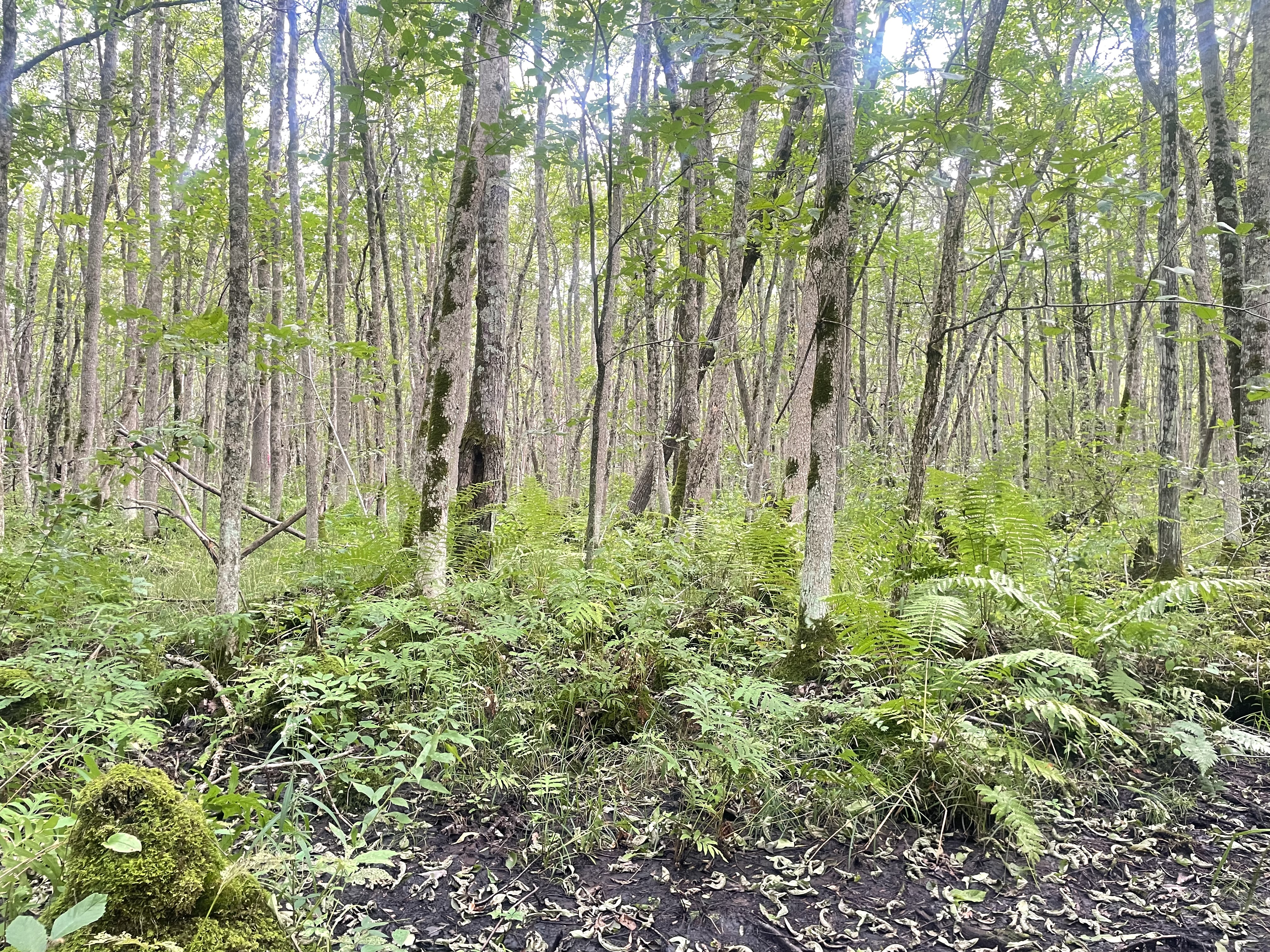
| Location Description | Wildlife management area (state-owned) in central Champlain Valley of Vermont; near Otter Creek River. |
| Latitude | 43.915921 |
| Longitude | -72.712223 |
| Directions | From Middlebury, Vermont take route 30 south for 8.5 miles. Take a left onto Swamp Road and go 0.5 miles to small parking lot on left. |
| Accessibility | The site is accessible only on foot. |
| Landowner Name | State of Vermont – Fish and Wildlife Department |
| Landowner phone | +1 802-878-1564 |
| Landowner email | fwinformation@vermont.gov |
| Stand Area with Units | 98 acres |
| Cover Type | Ash |
| Natural Community Classification | Red Maple-Black Ash Seepage Swamp |
| Primary Forest Health Threat | emerald ash borer |
| Primary Pests/Disease | emerald ash borer |
| Pre-Treatment Forest Health Issues | Emerald ash borer |
| Case Overview | Black ash is threatened by EAB. In an effort to keep black ash on the landscape, 18 black ash trees were injected with emamectin benzoate (4%) in 2026, 20 black ash will be treated in 2027, and 12 more in 2028. Treated trees will be monitored annually and re-treated when appropriate. Biocontrol parasitoids will be proposed for release in 2026 and releases will then occur in 2027 and 2028. Establishment of parasitoid releases will be assessed starting in 2029. |
| Silviculture Objectives | Trying to keep ash on the site. |
| Landowner Objectives | Trying to keep ash on the site. |
| Silviculture Prescription | Management objectives are to maintain genetic diversity and to slow the decline and mortality of the black ash on site. Dominant and codominant trees with no less than 30% dieback will be targeted for insecticide treatments. Insecticide treatments will be done using Tree-age G4 emamectin benzoate (4%) insecticide. An ideal ratio of 1:3 male to female trees will be treated to maintain seed production and regeneration on site. A spatial and temporal treatment rotation will be implemented annually to always have a subset of trees with insecticide treatment occurring each year. This will maximize the treatment effect of reducing EAB population density in and around treatment zone while increasing staff efficiency. |
| Factors Influencing Prescription Choice |
|
| Equipment used | Arborjet Quik-Jet Air injection system and plugs |
| Prescription Notes | Injections – measured DBH to inject correct amount, drilled corresponding number of holes on or near root flares, installed plugs, injected insecticide. |
| Post-Treatment Assessment Expected | yes |
| Future Treatment Plans | In 2027 20 trees will be treated and then in 2028 12 trees will be treated. Biocontrol parasitoids will be released in 2027 and 2028. |
| Primary Contact | Josh Halman |
| Contact Organization | VT Dept. of Forests, Parks and Recreation |
| Contact Email | joshua.halman@vermont.gov |
| Additional Photo 1 |
|
| Additional Photo 2 |
|
| Additional Photo 3 |
|
