The University of Vermont

PLANT BIOLOGY

Staff


Administrative Staff      
Research Staff
Sarah Goodrich Mark Isselhardt Benoit St. Pierre
Kristen Pritchard Shelley Jurkiewicz Brian Stowe
Lillian "Porky" Reade Michelle McGee Guoping Tang
Changjun Mu Tim Wilmot
Nate Poirier Craig Yendrek

Administrative Staff

Sarah Goodrich

Communications Coordinator
228 Marsh Life Science
802-656-2981
Sarah.Goodrich@uvm.edu

Sarah joined the Plant Biology Department in January 2005. She's the department web master, and she also writes the department newsletter and provides various other editorial and administrative support to the faculty. Before beginning her position at UVM, Sarah worked in textbook and encyclopedia publishing. She has a B.A. in English from the University at Albany, and she's working toward an M.S. in Natural Resources here at UVM.

Kristen Pritchard

Finance Coordinator
230 Marsh Life Science
802-656-0421
Kristen.Pritchard@uvm.edu

Kristen joined the Plant Biology Department in July 2007. Her responsibilities include maintaining the department's budgets, hatch accounts, gift & endowment accounts, as well as faculty research grants. Kristen is also responsible for analyzing and updating all distribution forms, travel and expense report verification, etc. She came to UVM with a highly diversified accounting background including international business experience working with subsidiaries in Mexico City and Montevideo, Uruguay. She earned her B.A. from the University of Massachusetts at Amherst.

Lillian "Porky" Reade

Student Services
120B Marsh Life Science
802-656-0461
Lillian.Reade@uvm.edu

Porky has been working at UVM since 1980, and she's been here in the Plant Biology Department since 1990. She is the first person you see when you come to the Plant Biology office, and she can answer almost any question you may have. She spends most of her time assisting students with everything from the application process to choosing classes to graduation requirements. While it's an unusual nickname, she really does prefer to be called Porky, so don't be shy!

Research Staff

Mark Isselhardt

Research Technician
Proctor Maple Research Center
802-899-9926
Mark.Isselhardt@uvm.edu

Mark Isselhardt with his daughter

As a research technician my duties include the design and support of various experiments related to the health of the maple resource. I have coauthored technical pamphlets, presented to professional maple groups in the US and Canada, and fielded sugaring related questions from diverse audiences. Being involved at the ground level of sugaring, including setting up tubing systems, tapping, and running the evaporator has also been an essential part of my professional development. I believe that the ability to draw from first hand experience makes communicating applied research findings to the maple industry more credible.

Shelley Jurkiewicz

Biochemistry Lab Coordinator
107 Hills
802-656-2225
Shelley.Jurkiewicz@uvm.edu

Plant Person

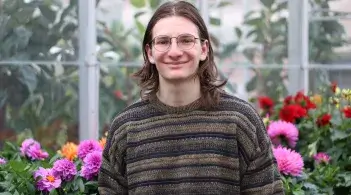
Shelley Jurkiewicz coordinates undergraduate Biochemistry laboratories where students practice the "hands on" skills of science. Laboratory activities include enzyme isolation and purification, protein, glucose and Vitamin C assays, SDS-PAGE electrophoresis and perennial favorite "The Great Potato," a compositional analysis of everyone's favorite food. As you can see from Shelley's picture, she is a real "plant person."

Michelle McGee

BioCore 102 & 103 Coordinator
118 Marsh
802-656-2810
Michelle.McGee@uvm.edu

Michelle McGee

Michelle is a key member of UVM's Integrated Biological Science Curriculum. She keeps busy with the behind the scenes operation of the two upper level BCOR lab courses: Ecology and Evolution (BCOR 102) and Molecular and Cell Biology (BCOR 103). Between organizing field excursions and troubleshooting fluorescent microscopes, she stays busy managing many of the financial and administrative aspects of the BCOR curriculum.

Changjun Mu

Post-Doctoral Associate
334 Marsh
802-656-0894
Changjun.Mu@uvm.edu

Changjun Mu

I am a post-doctoral associate in the laboratory of Dr. Mary Tierney, working on study of AtPRP1 and AtPRP3 which are proline-rich cell wall proteins in Arabidopsis (AtPRPs). The dynamic character of the cell wall provides a mechanism(s) by which plants selectively modify their extracellular matrix as a consequence of growth and differentiation. Our lab is interested in understanding the mechanisms through which structural proteins within the plant cell wall determine aspects of cell form and function during plant development. Now my work focuses on the localization and function of AtPRP1 and AtPRP3.

Nate Poirier

Laboratory Technician
226 Marsh
802-656-2981
Nathan.Poirier@uvm.edu

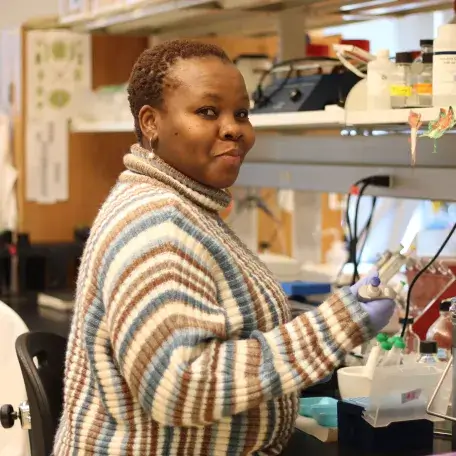
Lab Tech Nate Poirier in the lab.
Benoit St. Pierre

Post-Doctoral Associate
326 Marsh
802-656-0446
Benoit.St-Pierre@uvm.edu

Postdoc Benoit St. Pierre in the lab.

I am a post-doctoral associate in the laboratory of Dr. Terrence Delaney, working on the molecular and biological characterization of SON1 (suppressor of nim1-1), a negative regulator of disease resistance previously identified genetically in Arabidopsis thaliana. As this gene is predicted to encode an F-box protein, i.e. a factor that selectively inactivates the function of specific proteins by targeting them for degradation, the main focus of my research is to identify proteins that interact with SON1. This will allow the identification of targets for proteolysis controlled by this F-box factor, as well as regulatory proteins that affect its function. Other aspects actively pursued include a structure-function analysis to identify domains of SON1 required for its biological role as well as characterization of its subcellular localization in plant cells. Together, these approaches will provide a better understanding of the function of SON1 as a negative regulator of plant disease resistance signaling. While my previous experience has been in basic molecular cancer research (post-doctoral and Ph.D. training at the University of Toronto), a change in intellectual interests as well as an increased awareness of the world-wide economic importance of agricultural improvement to provide future sustained global development has motivated a change of focus to the field of plant biology.

Brian Stowe

Woodlands & Sugaring Operations Manager
Proctor Maple Research Center
802-899-9926
Brian.Stowe@uvm.edu

Brian Stowe

My position emphasizes sugarbush management, maple tubing layout, upgrades, repairs, and the annual production of maple syrup. I am also involved in designing, building, and maintaining various studies centered around maple sap collection and maple syrup production techniques and assisting in many of the studies on forest growth, health, and nutrition.

Guoping Tang

Post-Doctoral Associate
125 Marsh
802-656-0297
Guoping.Tang@uvm.edu

Guoping Tang

I am a postdoctoral associate in the lab of Dr. Brian Beckage. The focus of our research is on developing models of regional vegetation response to current and projected future climate change. Specifically, our research is designed to adapt and improve an existing global dynamic vegetation model, the Lund-Potsdam-Jena dynamic global vegetation model (LPJ-DGVM), to examine: (a) how historical climate change affected vegetation in the northeastern U.S. and how projected future climate change will affect the spatial distribution pattern of vegetation in the northeastern U.S., and (b) how environmental changes, such as acid rain, and the interactions between climate change and acid rain, will affect the dynamic and distribution of montane forest in the northeastern U.S. We will accomplish these goals by: first, improving the latest version of LPJ-DGVM, and expanding its application at the regional scale; second, projecting the responses of terrestrial vegetation in the northeastern U.S. to future (i.e. the 21st century) climate change using the improved LPJ-DGVM model, and third, summarizing how montane forest in this area is simulated to change under future climate scenarios, and suggesting ways of mitigating the negative impacts of climate change on vegetation. The results of this research will provide resource managers and the public with information about the potential behavior of important species or forest communities under climatic change so that more feasible and reasonable policies can be developed to cope with climate change-induced risks.

Tim Wilmot

Extension Maple Specialist
Proctor Maple Research Center
802-899-9926
Timothy.Wilmot@uvm.edu

Tim Wilmot

My position with UVM Extension combines research with outreach and education. One of my principal research interests is the sap flow mechanism in sugar maple, and the interactions among temperature, sap pressure, and sap flow rate. A second research interest is forest nutrition and relationships among soil and foliar chemistry, tree growth and vigor, and sap sugar production in maple stands. My work also includes writing and talking about maple research, both my own and that of my colleagues at the Proctor Maple Research Center, as well as reporting on successful methods, innovations, and discoveries by other sugarmakers.

Craig Yendrek

Post-Doctoral Associate
334 Marsh
802-656-0894
Craig.Yendrek@uvm.edu

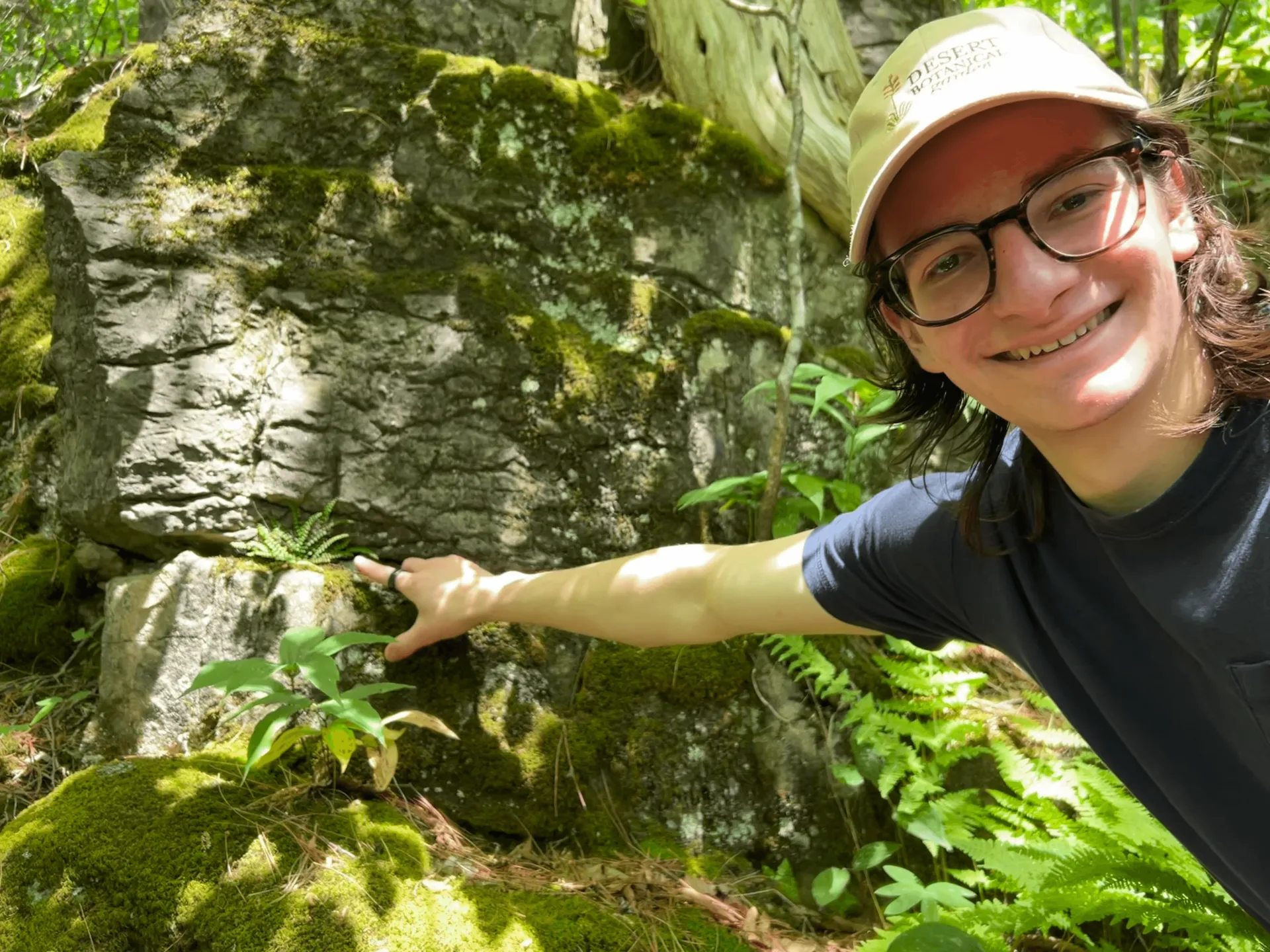
Craig Yendrek at Overlook Park

I am a postdoc in the lab of Dr. Jeanne Harris, where we are working with the model legume Medicago truncatula. Legumes are plants that can form a symbiotic relationship with a soil microbe called Sinorhizobium meliloti. This bacterium can "infect" the roots of M. truncatula where it resides in unique plant organs called nodules. Once the nodules are fully developed, the bacteria fix atmospheric nitrogen (which the plant can utilize for growth) in return for plant-produced carbohydrates. For my research, I am interested in the plant-microbe communication that occurs at the molecular level within the first several hours after M. truncatula is inoculated with S. meliloti. Specifically, I am looking at how the phytohormones ABA, JA and ethylene contribute to the regulation of the early signaling events that are necessary for nodule initiation. This work is important because many agricultural crops, like corn and wheat, are unable to form nodules and need to be fertilized at a high cost to farmers as well as the environment. By deciphering the molecular language that M. truncatula and S. meliloti use to communicate, it may be possible to provide non-legume plants with the ability to develop their own nodules.

Last modified May 11 2009 12:28 PM

Contact UVM © 2009 The University of Vermont - Burlington, VT 05405 - (802) 656-3131