Our size is just right — world-class faculty conduct cutting-edge research while mentoring and teaching; and our academic program is rigorous. But the proof is in the results: graduates get internships, find jobs, and feel satisfied with their experience.
Educating for the Future
"Business as usual" doesn’t secure success in today's economy. As a student at the Grossman School of Business, you'll become adept at “triple-bottom line” thinking, where a focus on healthy profit, people, and planet transforms enterprise and defines success.
Our vision for the future of business is expansive. The world needs the kind of professionals who can respond to these challenges; so do employers growing their businesses into the future. Whether you wish to become a founder launching the next big thing, a mission-driven employee transforming your organization from within, or the steward of a family business charged with maintaining a legacy while leading modernization efforts, you have a place at the Grossman School.
Our grads land great jobs at global powerhouses as well as innovative start-ups. Many also apply their training to strengthen a family-owned enterprise—another area of expertise earning the Grossman School worldwide recognition. Learn more about us.
Our Programs
Academics


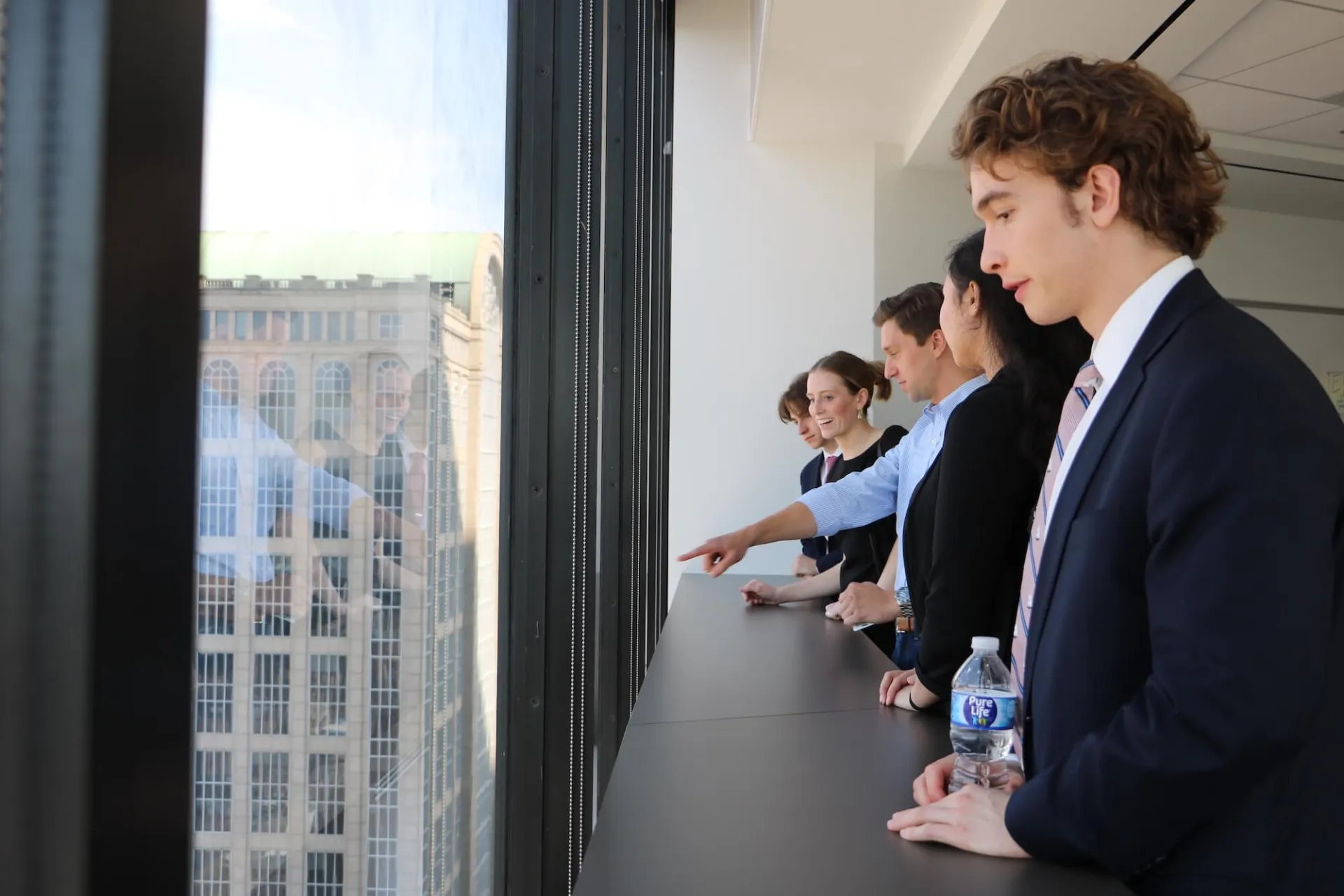
The Grossman Co-op Means Business!
Co-op is an immersive full-time paid work experience integrated into undergraduate academic studies where students alternate between classroom education and full-time employment, all while gaining practical, hands-on experience in their field of study.
Book an appointment with the GSB Co-op team and start planning your co-op journey today! For employers and students wishing to learn more.Grossman School by the Numbers
- 92% employed full-time were satisfied with their position.
- 100,000 active members of UVM’s Career Network help graduates launch their careers.
- 95% of GSB grads were employed or continuing education six months after graduation.

Experiential Learning
Find opportunities that will allow you to grow, test your skills, and put theory into practice—from alumni panels and guest speakers with real-world experience, to global case competitions, study abroad, and internships.
Student OpportunitiesExperiential Learning
Find opportunities that will allow you to grow, test your skills, and put theory into practice—from alumni panels and guest speakers with real-world experience, to global case competitions, study abroad, and internships.
Student OpportunitiesAcademics Success Grounded in Good Practice

Accredited by the leading standard setter

Training globally responsible leaders

A nurturing honors college

World-Class Research
Our research culture values impact. Grossman School's faculty are frequently recognized for their research, publish in top-tier journals, present at global conferences, provide media with insights, deliver keynotes, and use research to accelerate learning in the classroom.
Research at Grossman SchoolWorld-Class Research
Our research culture values impact. Grossman School's faculty are frequently recognized for their research, publish in top-tier journals, present at global conferences, provide media with insights, deliver keynotes, and use research to accelerate learning in the classroom.
Research at Grossman School
Listen to the SI-MBA Podcast
Explore expert and student perspectives on sustainability and business.
Grossman News
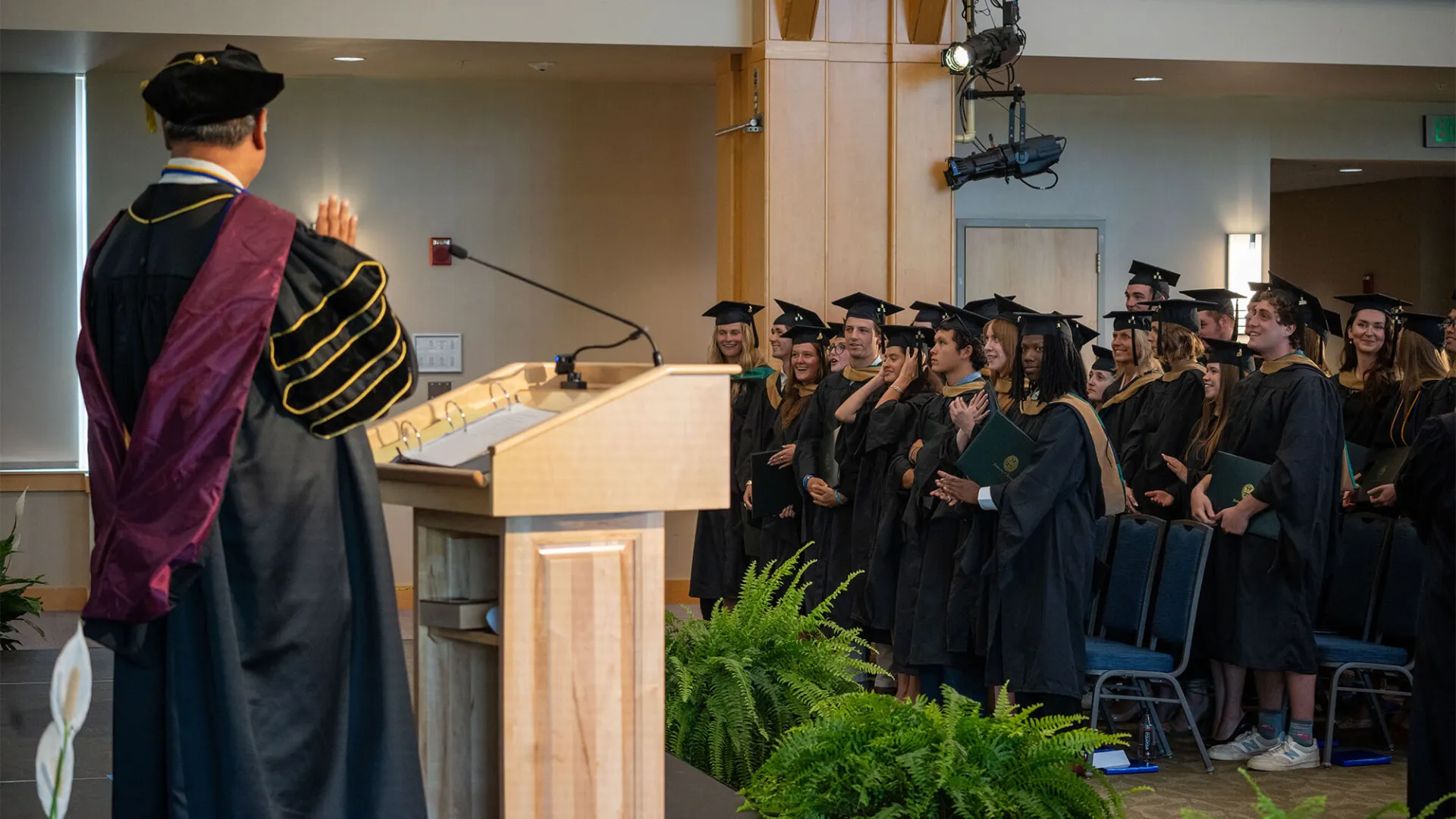
Grossman School of Business Bids Farewell to the Sustainable Innovation MBA Class of 2026
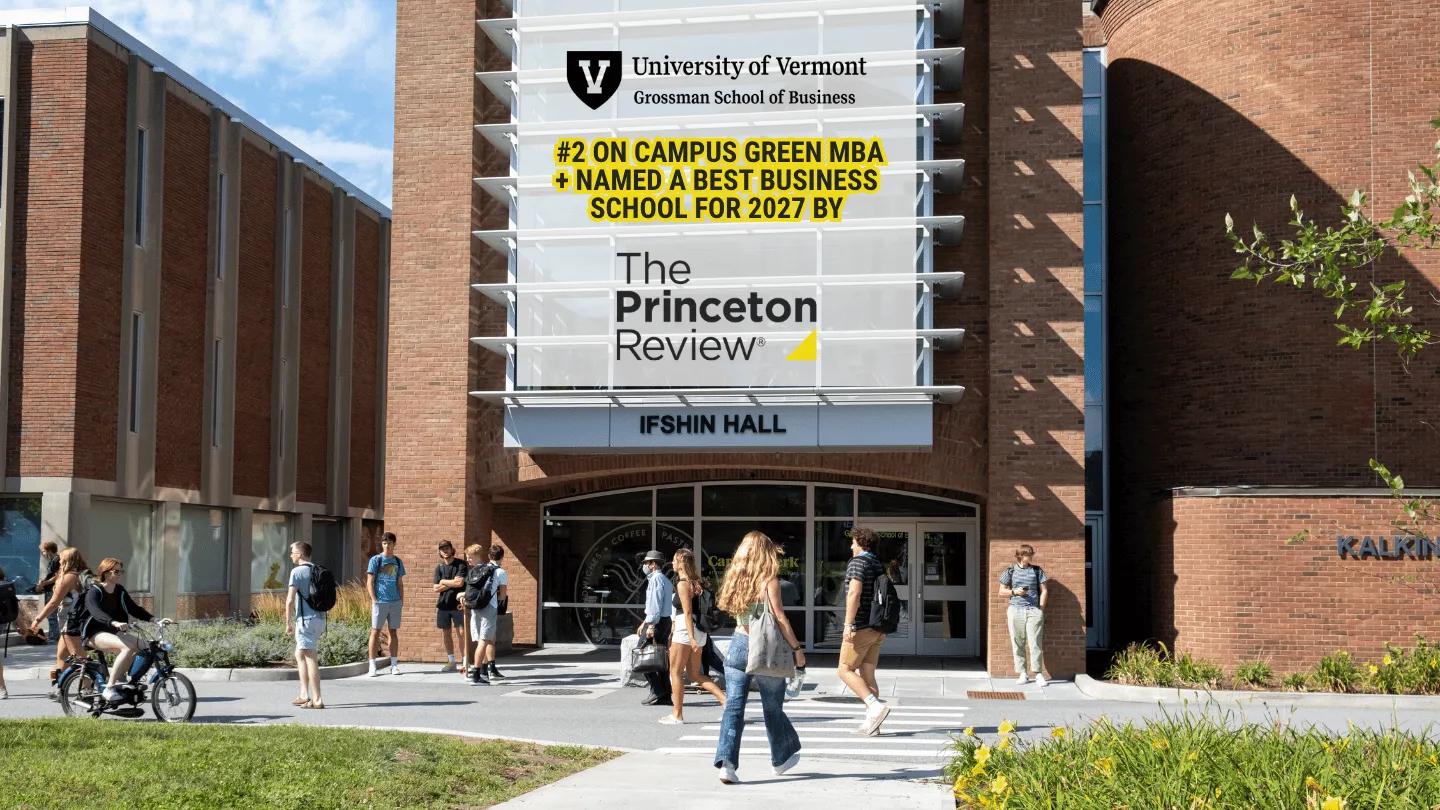
UVM's Sustainable Innovation MBA Ranked No. 2 Best Green MBA Nationally; Grossman School Named a Princeton Review Best Business School
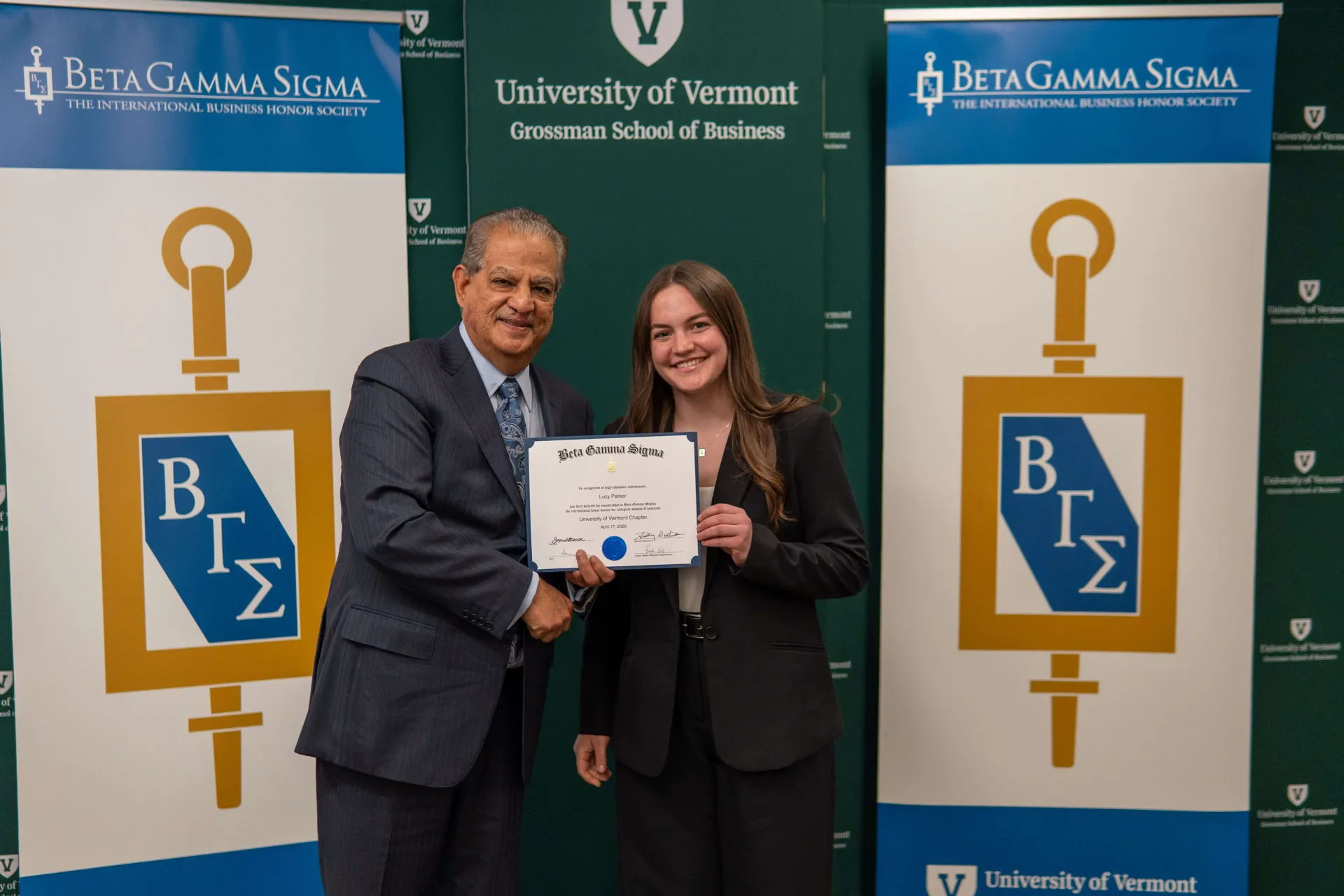
Lucy Parker ‘27 Named 2026 PCAOB Scholar
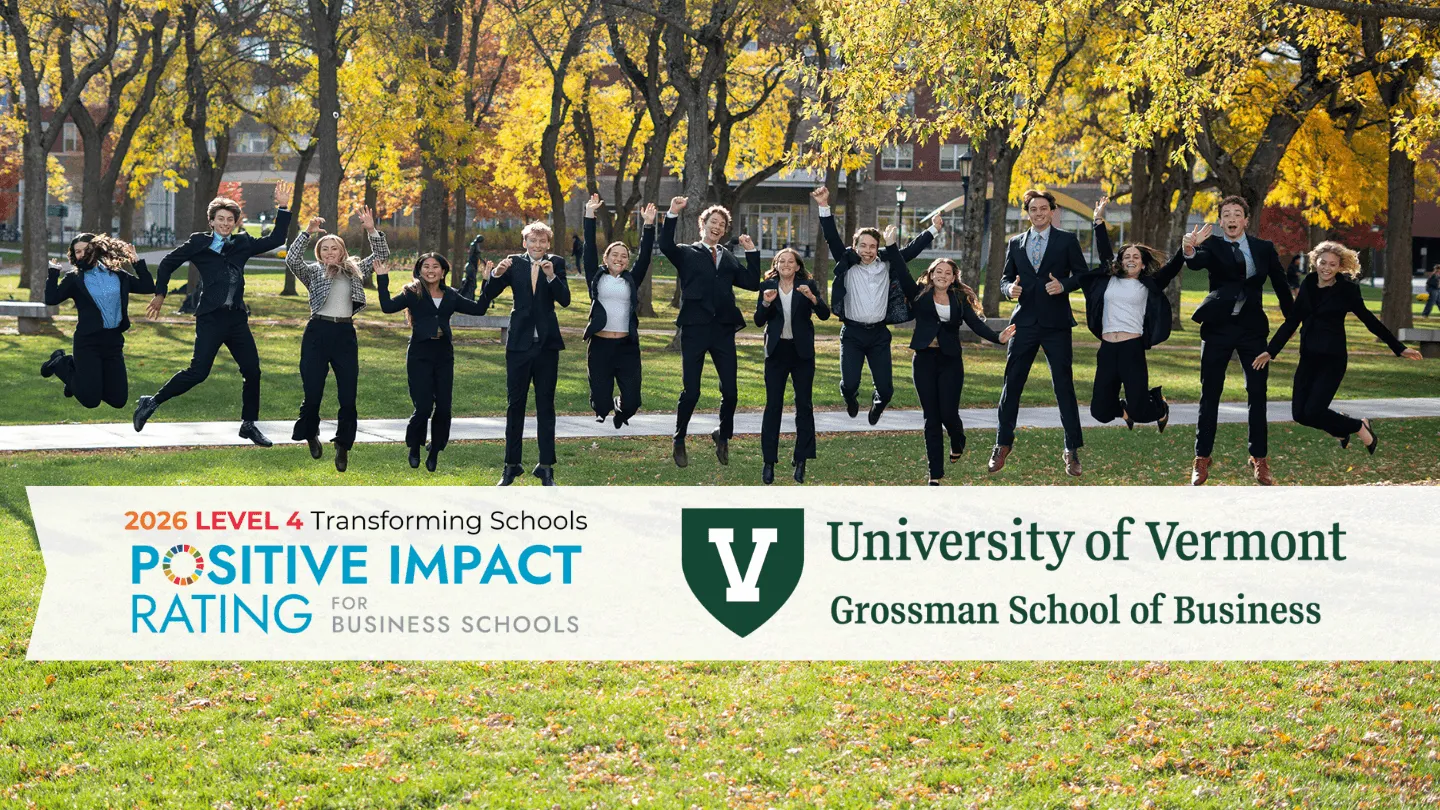
Grossman School of Business Earns 4-Star Global Positive Impact Rating, Among Top U.S. Programs
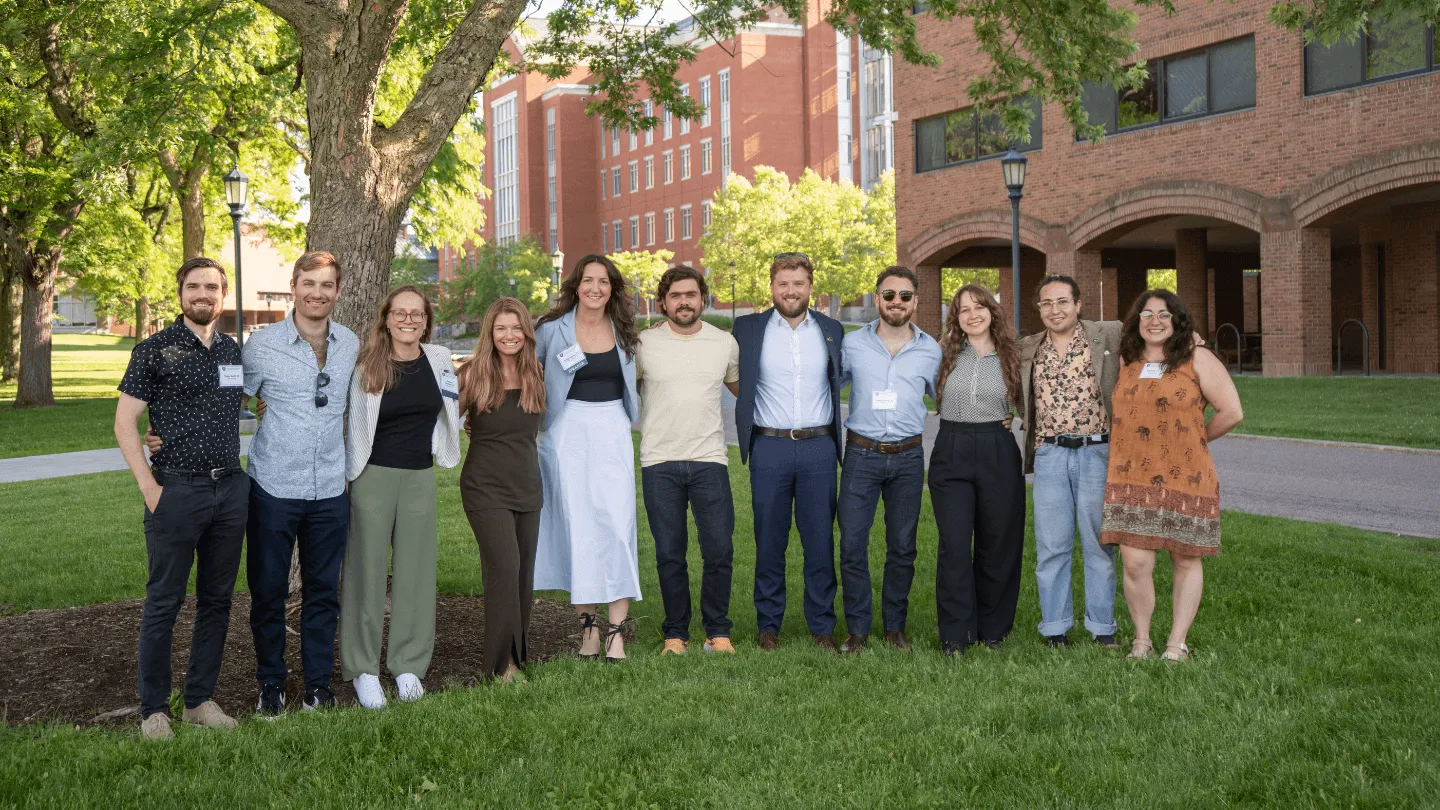
Celebrating a Decade of Launching Impactful Careers