
Cups of Memory

Aida
Sehovic '96
Theres significantly more than coffee, sometimes, in a cup of
coffee. Particularly in Bosnian culture, notes Aida Sehovic, where preparing
and drinking a cup has more in common with the Japanese tea ceremony
than the American Starbucks stop. This summer, Sehovic, an artist and
2002 UVM alumna, used the traditional Bosnian ritual of gathering for
coffee as the central vehicle for a Sarajevo art installation focused
upon her homeland's tragic recent history.
Sehovic had started exploring coffee as a medium during a post-UVM year
working on her masters degree at the School of Visual Arts in
New York. As a refugee, it becomes even more important,
she says of coffees place in the Bosnian social fabric. In
most other ways, whether you want to or not, you adjust to the American
lifestyle. This is a part of our identity we can keep.
A July 2003 trip back to Bosnia, her family's first return, coincided
with the anniversary of the 1995 Srebrenica massacre, in which some
seven to ten thousand Bosnians were killed. Emotions were particularly
high during the July 11-15 anniversary because bodies of the first victims
recovered and identified from mass graves were now being ceremonially
buried. The experience of returning to Bosnia at such a charged moment
turned in Sehovics imagination and a vision for a future work
began to emerge.
OUR
CONSCIOUSNESS
Between research, interviews, and developing the concept of her work,
Sehovics Sto te nema? (Why are you not here?)
was nearly a year in the making, but would be one day in the final production.
She made logistical preparations in Bosnia during a six-week leave from
her staff position in UVMs Registrars Office, then on the morning
of July 11, 2004, Sehovic set to work on her installation in the square
in front of a Sarajevo mosque. A bed of soil, 30 meters across, depicted
a map of Bosnia and Herzegovina. At the eastern edge in the area of
Srebrenica, 989 cups were set out for each of the residents whose bodies
had been identified and re-buried to date. Most were filled with coffee,
brewed on-site. Forty-four cups held only sugar cubes representing those
under age 18, too young for the ritual, who had died; a single rose
represented the one female victim. In a burlap sack at the side, an
additional 338 empty cups stood for the individuals to be buried that
day in Srebrenica. Three tape recorders embedded in the soil ran tape
loops of Sehovic reciting the names and birthdates of the dead.
For the artist, collecting the cups (fildzans in Bosnian) was an important
part of both process and product. Many came from Bosnian families in
the Burlington area, where Sehovic, her parents and three sisters immigrated
in 1997 following previous stays in Turkey and Germany. Many came from
residents of Srebrenica and neighboring areas, some who lost family
in the massacre. One woman gave her a cup that had been in her family
for 40 years. Considering the participation of so many in the work,
Sehovic says, It is not my project, but our project, our consciousness.
Sehovic says her ultimate goal was to create an experience that
is moving and powerful. Her snapshots of the day include photos
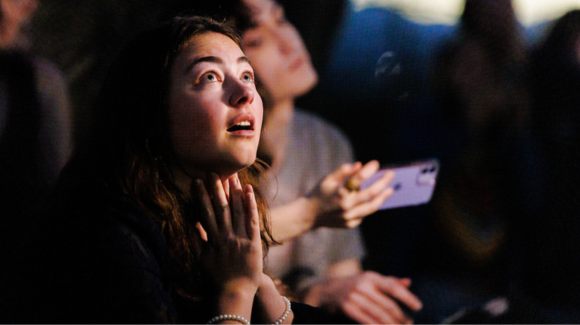
such as the one of a woman with a child by her side, kneeling to hear
the recitation of names, tears in her eyes; a journal of visitors
reactions includes comments in 13 languages. Sehovic estimates approximately
2,000 saw the exhibit, and many more learned about it through extensive
media coverage in Bosnia. It was a very overwhelming experience,
Sehovic says. It was good for me, as an artist, because I could
see that it actually worked. But it is a very sad project.
BRIDGE OF UNDERSTANDING
Professor Kathleen Schneiders 3D- design class was a pivotal moment
for Sehovic as an undergraduate, expanding her view of what art could
be and leading her to major in studio art. The professor remembers Sehovic
as a risk taker, so willing to experiment. A research project
in Schneiders class introduced Sehovic to Colombian sculptor Doris
Salcedo, whose work focusing on the tragedy of the thousands disappeared
in her country resonated with the young Bosnian artist. Sehovic began
to explore similar themes with Schneiders guidance during her
undergraduate years, including her John Dewey Honors Program senior
project, an installation titled Tree of Life.
Sehovic is hoping to extend the reach of Sto te Nema? with
subsequent July 11 installations, the number of coffee-filled cups growing
as more bodies are discovered, identified, and laid to rest. Shes
also working on final edits of a video shot by Gates Gooding, a UVM
senior. With assistance from URECA! (a UVM undergraduate research grant),
Gooding traveled to Bosnia to film and assist in Sehovics work
and create his own film about Bosnian youth.
Sehovic envisions creating two final versions of the Sto te Nema?
video one for Bosnian viewers and one for Americans-and is hoping
to screen them at UVM later this year. A project like this is
a way of healing for Bosnians, coming to terms with this terrible thing
that happened to us, Sehovic says. And for Americans it
is building a bridge of understanding where Bosnian people are coming
from, because it is very hard to talk about these things.