|
Elin Anderson, Selective Migration from Three |
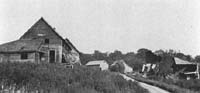
Elin Anderson, with the assistance of another field worker, Marjorie Choate, and the Survey Secretary Anna Rome, studied the causes and effects of the rural exodus in the Vermont towns of Waitsfield, Cornwall, and Jamaica (nicknamed "Pomona,""Beaufield," and "Sylvania" in the Fifth Annual 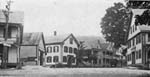 Report). Waitsfield was chosen as a "progressive, vital town." Cornwall was selected as a thriving agricultural community with a gradual succession of farms from Yankee to French Canadian ownership. Jamaica exemplified the "town that had gone down hill" yet showed potential for tourist or summer home development.
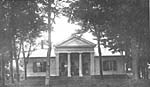 Anderson and her assistants lived in each town for at least eight weeks, participated in the social life of the town and became acquainted with each family. They made sociological, demographic, and economic profiles of each town and interviewed residents and recent emigrants to ascertain their reasons for remaining or leaving. Anderson's report, Selective Migration from Three Rural Vermont Towns and its Significance concludes with a "eugenical-sociological" solution, one that Professor Perkins promoted nationally as a model in eugenics:
"If Vermont wishes its future citizens to have the same fine qualities of character that marked the early builders of the State, it must pursue a line of action that will prevent deterioration from taking place by providing a social environment that will bring out all the fine qualities in the character of the people."
The final report of the Vermont Commission on Country Life, Rural Vermont: A Program for the Future, provided an action plan for realizing the vision.