
|
Third Annual Report of the Eugenics Survey of Vermont, 1929 |
 Harry Perkins devised the Key Family Study to demonstrate a relationship
between family quality and the quality of life in rural towns. He termed
this and subsequent studies as "eugenical-sociological" to align their investigations
with the Vermont Commission on Country Life goal of improving rural conditions.
After a general survey of several rural Vermont towns, the towns of Sandgate,
Williston, and Lincoln were selected for the Key Family study. The southeastern
Vermont towns of Readsboro and Sandgate had been a focus of Harriett Abbott's
studies of rural degeneracy and provided the setting and background for Francis
Conklin's 1928 study of "Better Branches of Degenerate Families."
Harry Perkins devised the Key Family Study to demonstrate a relationship
between family quality and the quality of life in rural towns. He termed
this and subsequent studies as "eugenical-sociological" to align their investigations
with the Vermont Commission on Country Life goal of improving rural conditions.
After a general survey of several rural Vermont towns, the towns of Sandgate,
Williston, and Lincoln were selected for the Key Family study. The southeastern
Vermont towns of Readsboro and Sandgate had been a focus of Harriett Abbott's
studies of rural degeneracy and provided the setting and background for Francis
Conklin's 1928 study of "Better Branches of Degenerate Families."
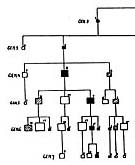 Having been criticized for his emphasis on bad heredity in the Eugenics Survey's
previous Annual Reports, Professor Perkins published Francis Conklin's "Study
of the Better Branches" of the "Rectors" of Readsboro to show a more hopeful
picture of Vermont families and a more charitable attitude of the Eugenics
Survey to families formerly labelled as "degenerate." While Martha Wadman's
field notes on families in Sandgate and Huntington reveal the Survey's continued
search for bad heredity in isolated rural sections and the willingness of
some townspeople to inform on their neighbors, Perkins chose to celebrate
the endurance and vigor of the "old Vermont stocks" in their reports on old
families in Williston and Lincoln. In the third and fourth Annual Reports,
Lincoln is given the pseudonym "Garfield," and the key families nicknamed
"Furman" and "Burr."
Having been criticized for his emphasis on bad heredity in the Eugenics Survey's
previous Annual Reports, Professor Perkins published Francis Conklin's "Study
of the Better Branches" of the "Rectors" of Readsboro to show a more hopeful
picture of Vermont families and a more charitable attitude of the Eugenics
Survey to families formerly labelled as "degenerate." While Martha Wadman's
field notes on families in Sandgate and Huntington reveal the Survey's continued
search for bad heredity in isolated rural sections and the willingness of
some townspeople to inform on their neighbors, Perkins chose to celebrate
the endurance and vigor of the "old Vermont stocks" in their reports on old
families in Williston and Lincoln. In the third and fourth Annual Reports,
Lincoln is given the pseudonym "Garfield," and the key families nicknamed
"Furman" and "Burr."
Recommended reading:
Kevin Dann, Lewis Creek Lost and Found (Hanover: University Press
of New England, 2001). In "Blood Streams" (Chapter 10), Dann elegantly weaves
the field investigations of the Eugenics Survey into the natural and cultural
history of the Lewis Creek watershed.
