Training Manual Menu |  | Main Menu |
Training Manual Menu | | Main Menu |
Unit 2
|
| building a core foundation |
 |
• OUTCOMES: To develop an understanding of the foundation of the Collaboration Framework. | |
 |
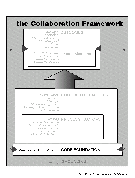 |
• DISCUSS: The Core Foundation represents the common ground of understanding for the Frame-work, and focuses upon creating a sense of common purpose that brings partners together, inspiring them. This takes time, care and strategy to build well, and is never ending. It encompasses the vision, the mission, and the values and principles of the group. |
| The VISION is an image of a desired future. The MISSION defines the purpose of the collabo-ration and represents the fundamental reason for the collaboration's existence. THE VALUES AND PRINCIPLES are the beliefs that individuals and the group hold. These are the guides for creating working relationships and describe how the group intends to operate on a day-by- day basis. |
| defining a common vision (from Charlotte Roberts' "What Do We Want to Create?", from The Fifth Discipline Fieldbook) |
| • OUTCOMES: To have participants build a shared vision and purpose for their collaborative efforts. | ||
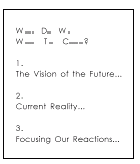 |
• ACTIVITY: Two series of questions are talked through
bringing pertinent issues to the forefront. Spend
time only with the questions which are meaningful
to your team - different groups will be attracted to
different questions. The words, phrases and ideas
that emerge from this exercise become the foundation
for building a shared vision and purpose.
Afterwards, a third series of questions allows group
members to try and focus their reactions and decide
whether the ideas made sense. This exercise was designed for businesses and has been shifted to work in the social service arena. You may want to change some of the questions to make them more relevant to your specific audience. Make sure each member of the team has an opportunity to comment on each of the questions. Note the main points on a flip chart that everyone in the group can see. After each question (at least during the first step) ask: "How would we measure our progress?" STEP 1: The Vision of the Future. It is five years from today and you have created the collaboration you wanted to create. (Take time as a facilitator to get the participants personally involved in this future sensibility.) Now it is your job, as a team, to describe it—as if you were able to see it, realistically, around you. Consider these questions one by one, painting an ever-clear shared vision of your future collaboration. After each question, ask: “How would we measure our progress? 1 Who are the stakeholders of this collaboration we have created (five years from now)? How do we work with them and produce value for them? 2 What are the most influential trends that may affect us? 3 What is our image in the marketplace? 4 What is our unique contribution to the world around us? What is the impact of our work? 5 How do we make money? 6 What does our organization look like? How do the important elements of the infrastructure interact? 7 How do we handle good times? How do we handle hard times? 8 In what ways is our collaborative effort a great place for us? 9 What are our values? How do people treat each other? How are people recognized? 10 How do we know that the future of our collaboration is secure? What have we done to ensure its future for ourselves? What have we done to ensure its future for our grandchildren? 11 What is our collaboration’s role in our community? STEP 2: Current Reality. Now come back to the current year, and look at the collaboration as it is today. 12 What are the critical forces in our systems? 13 Who are the current stakeholders today—inside and outside? What changes do we perceive taking place among our stakeholders? 14 What are the most influential trends in our industry today? 15 What aspects of our collaboration empower people? What aspects disempower people? 16 How is the strategic plan currently used? 17 What major losses do we fear? 18 What do we know (that we need to know)? What don’t we know (that we need to know)? STEP 3: Focusing Our Reactions. This shared vision exercise involved listening to other people’s presen-tations of what they want the collaboration to be. After hearing a presentation, we often need a way as individuals to focus our reactions and to decide whether these ideas make sense for us. These questions provide that vehicle. 19 What, for you, are the key words in this vision statement? 20 How did you first feel at the moment when you saw the vision or read it? 21 How do you feel about it now? 22 Do you feel like you could own it? 23 If not, how would it have to change for you to feel a sense of ownership of it? 24 How does it strike your sense of meaning and purpose? 25 If not, how would it have to change to be meaningful for you? 26 Based on your own reactions and feelings, what implications do you see, from this vision statement, for your collaboration’s visioning process? • EXAMPLES: A top team in a Mental Health System started with the third part of Question 1, and developed an image of themselves as passionately adding value to patients' lives, beyond the psychiat-ric prognosis and treatment: "We empower and facilitate patients toward personal growth and effective functioning." A team of computer engi-neers started with the second part of Question 4, and began to reconsider whether they should continue their focus on designing circuit boards. They ultimately described their vision as: "We are a winning, world-class component and system devel-opment group and the energy source to the group and the corporation as a whole." -p339. |
Training Manual Menu | | Main Menu |