Training Manual Menu |  | Main Menu |
Training Manual Menu | | Main Menu |
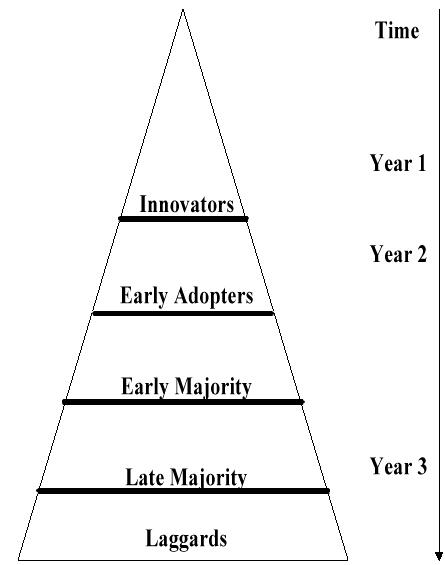
| Unit 1 5 stages to accepting new ideas | ||
|
1. Awareness 2. Interest 3. Evaluation 4. Trial 5. Acceptance |
| Unit 1 how change comes about | ||
|
| Check whether you believe the following statements are true, sometimes true, or false. This exercise is designed to help get you thinking about how you feel about change and your role in instigating and implementing change. In the space available expand upon why you responded as you did. |
| |
|
|||
 |
|
|
1. People tend to resist change. | |
|
|
|
2. Only momentous change is worthwhile. | |
|
|
|
3. Nothing can be changed overnight. | |
|
|
|
4. Change means improvement. | |
|
|
|
5. Change brings harships for some. | |
|
|
|
6. Change brings reward for the instigators. | |
|
|
|
7. Technological change should be slowed. | |
|
|
|
8. Change usually comes by chance. | |
|
|
|
9. People cannot adapt well to any change. |
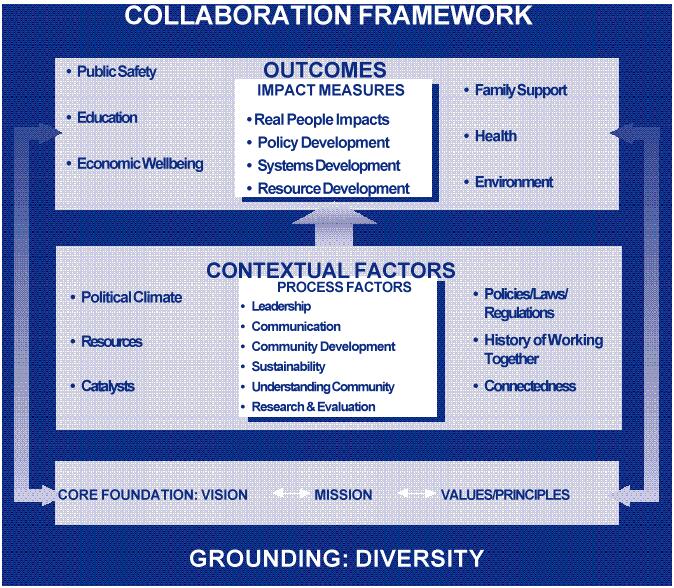
| Unit 1 the Framework's 5 elements |
|
 |
Unit 1 |
|
| Write down the goals you would like to see accomplished as a result of this
collaboration. These are broad statements of what you would like to achieve.
Your goals might have to do with the well-being of your community (example:
all community members are committed to creating a positive environment
in South Jones), healthy lifestyles (ex: all community members will have the
resources to reach their full physical, mental, emotional and spiritual capacity),
safety (ex: community neighborhoods will be safe and secure for children, adults,
families and businesses), or any number of other community goals (ex: economic,
learning, etc.). |
Training Manual Menu | | Main Menu |