|
Materials
- 5 cards for purpose; 5 cards for structure; 5 cards for process
- –Cards should be color coordinated by level (i.e., network, cooperation,
coordination, coalition, and collaboration). Cards must be coordinated by the
level of community linkage that they define. For example, Blue = Network; Green =
Cooperation; White = Coordination; Gold = Coalition; Red = Collaboration. Thus, the
blue purpose card would describe the general purpose of a network. The blue structure
card would describe the general structure of a network. Finally, the blue process card
would describe the general process of a network.
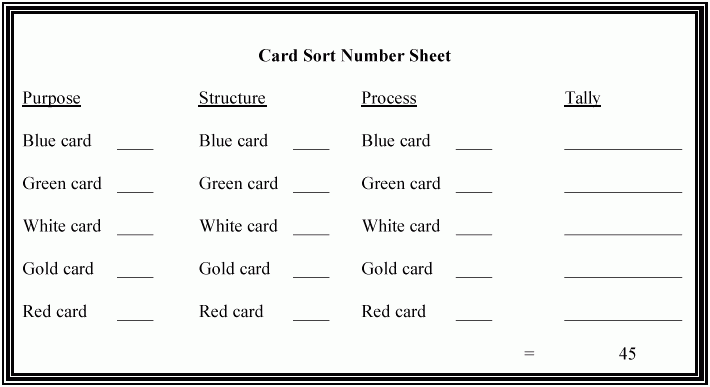
- Card Sort Number Sheet
Newsprint for the facilitator to write on
Peoples ranking
Pen or pencil
Markers
Time to Complete: 20-40 minutes
Procedure
- Three sets of five word cards are employed. The sets are categorized by the three
function areas: purpose, structure, and process.
- Hand out the first set (purpose)of cards. Explain to participants that each one of the five
cards represents a specific purpose that may be the focus of the group. Explain to them
that they are to rank order the cards in terms of their group’s priority. That is, the card
that they put at the top should contain the purpose which is the highest priority for their
group. The second card to the top should be the card whose purpose is the second
highest priority. They should sort all five cards by rank. (5 minutes)
- Then they should paper clip the cards so they stay in their rank order and flip them over.
- Hand out the second set (structure) of cards. Have participants do step two again. Only
this time have them sort the structure cards. (5 Minutes)
- Hand out the third set (process) of cards. Again, have participants complete step two
using the process cards.
- After they have sorted all the cards, hand out the Card Sort Number Sheet (see Handout)
and have them fill them out. They need to assign numbers to the cards from highest to
lowest. These numbers should be written on the Card Sort Number Sheet. Thus, the top
card would get a 5, the second to the top would get a 4 and so on and so forth.
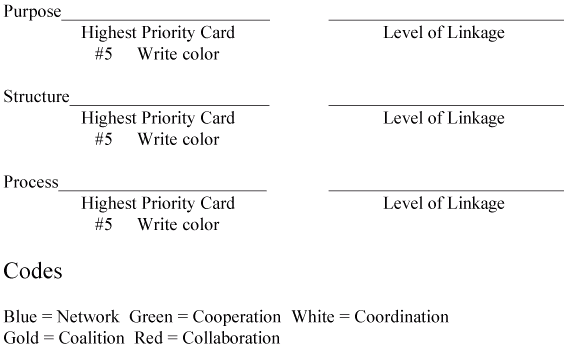
- After the participants have filled in the numbers they will be able to see what level of
community linkage they are at in terms of purpose, structure, and process. In addition
participant will be able to see if their priorities for each function area match up.
| |
| Example: |
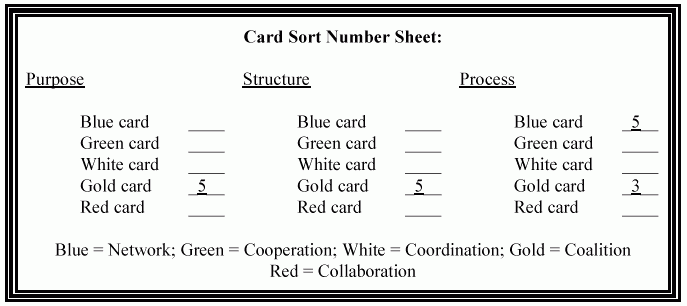
For example, someone might have scored the purpose Gold card a 5 and the structure
Gold card a 5 but scored the process Gold card a 3 and the process blue card a 5. This
indicates that they are operating at Network level of the process function even though
their purpose and structure is at then coalition level. Thus, the participant can identify
what level they are operating each of the three function areas and whether that level is the
same for each functional area. Differences in the level between function areas is an
indication of some problem to be address. For example, the individual may want to
examine his coalitions process function and identify strategies to move into operating on
the coalition process level instead of the network process level. |
|