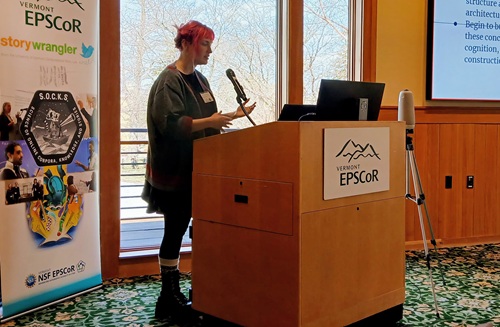
SOCKS postdoc Julia Zimmerman, PhD and Vermont Complex Systems Institute graduate research assistant Alejandro Ruiz were published in the "Matters Arising" section of npj Mental Health Research in November 2025. Their article, "A Response to Loneliness and Suicide Mitigation for Students Using GPT3-Enabled Chatbots," was a response to a 2024 article in the same journal which explored the use of AI chatbots, specifically the Replika app, in mental health crises.
Zimmerman and Ruiz discussed missing context about how Replika has been marketed and used, with an eye toward broader matters of industry interests and their effects on scientific integrity.
"To us, the authors’ apparent willingness to take Replika’s narrative at face value seriously undermines the utility and generalizability of their findings," said Zimmerman. "We see the study as symptomatic of a deeper pathology particularly acute in the AI field: science is failing to sufficiently interrogate the interests underpinning the resources used in research, even as increasingly many interested parties—like companies—fund projects, supply data and models, and co-author papers. What scientists accept uncritically becomes codified by peer review, amplified by press coverage, and used as marketing, laundering, branding, or propaganda."
The authors of the original article made a reply in npj Mental Health Research's "Matters Arising," demonstrating a scientific dialogue about the article begun by Drs. Zimmerman and Ruiz in their response.
More information about npj Mental Health Research can be found at nature.com/npjmentalhealth.