Submission information
Appalachian Trail Corridor, SAP-Ne Demonstration Site (Tyringham, MA)
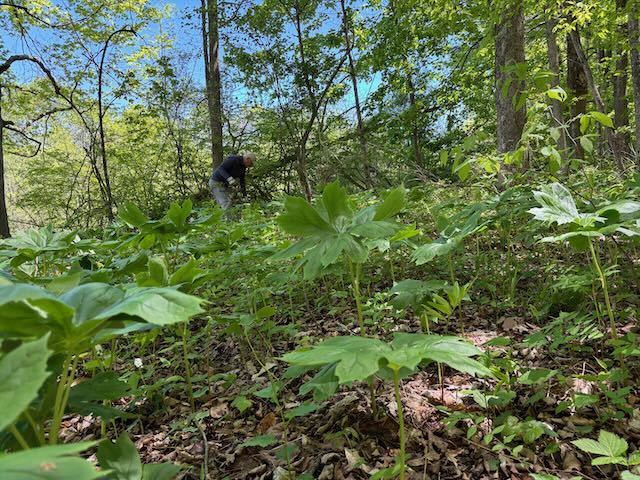
The Appalachian Trail Conservancy (ATC) treated a preservation patch of 168 white ash trees along the Appalachian Trail (A.T.) on a hillside where the trail crosses Jerusalem Road in Tyringham, MA. Some trees were first treated in 2021 and then again in 2024, and more trees were added in 2026. Emamectin benzoate was injected into the trees to protect them from the emerald ash borer. They will be treated every 3 years to preserve genetic diversity and protect seed trees for future ash regeneration. This is part of a network of 21 ash preservation sites, comprising 1378 treated trees along the Appalachian Trail, and it is the largest patch in New England. Forest stewardship practices at this site are supported in part by the Sustaining Ash Partners Network (SAP-Ne), through a demonstration site network showcasing effective approaches for preserving future generations of ash in the face of emerald ash borer.
Site Location
Tyringham, Massachusetts
Ash trees were treated along the Appalachian Trail on both sides of Jerusalem Road. The treatment area is approximately a ¾ mile stretch of the A.T. with the road in the center, comprising about 14 acres.
42.2502265
-73.2274240
From the north: Traveling on Interstate 90 (the Massachusetts Turnpike), take Exit 2 in Lee. Turn left onto US-20 East. After approximately 200 feet, turn right onto MA-102 West. Continue for 0.1 mile, then turn left onto Tyringham Road. Follow Tyringham Road for approximately 1.5 miles, then turn right onto Meadow Street. Continue for 0.8 mile, then turn left onto Fernside Road. Continue for 2 miles on Fernside Road, which becomes Jerusalem Road, to reach the Appalachian Trail crossing.
From the south: Traveling north on US Route 7 from Great Barrington, take a slight right onto MA-23 East/State Road and continue following MA-23 East for approximately 7.7 miles. Turn left onto Tyringham Road and continue for approximately 3.1 miles. Continue onto Monterey Road for 0.2 miles, then turn left onto McCarthy Road. Follow McCarthy Road for approximately 1.1 miles, then turn left onto Jerusalem Road and continue 1.4 miles to reach the Appalachian Trail crossing.
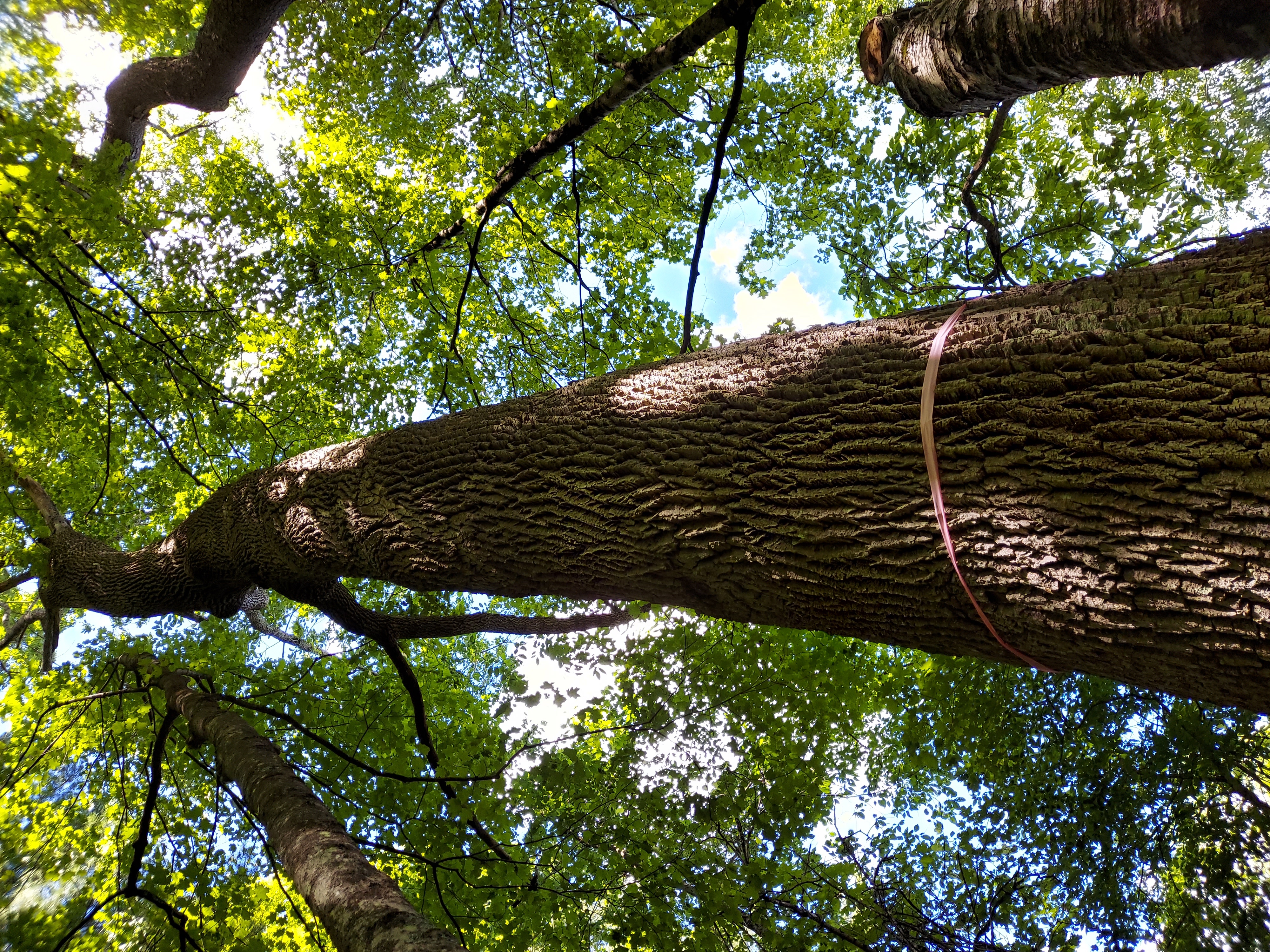
Look for wooden trail signs and white blazes on trees marking the Appalachian Trail. There is a wide place in the road just south of the trail crossing where cars can be parked. Trees have been treated on both sides of the road and are marked with round metal tree tags and dots of blue spray paint.
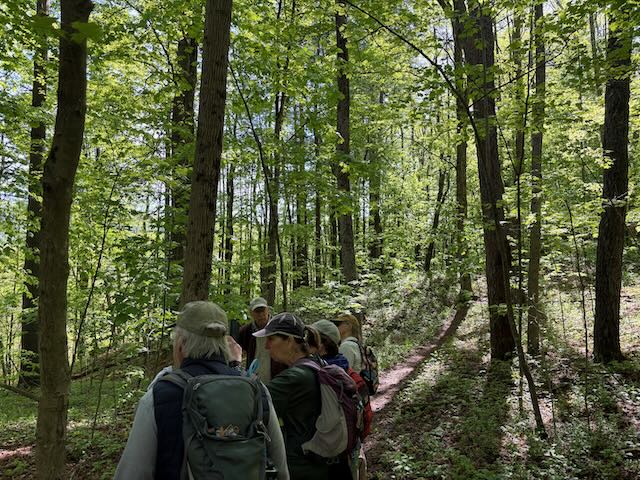
Visitors can park on Jerusalem Road and then follow the Appalachian Trail by foot through the treatment area.
National Park Service – Appalachian National Scenic Trail; Stewardship by the Appalachian Trail Conservancy
+1 802-478-0809
Stand Information
14 acre area where 168 trees were treated along ¾ miles of the A.T.
Northern Hardwoods
Rich Northern Hardwood Forest
emerald ash borer
emerald ash borer
Pre-treatment Conditions
This area was farmed and settled by a Shaker Community that was active from 1792 to 1874. The land reverted back to forest after the Shakers moved away, and there has been no recent forest management activity within the stand.
Some trees were infested with Emerald Ash Borer (EAB) before treatments began. Invasive plants in the understory, including garlic mustard, Japanese barberry, winged euonymus, border privet, and Asian bittersweet were established and displacing native plants.
Silviculture Prescription
In response to the threat posed by emerald ash borer (EAB), the Appalachian Trail Conservancy (ATC) is working to protect selected ash stands and maintain sources of seed for future forest regeneration. ATC began protecting ash trees along the Appalachian Trail in 2016 after observing the impacts of EAB in the southern Appalachians. ATC and its partners have since treated and monitored nearly 1,400 ash trees along the Trail corridor. Selected healthy ash trees are treated with a systemic insecticide, emamectin benzoate, to protect them from EAB. ATC identifies and treats intact stands of healthy ash trees, helping to preserve forest structure, canopy cover, and the habitat these forests provide for associated native species. Maintaining ash in the canopy can also reduce canopy openings, limit the influx of invasive species, and protect shade-dependent understory communities. These efforts are intended to maintain functioning forest communities and to conserve genetic diversity for ash to contribute to forest regeneration. This stand at Jerusalem Road is ATC’s largest treatment area in New England, containing 168 treated trees along ¾ miles of trail.
Conserve a reproducing population of white ash and the genetics of white ash.
ATC’s objectives for ash treatment stands are to protect concentrations of healthy ash trees from emerald ash borer while maintaining intact forest canopy, structure, and ecological function. This stand at Jerusalem Road was chosen because multiple rare plants occur here, and preserving ash trees allows the rare plants to survive as well. By treating ash at the stand and forest level, ATC seeks to reduce canopy loss, protect associated understory communities and wildlife habitat, and preserve local ash genetics for future regeneration.
168 white ash trees were treated with a systemic trunk injection of emamectin benzoate 4% (trade name: TREE-age G4 by Arborjet) at an application rate of 5mL per inch DBH using the Arborjet QUIK-jet AIR Kit. The first treatment of 132 trees occurred in 2021. In 2024, the original trees were treated again and 12 additional trees were treated. 24 more trees were added in 2026. We plan to continue to treat all of these trees every 3 years.
- forest health
- species or ecosystem restoration
Arborjet QUIK-jet AIR
It is important to mark treated trees and record their locations. GPS accuracy will get you close to previously treated trees, but then the trees must be easy to find and identify with bold paint marks and uniquely-numbered tree tags. Only live healthy trees with <30% canopy die-off are expected to survive after treatment. Tree survival between 2021 and 2024 was 96%, while many untreated trees nearby were killed by EAB.
Post-treatment
yes
Trees are monitored for health and survival between and during treatment years. Treatments are timed and dosed according to current scientific research.
Miscellaneous
Treatments will continue on a three-year cycle while healthy, viable ash remain and treatment is necessary to keep these trees alive. Treatments may eventually be discontinued when the EAB threat has substantially declined, effective biological control or other natural resistance reduces the need for protection, or sufficient natural regeneration has become established to fulfill the conservation objectives of the stand. Individual trees may be removed from treatment if they become too heavily infested or decline beyond effective treatment.
Statistics
Contact Information
Dan Hale
Senior Natural Resource and Land Stewardship Manager
Appalachian Trail Conservancy
Supplementary Content