|
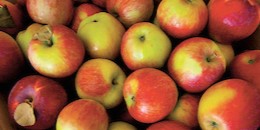
About the OrganicA Project Apples are an important component of New England’s diversified agriculture. Although there is strong interest in organic apple production, there are very few certified organic orchards because of insect and horticultural challenges plus disease challenges associated with the predominant cultivar grown in the New England region (i.e., ‘McIntosh’). However, recent shifts in consumer preference for ‘newer’ cultivars have led to the planting of different apple cultivars which have different disease susceptibility and research has identified potential alternatives to insect and horticultural obstacles to organic apple production in the region. Research knowledge is at a point where it needs to be integrated into organic production systems and evaluated holistically, including an economic analysis of potential economic costs, returns, and risks associated with the systems. Thus, we are conducting a multi-disciplinary, multi-state research project which is examining the two major production systems growers would use in changing to new cultivars and to organic production with a closely integrated organic apple extension program to disseminate research findings, information, and insights. We plan to build an interactive, vibrant community of growers, researchers, and educators (academic/extension) for the exchange and generation of information and knowledge to enhance adoption of organic practices and to improve the competitiveness of organic apple producers by enhancing their ability to grow and market high quality apples. Students (undergraduate and graduate) who are considering careers in agriculture or just want to be informed on organic production systems need classroom and in-field learning on organic principles and the complex issues associated with organic agriculture. We developed an Organic Fruit Production course in which students applied organic principles, examined practical aspects, and dealt with the multi-dimensional aspects of organic fruit production. Options for experiential learning included participating in organic research, in extension education (e.g., developing organic resource material), and in on-farm problem solving. The long-term goal of this project is to enhance adoption of organic apple production in New England through: (i) establishing an integrated and collaborative certified organic farm at the University of Vermont, a land-grant institution, for the development and implementation of research which addresses opportunities and constraints to organic apple production; (ii) implementing a comprehensive organic apple extension program for current and prospective apple growers within the region; and (iii) developing an educational program for both graduate and undergraduate students in organic fruit production. We envision this project to span 6-9 years. Project Objectives: Obj. 1. Incorporate and evaluate ‘new’ apple cultivars and research-generated knowledge of apple ecosystem dynamics into organic production systems to determine sustainability and profitability. In essence, the questions being researched in this project are:
Obj. 2. Collaboratively develop and implement with stakeholders a multi-dimensional extension program that addresses their priorities and needs and improves the competitiveness of organic apple producers. Obj. 3. Collaboratively develop a course on organic fruit production that effectively integrates classroom and experiential learning and that includes principles, practical aspects, and complexities of organic production. Brief Highlights of Accomplishments (Years 1, 2, 3): [Also, please see additional highlights on our Project Welcome page or see the full Progress Report pages]
|