Home
Waldniel (Provinzial Heil- und Pflegeanstalt Johannistal zu Süchteln,
Teilanstalt Waldniel)
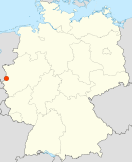
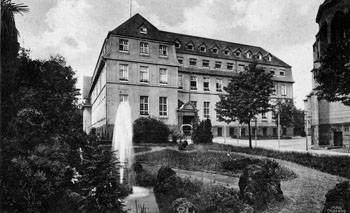
The facility Waldniel became a branch of the Provinzial Heil- und
Pflegeanstalt Johannistal zu Süchteln in 1937, after the Franciscan order
that had run the establishment as the St. Josefsheim since 1909 was forced
to declare bankruptcy and the administration of the Rhenish province assumed
the property. The Kinderfachabteilung in Waldniel came into existence when
in August 1941 the head of the Rhenish provincial administration
(Landeshauptmann) Heinz Haake agreed to the demands of the "Reichsausschuss"
(Brack, Hefelmann, v. Hegener) to have at least one special children's ward
established in the Rhenish province. After no local doctor was found to head
it, Dr. Georg Renno was sent to Waldniel, which formally was under the
directorship of the director of the facility in Süchteln, Dr. Kleine, in
October 1941. Dr. Renno had previously worked in the Landesheil- und
Pflegeanstalt Leipzig-Dösen, itself the location of a special
children's ward since October 1940 (see Kinderfachabteilung Leipzig-Dösen),
where he was involved in the development of director Hermann Nitsche's
infamous "Luminal-Schema," which led to the death of more than 100 patients
during testing. He was also the assistant director of the T4 gassing
facility in Hartheim. According to a letter of 22 December 1941 by Viktor
Brack, the "activities" in Waldniel had not yet started then, although there
was a special allocation (Sonderzuwendung) to Waldniel personnel working for
the Reichsausschuss in 1941. The first children were transferred from the
institution of Gangelt on 16 December 1941. Dr. Renno soon contracted
tuberculosis of the lung and left. Prior to his departure he signed two
death certificates on 27 January 1942. His successor was to become Hermann
Wesse, who on the insistence of Dr. Walter Creutz, the provincial
administrator responsible for medical facilities, underwent a pediatric
psychiatric internship (in the Kinderfachabteilung Brandenburg-Görden as
well as the Rheinische Landesklinik für
Jugendpsychiatrie in Bonn (Rhenish State Clinic for Pediatric Psychiatry)
prior to his assuming responsibility for the special children's ward on 1
October 1942. In the meantime, Dr. Hildegard Wesse, his wife, was the
interim physician, and during this period a total of eight children died.
The relatively very low number of deaths has led researchers to conclude
that the special children's ward did not actually operate until Hermann
Wesse took over. A special arrangement existed in so far as the assessment
reports to the Reichsausschuss were reviewed and co-signed by Dr. Hans Aloys
Schmitz, the head of the Rhenish State Clinic in Bonn. He had been asked to
do so by Dr. Creutz, who was skeptical of Hermann Wesse's abilities.
The Kinderfachabteilung, located in the "Schutzengelhaus" (the house of the
guardian angel) was closed at the beginning of July likely due to the
increase of Allied aerial bombing in the area, and the remaining 183
children transferred to special children's wards at Brandenburg-Görden,
Uchtspringe, Lüneburg, Ueckermünde and Ansbach.
During Hermann Wesse's time as physician responsible for the special
children's ward, 15 children died in 1942 and 76 in 1943. These numbers are
derived from bureau of vital statistics (Standesamt) in Waldniel (see Zöhren
1988, p. 26). Additionally, outside the Reichsausschussverfahren, six
children of female forced laborers died there as well.
After Waldniel, Hermann Wesse with his wife went to Leipzig-Dösen, the
location of another Kinderfachabteilung, and then assumed responsibility for
the special children's wards in Uchtspringe and Kalmenhof (see
Kinderfachabteilung Uchtspring and Kinderfachabteilung Kalmenhof). At his
trial in Düsseldorf for the murders at Waldniel the court established in
1948 that 93 children had died, of which 30 (between the ages of 2 and 8)
were considered confirmed to have been murdered. The investigations of the
state attorney's office are reported to have resulted in a list of 98 deaths
of children between 27 January 1942 and 1 August 1943. The sentence was life
in prison (later commuted to 12 years; for further information on Hermann
Wesse's criminal conviction, see Kinderfachabteilung Uchtspringe). Dr.
Renno, after dealing with illnesses, returned to Hartheim in 1943 and become
involved in the "Aktion 14f13," the murder of sick concentration camp
inmates. He was never found guilty in a court of law and died in 1997. Dr.
Hildegard Wesse became responsible for the special children's ward in
Uchtspringe in 1943 (see Kinderfachabteilung Leipzig). She was never charged
for her deeds at Waldniel and was acquitted for her involvement in the
killing of children at Uchtspringe but convicted of manslaughter for killing
30 adult women there (see Kinderfachabteilung Uchtspringe). Dr. Schmidtz was
dismissed from office by the British authorities but was found not guilty in
a trial in terms of his involvement in "euthanasia" actions and was
reinstated as the director in 1947, which he remained until his retirement
in 1964. He died in 1983. Dr. Kleine served as a witness in trials of
personnel and administrators concerning Waldniel. He was put on leave as
director of the Provinzial Heil- und Pflegeanstalt Johannistal zu Süchteln
and dismissed in 1947. After his denazification procedure was over, he was
rehired and served as a senior health officer. He retired in 1961 and died
in 1968.
Commemoration of the events at Waldniel has been unusual in three ways.
First, it began relatively early; second, activities leading to
commemoration have been carried by local individuals and civic groups who
relied on personal initiative; and third, documentation of these events is
available in extraordinary detail via a website.
Between the end of WWII and the early 1990s the use of the facilities at
Waldniel included those of a British military hospital and school (the Kent
and the Windsor school). After in 1951 burials had ended in the cemetery of
the facility, which housed about 900 patient graves, including at least 76
of children for the years 1942 and 1944, bone fragments were discovered when
homes were erected for the British forces, indicative of the fact that the
property adjacent to the cemetery had been used as burial ground. A cross
was erected in 1962 with a typical dedication for the period, which did not
mention patients or "euthanasia" ("To the Dead in this Cemetery. The Fallen
Heroes [19]14-18 [19]39-1945"). Feedback from former students indicates that
students might have been well aware of the murder of children there, though
perhaps the historical details might not have been known to them. At the
time it appears that the directorship of the Kent school was not keen on
informing students about the events at the facility during the Nazi period.
An issue of the "Kent Chronicle" in the mid 1960s did not refer to the
Kinderfachabteilung in its historical overview. Some former students of the
Kent School contacted by this researcher indicated that they may have been
vaguely aware of atrocities during the Nazi period, although much of that
may have been based on rumors.
 Source:
http://www.waldniel-hostert.de/Web_Galerie/images/02006GedenkkreuzTafelre.jpg
Source:
http://www.waldniel-hostert.de/Web_Galerie/images/02006GedenkkreuzTafelre.jpg
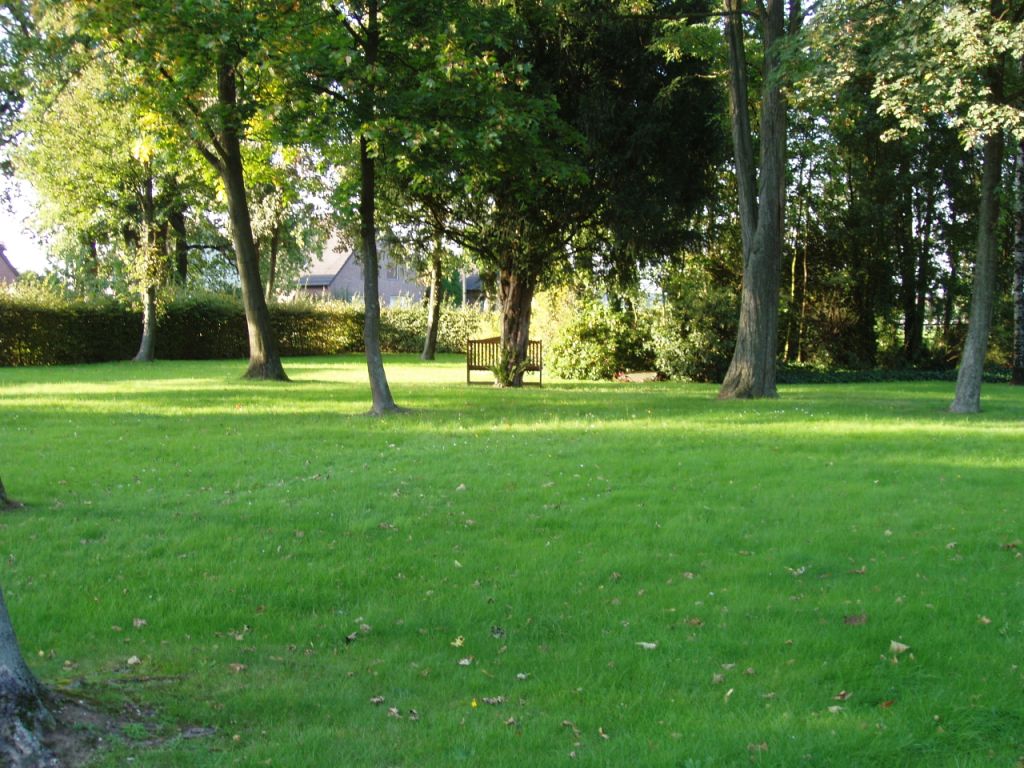
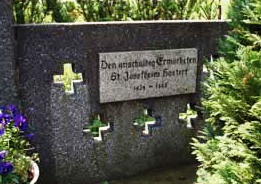
The cross was relocated in 1979 to the park of a newly built church in the
vicinity, where in 1982 new texts were added to the sides, including one
that reads "Den unschuldig Ermordeten/St. Josefsheim Hostert/1939-1945" ("To
the innocently murdered/Home of St. Josef, Hostert/1939-1945). This was the
first express reference, though still somewhat veiled, to the events in the
Kinderfachabteilung.
In 1985 the past history of the Kinderfachabteilung began to be rediscovered
when a citizen of Waldniel saw a reference to the Kinderfachabteilung
Waldniel in an exhibit on "euthanasia" crimes in Cologne, "Heilen und
Vernichten im Nationalsozialismus" (Healing and Extermination in National
Socialism), which was one of the very first exhibits on the subject matter
in Germany (see exhibits). A citizens' petition was filed with the town
council to place a commemorative plaque at the Kent school, and a regional
newspaper ran a story on the Kinderfachabteilung. In the council's
discussion, one of the councilor alluded to already existing practices of
commemoration in sermons and processions of the local Catholic community -
if accurate, such practices would have been among the earliest
manifestations of this type of commemorative practice for such children
anywhere. The outcome of the town council's and town mayor's deliberations
was a resolution in 1986 not to erect a display but rather to lease the
cemetery grounds from its owner and to turn it into a memorial.
Subsequently, the local secondary school was asked whether it wanted to take
over the upkeep of the memorial, and it did. The students and one of their
teachers, Peter Zöhren, not only restored the overgrown cemetery to its
appropriate form, but also put together an exhibit on the "euthanasia"
crimes that had been committed (here and here). Based on the students' activities, the research
of researchers at the psychiatric clinic in Viersen to shed light on
"euthanasia" crimes there (see below), and his own inquiries, Peter Zöhren
published a detailed account in 1988, "Nebenan - eine andere Welt" (Next to
us: A different world).
 Source: Author.
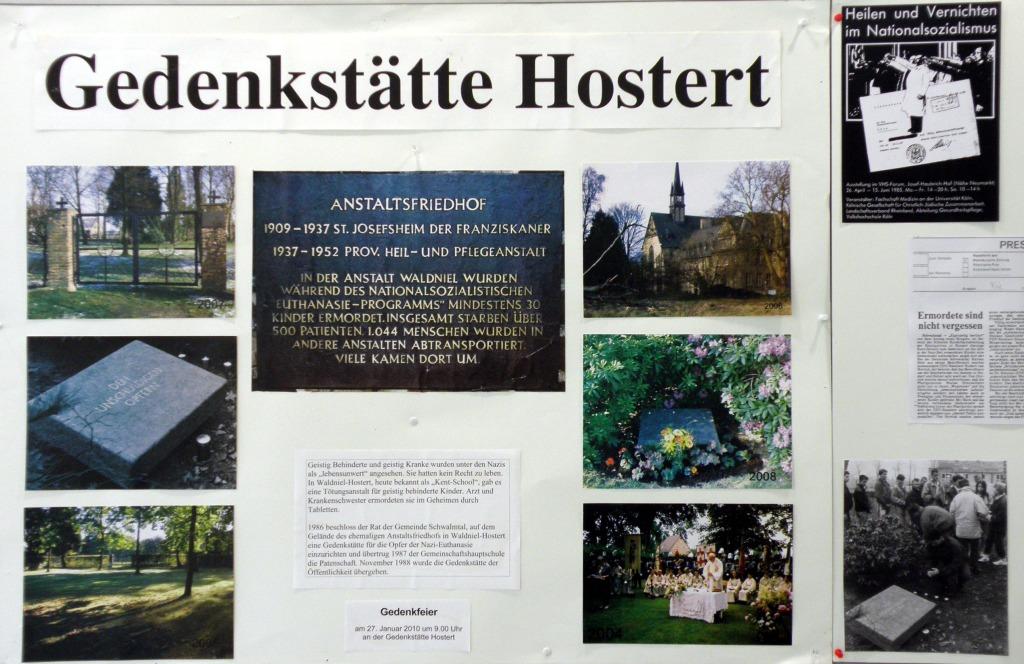
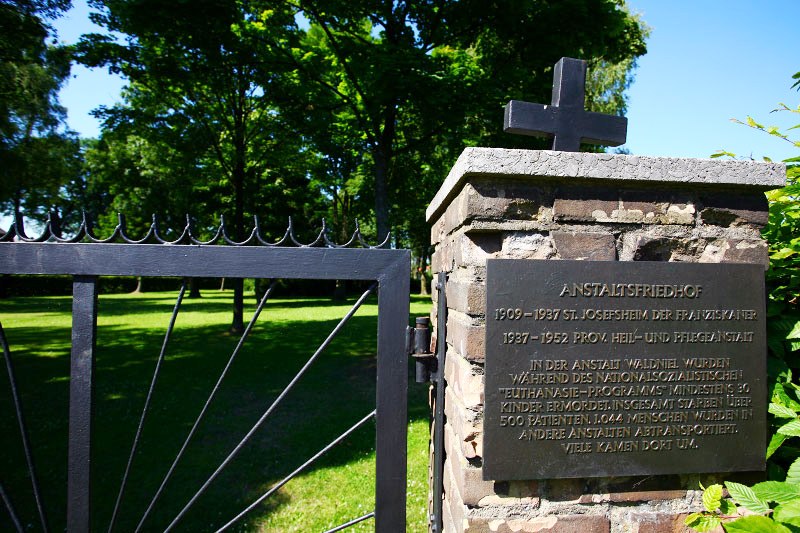
A bronze display was placed next to the entry door of the cemetery that
reads "Anstaltsfriedhof - 1907-1937 St. Josefsheim der Franziskanier -
1937-1952 Prov. Heil- und Pflegeanstalt - In der Anstalt wurden während des
Nationalsozialistischen "Euthanasie-Programms" mindestens 30 Kinder
ermordet. Insgesamt starben über 500 Patienten. 1044 Menschen wurden in
andere Anstalten abtransportiert. Viele kamen dort um" (Cemetery of the
facility - 1907-1937 Home of St. Josef of the Fransciscans - 1937-1952 Care
facility of the Communal Association of the Rhenish province - During the
National-Socialist "euthanasia-program" at least 30 children were murdered
in the facility. In all, more than 500 patients died. 1,044 persons were
transported to other facilities. Many of them perished in those).
Sources:
http://www.waldniel-hostert.de/Web_Galerie/images/01988EinweihungStein.jpg;
author.
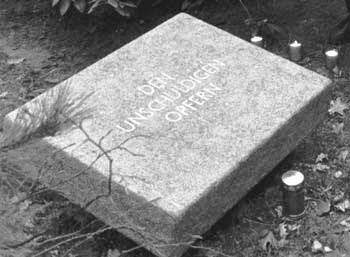
A memorial stone was placed at the memorial site at the same time. It has
the inscription "Den unschuldigen Opfern" ([Dedicated] To the innocent
victims). The memorial was dedicated on 26 November 1988.
At the time, a working group at the LVR-Klinik Viersen formed to explore the
involvement of the clinic in NS "euthanasia." Patient records of victims,
including more than 60 records of children who had died in the children's
ward, had been found in a cellar of the administrative building in 1986. At
the entrance of the building a commemorative display was placed in 1989:
"During National Socialism several hundred patients of the then
Provinzialanstalt Johannistal/Süchteln were transported [to other
facilities] and to a large extent, murdered. In the special children's ward
of the branch facility Waldniel at least 30 disabled children were killed.
Their fate admonishes us to monitor our actions" (In der Zeit des
Nationalsozialismus sind mehrere hundert Patientinnen und Patienten der
damaligen Provinzialanstalt Johannistal/Süchteln abtransportiert und zu
einem grossen Teil ermordet worden. In der Kinderfachabteilung der
Teilanstalt Waldniel wurden mindestens 30 behinderte Kinder getötet. Ihr
Schicksal mahnt zur Überprüfung unseres Tuns). Annual memorial events take
place there (see here)
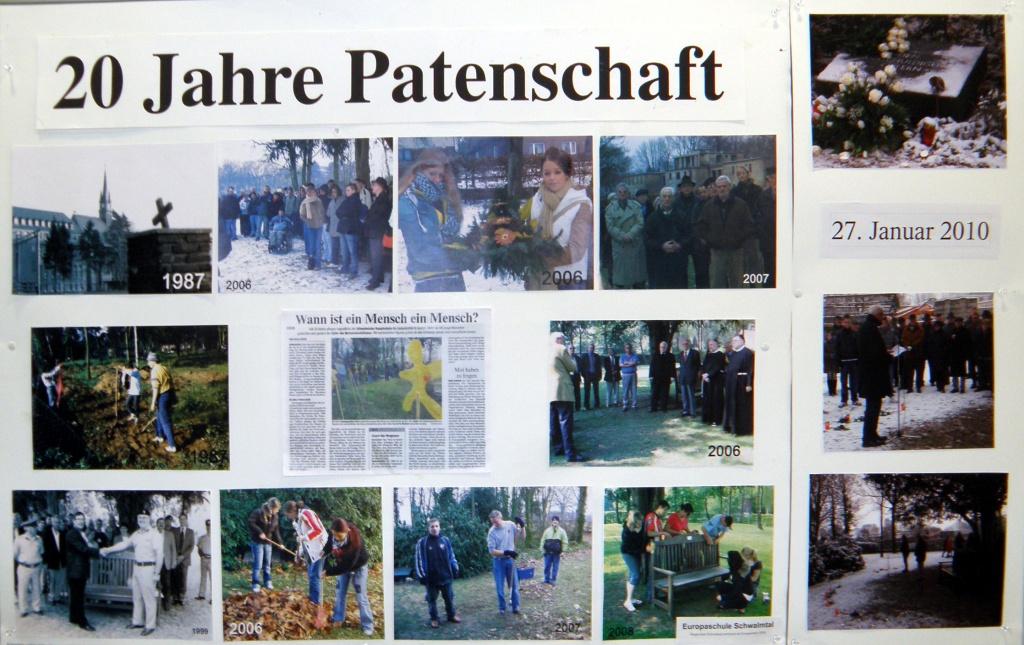
Since then, there have been numerous commemorative events, which over the
years have involved various individuals, groups, and organizations. These
events are chronicled in detail on the web site of the Gedenkstätte Waldniel-Hostert, which is supported by
Peter Zöhren and has existed since 2006. The website of the LVR-Klinik
Viersen, the successor of the Heil- und Pflegeanstalt Johannistal zu
Süchteln, in its section pertaining to its department of psychiatry and
psychotherapy (Fachbereich Psychiatrie und Psychotherapie) has a detailed overview of the history of the clinic that includes
the murder of patients during the Nazi period and the events at Waldniel.
The website of
former students of the Kent School also informs about the special
children's ward in its history section, although the information seems to be
a translation of Peter Zöhren's website.
Source: P. Zöhren
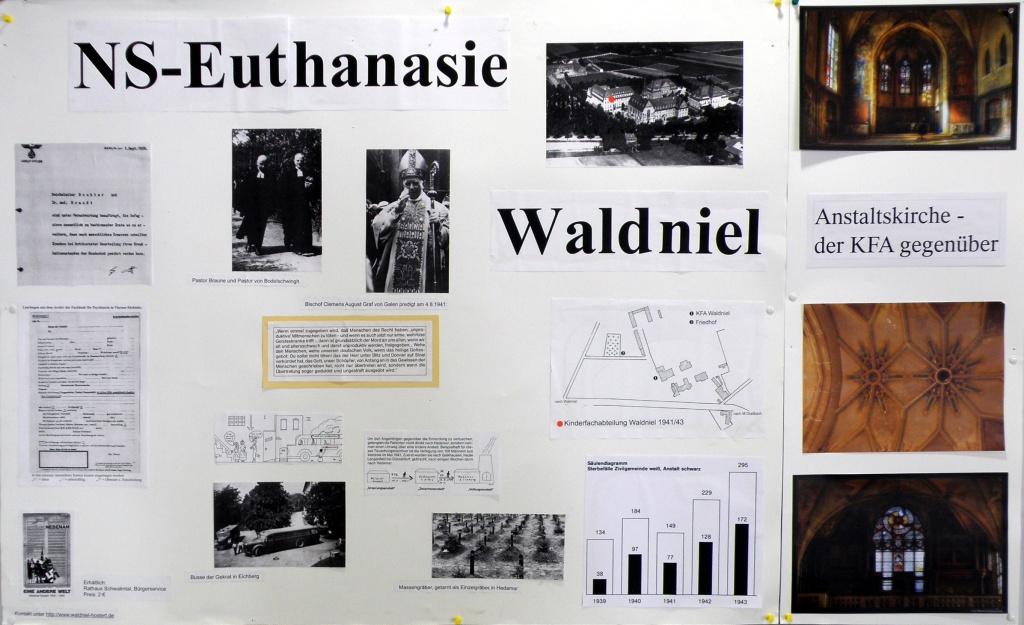
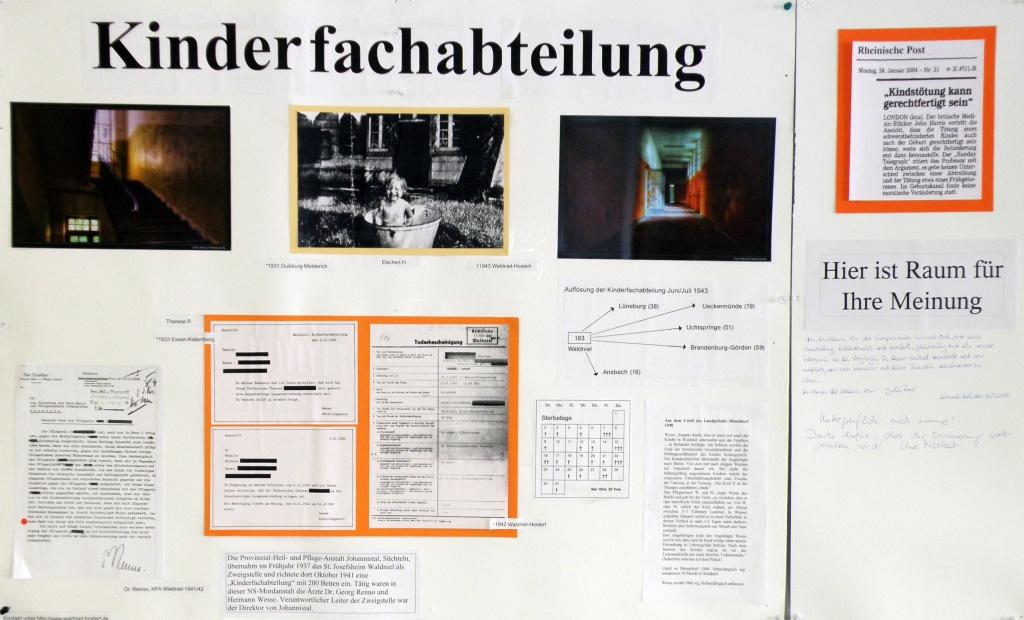
In early 2010, a small exhibit by Peter Zöhren was shown in Lobberich and
Waldniel.
Source:
http://www.waldniel-hostert.de/Web_Galerie/images/01942Elschen.jpg;
http://www.waldniel-hostert.de/Web_Galerie/images/0200708Stolperstein02.jpg
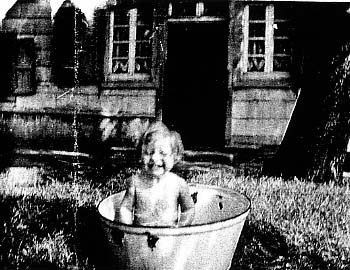
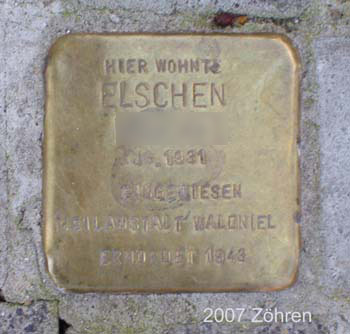
The website of the Gedenkstätte Waldniel-Hostert also informs about one of
the victims, Elschen, for whom a "stumbling block" was placed at the place
where she grew up in Duisburg. A relative of the child visited the memorial
site as part of the memorial services in 2007. A block for another victim
has been put in the ground in 2012 in Krefeld (see here).
Sources:
http://www.waldniel-hostert.de/Web_Galerie/original/Hostert_1008.html;
http://www.fotocommunity.de/pc/pc/display/18437196
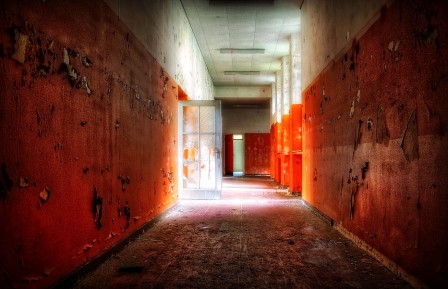
The facility itself is in private hands (it is for sale) and in a
dilapidated condition. Access is not permitted without permission of the
owner and highly unsafe. Occasionally access is granted to groups wishing to
see the historical facilities. It is used commercially for photo shoots and
action tv due to its architecture.
New research on the perpetrators at Waldniel and their victims by Andreas
Kinast has been published in 2010. One story that addresses his research is
featured here.
A video on the subject matter, which also addresses Elschen, is available on
youtube (http://www.youtube.com/watch?v=s1O2WVDeaUw).
 Source:
http://www.waldniel-hostert.de/Web_Galerie/images/020140127_4.JPG
Source:
http://www.waldniel-hostert.de/Web_Galerie/images/020140127_4.JPG
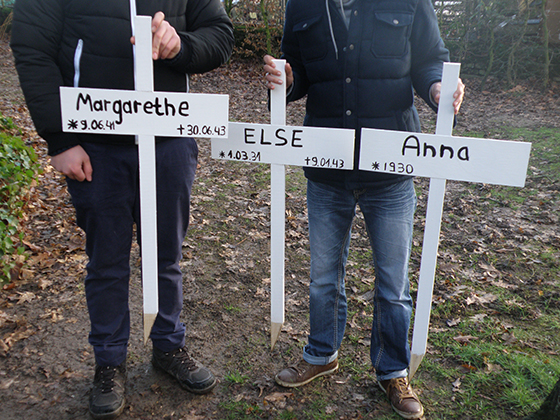
In January 2014, four crosses representing four of the about 100 murdered
minors were placed at the memorial site. As part of a remake of the older
film "NS-Euthanasia in the Rhineland," sequences for the remake were shot at
Waldniel with youth actors in the fall of 2014. The film is scheduled for
release in 2015 (see here).
Toward the end of 2014, a press report in a local newspaper addresses the
discovery of bones, possibly of victims of the "special children's ward," in
the backyard of a local home owner whose property abuts the memorial
facility. It has been known for some time that the historical cemetery had
been too small to house all the remains of the persons who died at Waldniel
during WWII, and that adjacent properties had been used as an extension of
the cemetery. Fragments have occasionally been found for many decades now,
but the report serves as a reminder of an unusual situation that continues
to disturb local residents and relatives of victims.
In early 2015, a stumbling block for child victim Margarethe Papendell, who
died at Waldniel in 1943, was placed at the former location of her family's
home in Krefeld (see here).
Peter Zöhren's website provides updates here: http://www.waldniel-hostert.de/archiv1.html.
A new concept for a potentially extended memorial site is planned.
Literature
Arbeitskreis zur Erforschung der
nationalsozialistischen "Euthanasie" und Zwangssterilisation, ed. 2013. Schatten und Schattierungen: Perspektiven
der Psychiatriegeschichte im Rheinland. Munster: Klemm +
Oelschläger. See especially Andreas Kinast, "Die Tötung behinderter Kinder
in der Kinderfachabteilung Waldniel 1941 bis 1943" (pp. 87-106) and Peter
Zöhren, "Waldniel-Hostert" (pp. 107-110)
Benzenhöfer, Udo. 2003. "Genese
und
Struktur der 'NS-Kinder- und Jugendlicheneuthanasie.'" Monatsschrift
für Kinderheilkunde 151: 1012-1019.
Castell, Rolf, Jan Nedoschill,
Madeleine Rupps, and Dagmar Bussiek. 2003. Geschichte
der Kinder- und Jugendpsychiatrie in Deutschland in den Jahren 1937 bis
1961. Göttingen: Vandenhoeck & Ruprecht.
Forsbach, Ralf. 2006. Die
Medizinische Fakultät der Universität Bonn im Dritten Reich.
Munich: Oldenbourg Verlag.
Horsinga-Renno, Mireille. 2008. Der
Arzt von Hartheim: Wie ich die Wahrheit über die Nazi-Vergangenheit
meines Onkels herausfand. Reinbek bei Hamburg: Rowohlt.
Kaelber, Lutz. 2010. “Virtual Traumascapes: The
Commemoration of Nazi ‘Children's Euthanasia’ Online and On Site.” Digital Icons: Studies in Russian, Eurasian
and Central European New Media 4 (2010): 13-44. Available here.
Kaminsky, Uwe. 1995. Zwangssterilisation
und "Euthanasie" im Rheinland: Evangelische Erziehungsanstalten sowie
Heil- und Pflegeanstalten 1933-1945. Cologne: Rheinland-Verlag.
———. 2009. "'Euthanasie ' im Rheinland:
Verlegung und Krankenmord." Pp. 37-72 in "...wir
waren samt und sonders gegen die Durchführung der Euthanasie-Aktion":
Zur NS-"Euthanasie" im Rheinland, edited by the Arbeitskreis zur
Erforschung der nationalsozialistischen "Euthanasie" und
Zwangssterilisation. Münster: Klemm und Oelschläger.
Kinast, Andreas. 2010. "Das Kind ist
nicht abrichtfähig": "Euthanasie" in der Kinderfachabteilung Waldniel
1941-1943. Cologne: shVerlag.
———. 2011. "
Kindermord in Waldniel und die Legende vom rheinischen
Widerstand." Pp. 121-44 in Kindermord
und «Kinderfachabteilungen» im Nationalsozialismus, edited by
Lutz Kaelber and Raimond Reiter. Hamburg: Lang.
Kohl, Walter. 2000.
"Ich fühle mich nicht schuldig": Georg Renno, Euthanasiearzt.
Göttingen: Steidl.
Orth, Linda. 1989. Die
Transportkinder aus Bonn: "Kindereuthanasie." Cologne:
Rheinland-Verlag (see esp. the chapter by Schulte).
Prost, Heinz. 2003. Rheinische
Kliniken Viersen im Wandel der Zeit. 2d edition. Willich: n.p.
Puvogel, Ulrike, and Martin Stankowski. 1996. Gedenkstätten
für die Opfer des Nationalsozialismus, vol. 1. 2d ed. Bonn:
Bundeszentrale für politische Bildung. Available at http://www.bpb.de/files/5JOYKJ.pdf.
Seipolt, Harry. 1993. "'Reichsausschusskinder' im Kreis
Heinsberg, 1939-1945." Heimatkalender
des Kreises Heinsberg 22: 123-35.
———. 1995. ..Kann
der Gnadentod gewährt werden: Zwangssterilisation und NS-"Euthanasie" in
der Region Aachen. Aachen: Alano Herodot.
Stierl, Sebastian. 1989. Die
Heil- und Pflegeanstalt Johannistal/Süchteln und die Euthanasie.
Viersen: n.p.
Süß, Winfried. 2003. Der "Volkskörper" im Krieg:
Gesundheitspolitik, Gesundheitsverhältnisse und Krankenmord im
nationalsozialistischen Deutschland 1939–1945. Munich: Oldenbourg
Wissenschaftsverlag. pp. 327-39.
Topp, Sascha. 2004. “Der ‘Reichsausschuss zur
wissenschaftlichen Erfassung erb- und anlagebedingter schwerer Leiden’:
Zur Organisation der Ermordung minderjähriger Kranker im
Nationalsozialismus 1939-1945.” Pp. 17-54 in Kinder in der
NS-Psychiatrie, edited by Thomas Beddies and Kristina Hübener.
Berlin-Brandenburg: Be.bra Wissenschaft.
———. 2005. "Der 'Reichsausschuß zur wissenschaftlichen
Erfassung erb- und anlagebedingter schwerer Leiden': Die Ermordung
minderjähriger Kranker im Nationalsozialismus 1939-1945." Master's Thesis
in History, University of Berlin.
Vormbaum, Thomas. ed. 2005. "Euthanasie"
vor
Gericht: Die Anklageschrift des Generalstaatsanwalts beim OLG
Frankfurt/M. gegen Dr. Werner Heyde u. a. vom 22. Mai 1962.
Berlin: Berliner Wissenschafts-Verlag. Pp. 87-88.
Zöhren, Peter. [1988] 2005. Nebenan
- eine andere Welt: Vom Schicksal der Behinderten in der Anstalt
Waldniel-Hostert, 1909-1945. N.p.: N.p.
Zöhren, Peter. 1991. "Die 'Kinderfachabteilung'
Waldniel." In Psychiatrie im Abgrund:
Spurensuche und Standortbestimmung nach den NS-Psychiatrie-Verbrechen,
edited by R. Seidel and W. Werner. Cologne: Rheinland-Verlag.
———. 2008. "Gedenkstätte Waldniel Hostert 1988-2008."
Pp. 89-102 in Heimatbote Schwalmtal,
ed. by Walter Arretz.
Concerning "Euthanasia" trial(s)
for this location
Bauer, Fritz et al., eds. 1968-1981. Justiz
und
NS-Verbrechen: Sammlung deutscher Strafurteile wegen
nationalsozialistischer Tötungsverbrechen, 1945-1966. Amsterdam:
University Press Amsterdam. Nos. 102, 191, 282, 339, 380, 480.
Bryant, Michael S. 2005. Confronting
the "Good Death": Nazi Euthanasia on Trial, 1945-1953. Boulder:
University of Colorado Press. Pp. 150-63.
Mildt, Dick de. In the Name of the
People: Perpetrators of Genocide in the Reflection of Their Post-War
Prosecution in West Germany: The 'Euthanasia' and 'Aktion Reinhard'
Trial Cases. The Hague: Martinus Nuhoff Publishers. Pp. 132-5.
Last updated on 8 Feb.
2015