Home
[Polskie tłumaczenie]
Loben [Lubliniec] (Heil- und Pflegeanstalt Loben)
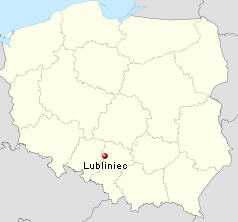
The Kinderfachabteilung in Loben/Lubliniec was established in December 1941
at the latest (according to Uzarczyk 2012, in November 1941; or perhaps as
early as August 1941; see Uzarczyk 2013) and continued until toward the end
of 1944, possibly the first special children's ward on what today is the
state of Poland. Dr. Ernst Buchalik was the clinic director and responsible
for the special children's ward, and Dr. Elisabeth Hecker was the director
of the pediatric psychiatric unit from where she reported children to the
Reichsausschuss with negative evaluations and subsequently had them
transferred to the special children's ward.
After the end of WWII, Dr. Buchalik practiced medicine in the German
Democratic Republic (beginning in September 1945) before moving to West
Germany in 1957 and then working at the Westfälisches Landeskrankenhaus in
Niedermarsberg (itself the location of a Kinderfachabteilung in Nazi Germany
- see Niedermarsberg).
Dr. Hecker left Lubliniec in early 1945 for the Sudentengau and then
Bavaria. She worked as country doctor, and as psychiatrist in Siegen. She
then worked briefly in Niedermarsberg before becoming the first director of
the Westfälische Klinik für Jugendpsychiatrie in Gütersloh (since 1965:
Hamm). She retired in 1960 and received in 1979 the Federal Cross of Merit
and was an honorary member of the German Society for Child and Juvenile
Psychiatry before her death in 1986. The state attorney's office in Dortmund
conducted investigations against both doctors from the mid-1960s to the
mid-1970s. The investigation was prompted by a West German acquaintance of
Dr. Buchalik listing to an East German radio broadcast in which he believed
that Dr. Buchalik's name was mentioned in the context of Nazi crimes in
Poland. The trial proceedings were stopped in the 1970s, after two
pharmacologists claimed in expert opinions that the dosages of Luminal that
were administered to the children could not have been deadly.
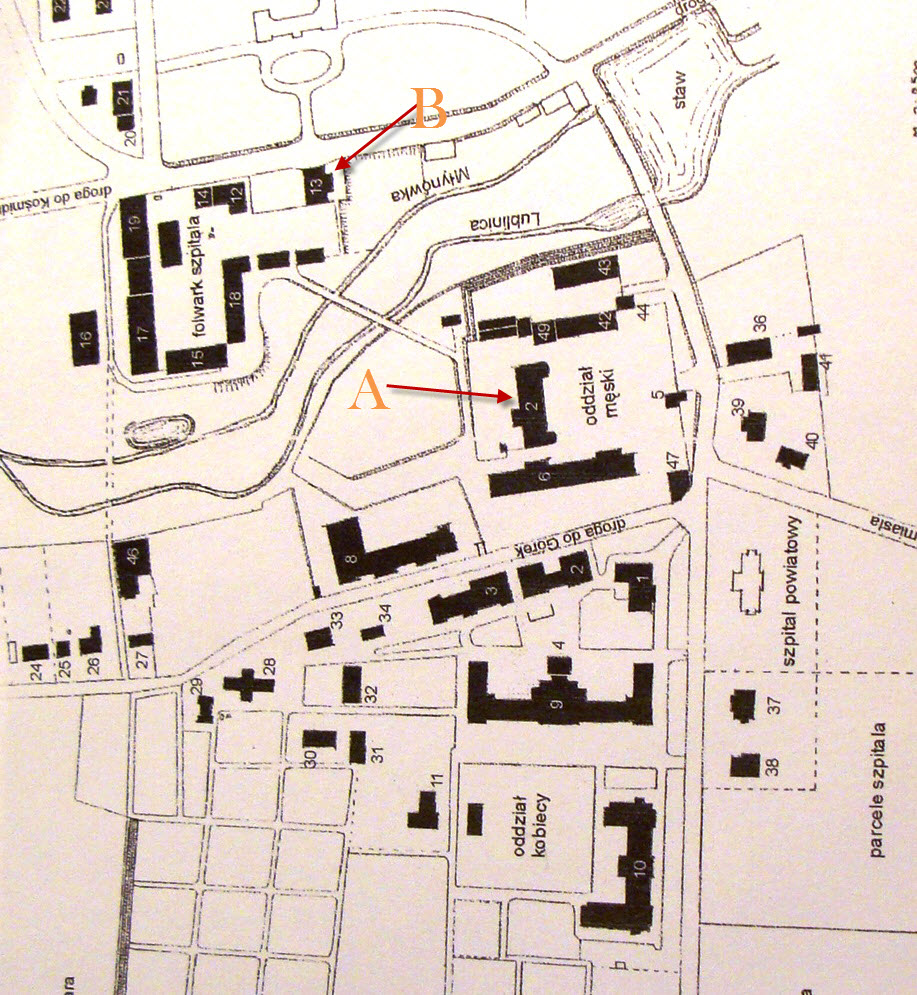
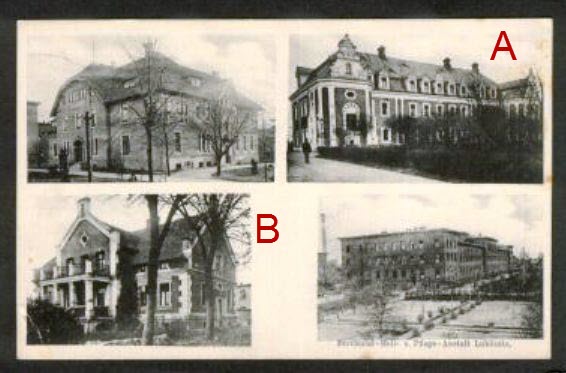
Hospital map in 1911; postcard of 1909; picture:
Krupka-Matuszczyk/Bloch 1993, p. 175; http://www.zameklubliniec.pl/;
private contributor.
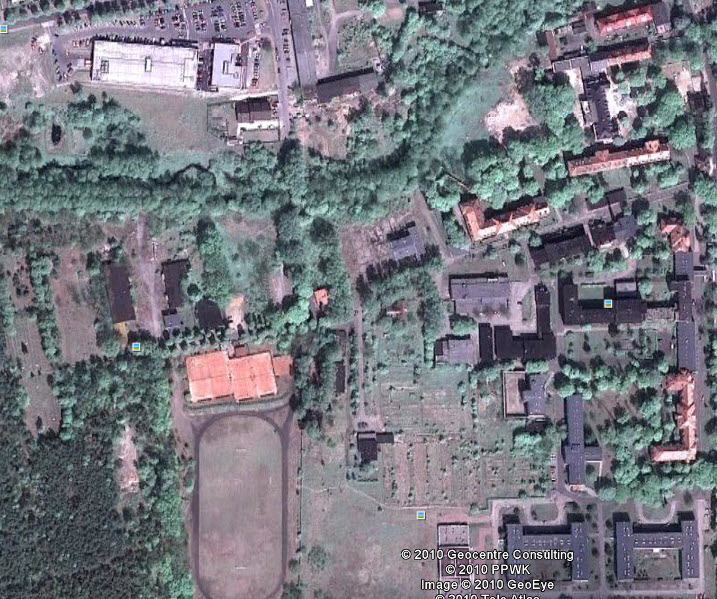
During WWII, the clinic had a capacity of about 1,500. In 1941 Dr. Buchalik
became responsible for establishing a pediatric psychiatric facility in the
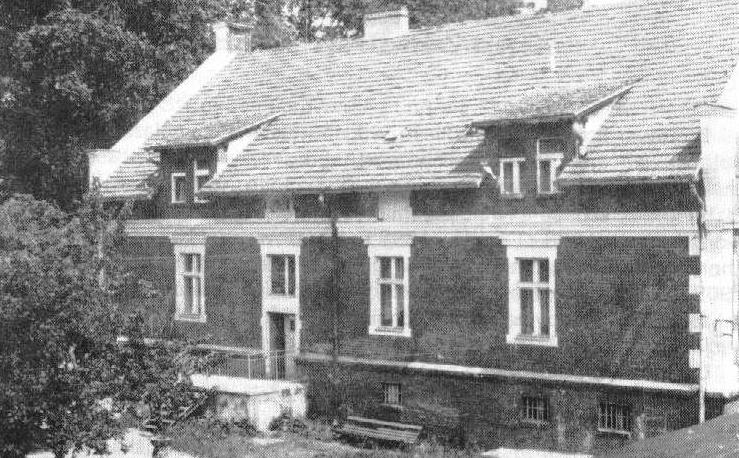
Loben hospital, which had two stations: A, for which Dr. Hecker became
responsible, with a capacity of about 60 beds in a wing of what today is
known as the castle. It was called the pediatric psychiatric clinic; its
purpose was to diagnose and evaluate pediatric patients. Those who had a
favorable assessment were transferred to other facilities, whereas those who
were considered beyond therapy (therapieunfähig) were transferred to station
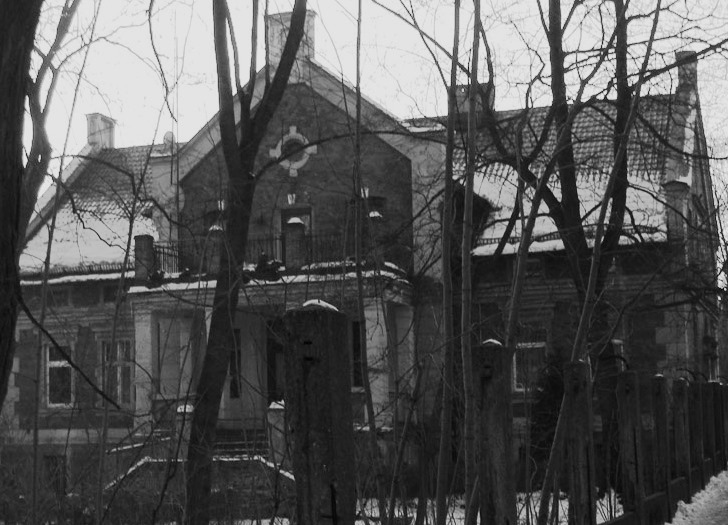
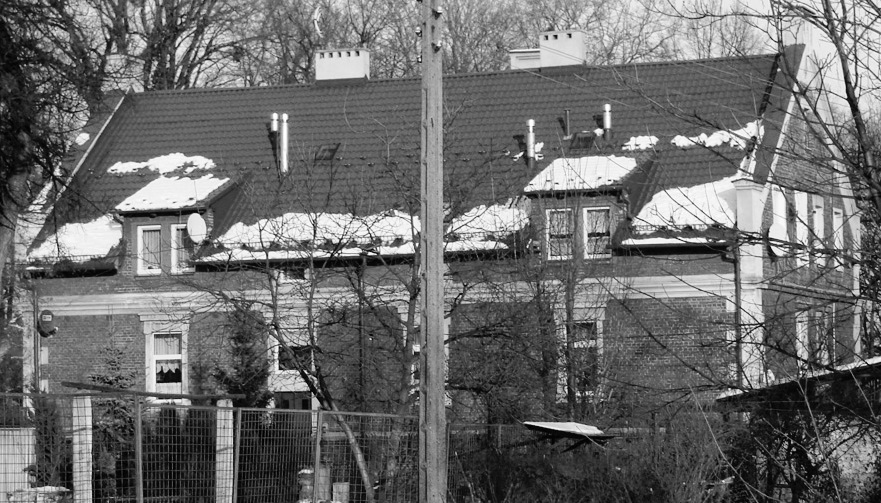
B. Station B was not located on the clinic premises but rather in an
outlying estate building (Vorwerksgebäude) close by. Station B was the
location where the children were poisoned. The castle has been extensively
renovated and operates as a hotel today (http://www.zameklubliniec.pl/),
whereas the building for station B is a private residence.
 Source:
Moska, p. 113
Source:
Moska, p. 113
 Source: Moska, p. 113
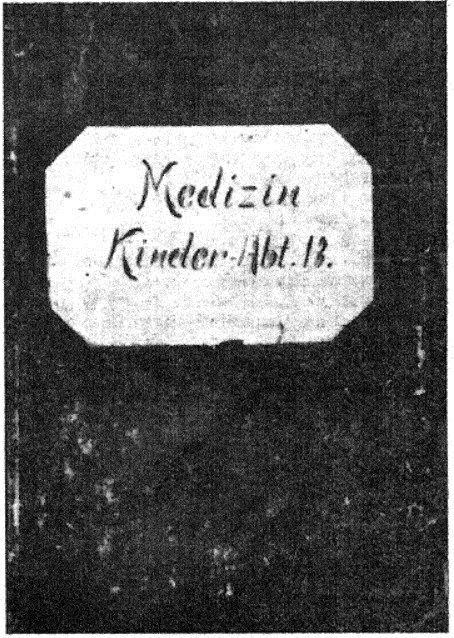
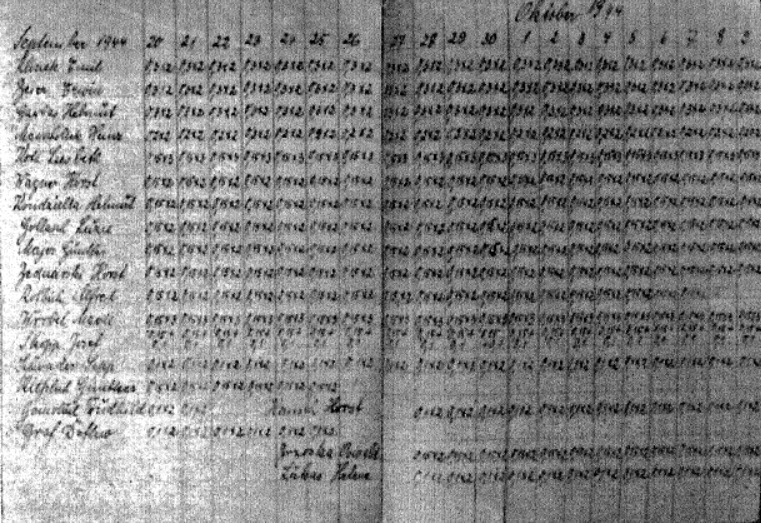
Right after the war a medical booklet was discovered ("Medizin Kinder-Abt.
B," or the "Luminalbuch") that contained the dosages of barbiturates given
to children in station B (for the period from 15 August 1942 to 31 October
1941), of whom all or almost all were very likely children of the
Reichsausschussverfahren. It must be emphasized that the booklet does not
contain a complete record of all children of the Kinderfachabteilung. Polish
physicians Dr. Marxen and Dr. Latynski reported at the time that 235
children from ages up to 14 were listed in the booklet, of whom 221 had died
(likely from poisoning).
As part of a more extensive investigation of the Regional Commission for
Investigation of Nazi Crimes in Katowice in the late 1960s, P. Lisiewicz
reported the number of 194 deaths of 256 patients contained in the booklet.
For 151 of the dead children, a detailed analysis of the extant records were
conducted to establish their cause of death. The report contained
toxicological analyses of luminal poisoning and showed that a far lower
dosage was contained in the medical records than in the booklet. For
example, the medical records for Marianna N. showed for 16 January 1943 (she
died on that day) a dosage of .1 grams of Luminal, whereas the Luminal
booklet showed the actual dosage as .4 grams, or four times the dosages
recommended for her body weight. The report also notes that specimens of the
dead children had been sent to the Neurological Research Institute in
Breslau, to be examined by Dr. Hans-Joachim Scherer (see also Kinderfachabteilung
Breslau), who started working there in March 1942. The German state
prosecutor arrived at the following figures: 244 children, of whom 186 died
(Dahl 2002, p. 106 n. 26).
On occasion of the 60th anniversary of the German invasion of Poland and the
beginning of the murder of mental patients in Poland, the Polish Psychiatric
Association held a special session at the 36th Congress of Polish
Psychiatrists and published a two-volume book, the second of which contained
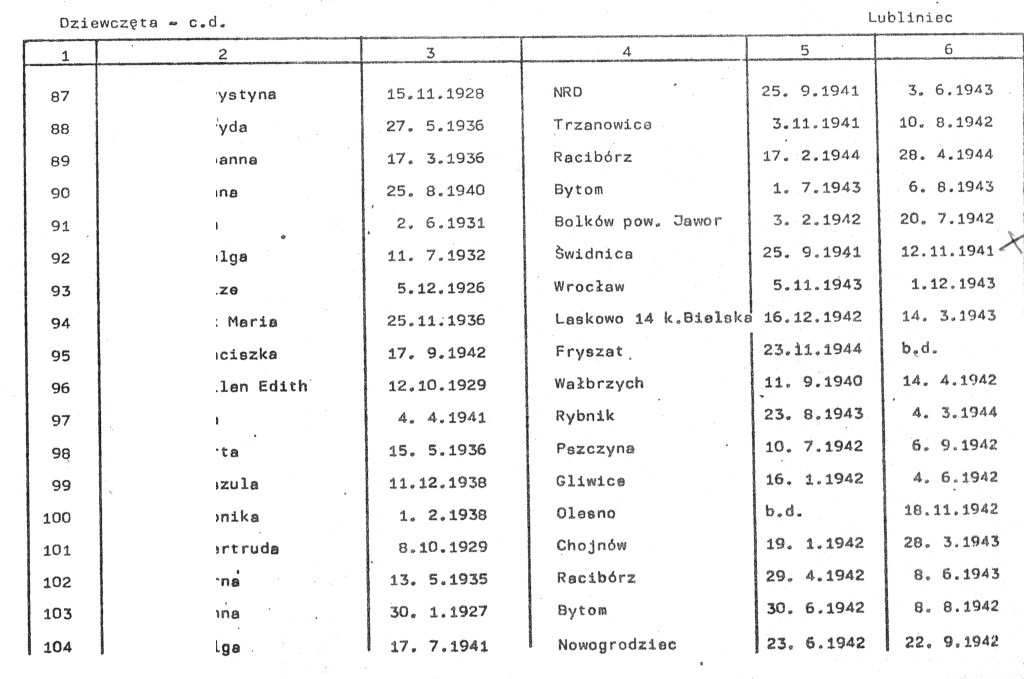
the names of patients who had died during the war. A list of 293 dead
pediatric patients, with their names and the dates of their births, is,
given in Zdzisław Jaroszewski, ed., 1989. Pacjenci
i pracownicy szpitali psychiatrycznych w Polsce zamordowani przez okupanta
Hitlerowskiego i los tych szpitali w latach 1939-1945. Vol. 2:
Imienne wykazy zamordowanych. The
earliest admissions to the hospital are recorded for 1940, and the first
death is recorded for mid November 1941. A few deaths occurred as late as
into March 1945.
 Source: Jaroszewski,
p.
379.
Source: Jaroszewski,
p.
379.
In the first volume of this book, a summary of the events by Dr. Bloch
is provided based on the accounts by Marxen/Latynski and Lisiewicz. The
number of dead children given as 275 may be a reading error of the figure
(235) provided by Marxen/Latynski. The same account, authored by Drs.
Krupka-Matuszczyk and Bloch, is provided in a 1993 Polish-German publication
based on vol. 1.
The list of 293 dead pediatric patients, with their names and the dates of
their births, is, given in Zdzisław Jaroszewski, ed., 1989. Pacjenci
i pracownicy szpitali psychiatrycznych w Polsce zamordowani przez okupanta
Hitlerowskiego i los tych szpitali w latach 1939-1945. Vol. 2:
Imienne wykazy zamordowanych. The
earliest admissions to the hospital are recorded for 1940, and the first
death is recorded for mid November 1941. A few deaths occurred as late as
into March 1945. Additional possible 14 dead children are identified by name
in Szwajca, although one died in 1940, and is unlikely to have been part of
the Reichsausschussverfahren.
In 1994, C. Penselin, the daughter of V. v. Weizsäcker, whose name as the
head of the Neurological Research Institute (Otfrid Foerster Institut) of
the University of Breslau (today: Wroclaw) had been linked to medical
examinations of child victims from Lubliniec in Liesiwicz's report in 1970,
reported that 294 medical records remain extant and that 209 pathology
reports (based on brain and spinal cord samples of these children) signed by
Dr. Hans-Joachim Scherer had been found in them. Similar information was
provided in Peiffer (2007, p 70).
C. Szwajca corrected the list of 293 dead children in 2000. According to his
review of victims' medical records at the hospital, four names had been
included among them by mistake, but he also found 13 additional victims (p.
28), which would bring the number of dead children to 302.
According to U. Benzenhöfer (2007a; see also 2007b), based on his inquiries
and those of historian D. Schulze, the Luminal booklet contains 239
patients, and 292 medical records are extant (those figures do not
seem to include those found by Szwajca), to which were attached copies of
more of 220 notes (by Hecker et al.) to Dr. Scherer on shipments of
specimens to his institute, as well as more than 200 of Scherer's
neuro-anatomic autopsy reports. Overall, the number of victims is estimated
to be "certainly over 200."
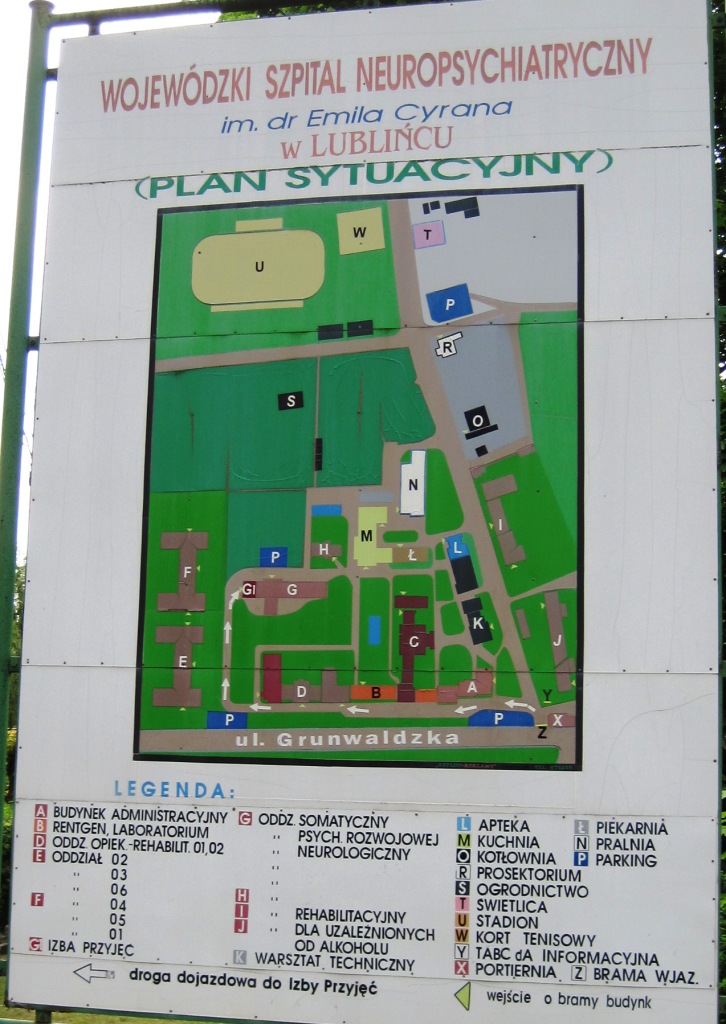
The clinic's name today is Wojewódzki
Szpital
Neuropsychiatryczny im dr. Emila Cyrana. Its website has a history section, where it is only
mentioned that between 1939 and 1945 the clinic was under German authority.
Source: author.
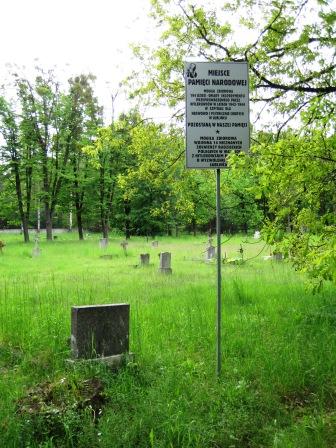
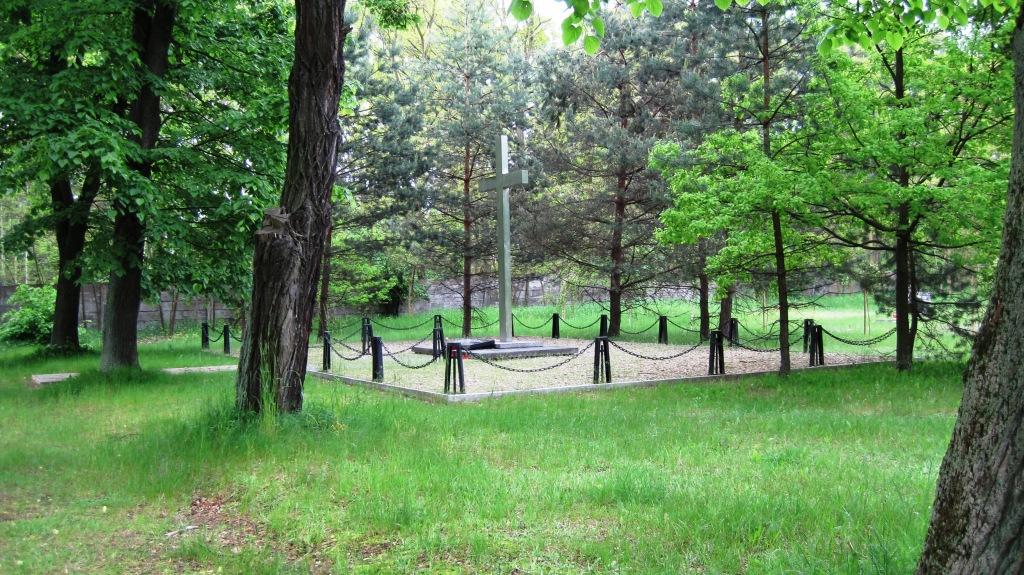
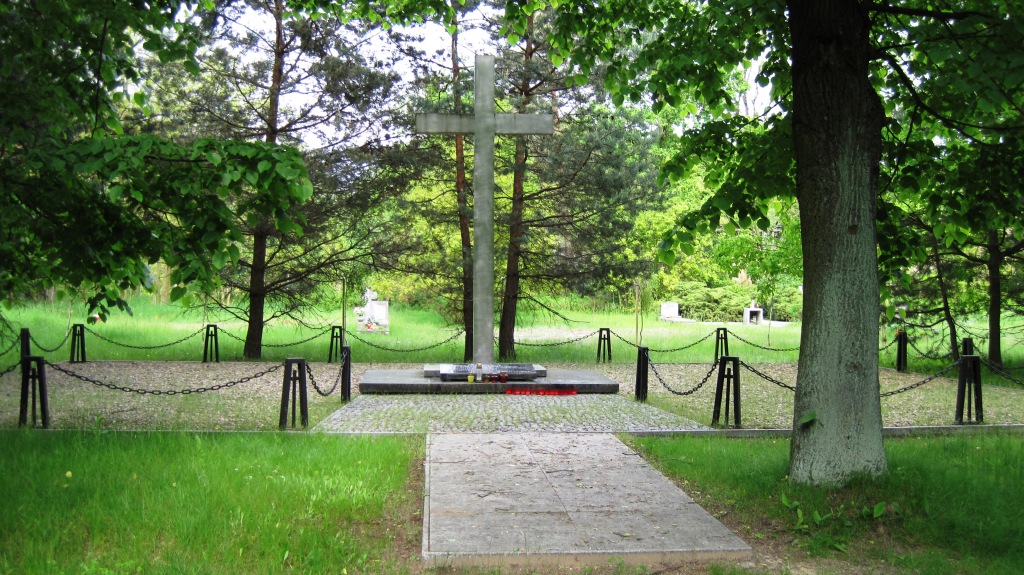
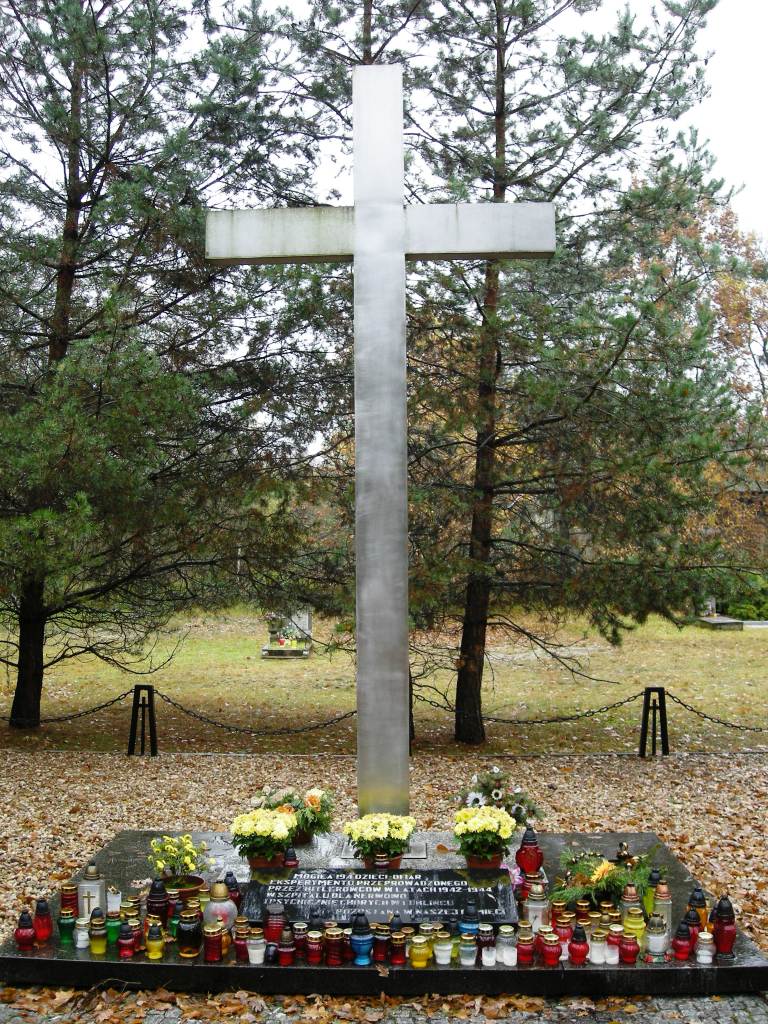
In the cemetery of the clinic there is a monument to the victims, which
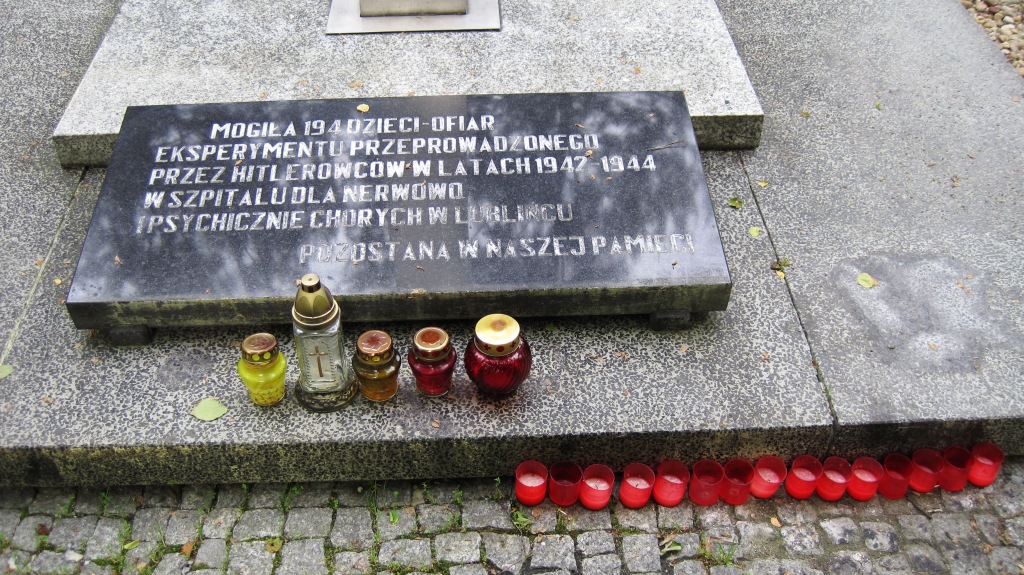
includes a sign at the entrance ot the cemetery, a plaque and a cross. The
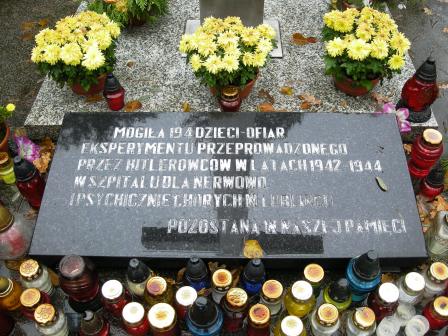
cross was erected in 2002. The plaque underneath the cross reads: "Grave for
the 194 child victims of experiments carried out by the Nazis in
1942-1944 in the Hospital for the Mentally Ill in Lubliniec. They will
remain in our memory" (MOGIlA 194 DZIECI OFIAR EKSPERYMENTU
PRZEPROWADZONEGO PRZEZ HITLEROWCÓW W LATACH 1942-1944 W SZPITALU DLA
NERWOWO I PSYCHICZNIE CHORYCH W LUBLIŃCU. POZOSTANĄ W NASZEJ PAMIĘCI).
Pictures taken after All Saints/All Souls day in Nov. 2009 shows the
commemoration that took place on the site. A more recent picture (May
2010) is also included.
Sources: author;
https://www.katowice.uw.gov.pl/pics/miejsca_pamieci/lubliniec/lubliniec-14.jpg;
private contributor.
Dr. Hecker's activities became the topic of an exhibit conceived
by Wilfried Huck in 2001 (see exhibits).
In 2009/2010 a local school class took on the task of memorializing the children as a project.
A publication in 2013 (Haack et al. 2013) addresses "children's
euthanasia" at Loben on the basis of surviving patients' records housed in
the Bundesarchiv Lichterfelde (BArch R96/1, six appendices). There are about
30 children mentioned in these records. Additional information about two
children is contained is a complementary essay (Haack and Kumbier 2013). A
lecture by Kamila Uzarczyk (2013) provides further information, especially
on the testing of children and the network of institutions of which Loben
was a part.
Literature
Publications by Polish authors in
chronological order
Marxen, Kazimiera, and Hipolit Latynski. [1945] 1949. "Dane ze sposobów
leczenia dzieci, uposledzonych umy-slowo, na Oddziale B przy Klinice
Dzieciecej w Zakladzie Psychiatrycznym w Lublincu, które to leczenie mozna
traktowac jako eutanazje." Rocznik
Psychiatryczny 37(1):113-16. (Note: this is a lecture first read
in 1945)
Biuletyn Glownej Komisji Badania zbrodni
niemieckich w polsce, vol. 3 (1947), p. 105.
Barteczko, Pawel. 1969. "Sanatorium Smierci." Trybuna
Robotnicza no. 229 (7976), 26 September.
Rutkowski, Jan. 1969. "Bylem w 'sanatorium smierci.'" Trybuna
Robotnicza no. 232 (7979), 30 September.
Lisiewicz, Pawel. 1970. "'Casus Buchalik': Jako zagadnienie unicestwiania
dzieci w zakladzie psychiatryczym na terenie Lublinca." Zeszyty
Naukowe (ed. Slaski Instytut Naukowy) 30: 187-91.
Moska, Dionizy. 1975. "Eksterminacja w zakladzie 'Loben.'" Przeglad
Lekarski 32(1): 112-4.
Lisiewicz, Pawel. 1980. "Zbrodnie na dzieciach i młodzieży popełnione w
szpitalu psychiatrycznym w Lublińcu." Pp. 589-95 in Zbrodnie
i sprawcy: Ludobójstwo hitlerowskie przed sądem ludzkości i historii,
edited by Czeslaw Pilichowski. Warsaw: Panstwowe Wydawnictwo Naukowe.
Hrabar, Roman, Zofia Tokarz, and Jacek E. Wilczur. 1981. "In der
'Jugend-Psychiatrischen Klinik' in Lubliniec begangene Verbrechen an Kindern
und Jugendlichen." Pp. 176-79 in Kinder
im Krieg: Krieg gegen die Kinder: Die Geschichte der polnischen Kinder,
1939-1945. Hamburg: Rowohlt.
Bloch, Włodzimierz. 1989. "Lubliniec." Pp. 70-3 in Pacjenci
i
pracownicy szpitali psychiatrycznych w Polsce zamordowani przez okupanta
Hitlerowskiego i los tych szpitali w latach 1939-1945. Vol.
1: Szpitale, edited by Zdzislaw Jaroszewski. Warsaw: n. p.
Jaroszewski, Zdzisław, ed. 1989. Pacjenci
i pracownicy szpitali psychiatrycznych w Polsce zamordowani przez okupanta
Hitlerowskiego i los tych szpitali w latach 1939-1945. Vol. 1: Szpitale. Vol. 2: Imienne
wykazy zamordowanych. Warsaw: n. p.
Krupka-Matuszczyk, Irena; and Wlodzimierz Bloch. 1993. "Lubliniec:
Schlesisches Psychiatrisches Krankenhaus." Pp. 170-75 in Die
Ermordung der Geisteskranken in Polen, 1939-1945, edited by
Zdzislaw Jaroszewski. Warsaw: Wydawnictwo Naukowe PWN.
Szwajca, Krzysztof. 2000. "Eksterminacja dzieci w szpitalu psychiatrycznym w
Lublincu w latach 1942-1945." Szkice
Lublinieckie 5: 24-30.
Nasierowski, Tadeusz. 2006. "In the Abyss of Death: The Extermination of the
Mentally Ill in Poland
During World War II." International
Journal of Mental Health 35(3):50-61.
———. 2008. Zagłada osób z zaburzeniami
psychicznymi w okupowanej Polsce: Początek ludobójstwa. Warsaw:
Wydawnictwo Neriton, pp. 160-5.
Janusz, Michał. 2007. "Sanatorium pod swastyką." Ziemia
Lubliniecka 48/49: 22. Available at http://www.lubliniec.starostwo.gov.pl/zalaczniki/ziemia_kw_2.pdf
Kulesza, Witold. 2010. "'Euthanasie'-Morde an polnischen
Psychiatriepatient/innen während des Zweiten Weltkriegs." Pp. 175-78 in Die nationalsozialistische "Euthanasie"-Aktion
"T4" und ihre Opfer: Geschichte und ethische Konsequenzen für die
Gegenwart, edited by Maike Rotzoll, Gerrit Hohendorf, Petra Fuchs,
Paul Richter, Christoph Mundt, Wolfgang U. Eckart. Paderborn: Schöningh.
Uzarczyk, Kamila. 2012. "Niechciane dzieci nazizmu: eugeniczna eutanazja w
Dziecięcej Klinice Psychiatrycznej w Lublińcu (1942-1944)". Problemy
współczesnej tanatologii.
Uzarczyk, Kamila. 2013. ""'Der Kinderfachabteilung vorzuschlagen':
Psychological examination of children at the Jugendpsychiatrische Klinik
Loben." Lecture at the symposium "Reassessing Nazi Human Experiments and
Coerced Research, 1933-1945: New Findings, Interpretations and Problems," 4
- 7 July 2013, Wadham College, Oxford. Available here: http://www.pulse-project.org/node/576
Other authors
Benzenhöfer, Udo. 2003. "Genese und Struktur der
'NS-Kinder- und Jugendlicheneuthanasie.'" Monatsschrift
für Kinderheilkunde 151: 1012-1019.
———. 2007a. Der Arztphilosoph Viktor von
Weizsäcker: Leben und Werk im Überblick. Göttingen:
Vandenhoeck & Ruprecht.
———, and Wilhelm Rimpau. 2007b. "Introduction
to Viktor von Weizsäcker, ''Euthanasia' and Experiments on Human Beings
[Part I: 'Euthansia'].'" Pp. 277-84 in Human
Sacrifice in Jewish and Christian Tradition, edited by Karin
Finsterbusch, Armin Lange, and K.F. Diethard Römheld. Leiden: Brill.
Dahl, Matthias. 2003. "Dr. Elisabeth Hecker (1895-1986): Verdienste als
Kinder- und Jugendpsychiaterin einerseits – Beteiligung an der Ausmerzung
Behinderter anderseits." Praxis der
Kinderpsychologie und Kinderpsychiatrie 52: 98-108.
Haack, Kathleen, Frank Haessler, and Ekkehardt Kumbier. 2013. "'Irgend eine
angenehme Seite ist bei dem Jungen nicht zu entdecken: Aspekte der
'Kindereuthanasie' in Schlesien." Praxis
der Kinderpsychologie und Kinderpsychiatrie 62: 391-404.
Haack, Kathleen, and Ekkehardt Kumbier. 2013. "Verbrechen an Kindern und
Jugendlichen in der NS-Zeit." Zeitschrift
für Kinder- und Jugendpsychiatrie und Psychotherapie 41: 12-19.
Huck, Wilfried. 2001. "'Wunden der Erinnerung': Eine künstlerische
Annäherung an das Phänomen 'Kindereuthanasie' am Beispiel von Elisabeth
Hecker, Erste Direktorin der Westfälischen Klinik für Jugendpsychiatrie,
Gütersloh, ab 1965 Hamm." Mitteilungen
des Landesjugendamts Westfalen 146:67-76.
Peiffer, Jürgen. 1997. Hirnforschung im
Zwielicht: Beispiele verführbarer Wissenschaft aus der Zeit des
Nationalsozialismus: Julius Hallervorden - H.-J. Scherer - Berthold
Ostertag. Husum: Matthiesen Verlag.
Penselin, Cora. 1994. "Bemerkungen zu den Vorwürfen, Viktor von Weizsäcker
sei in die nationalsozialistische Vernichtungspolitik verstrikt gewesen."
Pp. 123-37 in Anthropologische Medizin
und Sozialmedizin im Werk von Viktor von Weizsäckers, edited by Udo
Benzenhöfer. Frankfurt: Lang.
Schulze, Dietmar. 2010. "'Euthanasie'-Verbrechen in Oberschlesien." Pp.
179-83 in Die nationalsozialistische
"Euthanasie"-Aktion "T4" und ihre Opfer: Geschichte und ethische
Konsequenzen für die Gegenwart, edited by Maike Rotzoll, Gerrit
Hohendorf, Petra Fuchs, Paul Richter, Christoph Mundt, Wolfgang U. Eckart.
Paderborn: Schöningh.
Topp, Sascha. 2004. “Der ‘Reichsausschuss zur wissenschaftlichen Erfassung
erb- und anlagebedingter schwerer Leiden’: Zur Organisation der Ermordung
minderjähriger Kranker im Nationalsozialismus 1939-1945.” Pp. 17-54 in Kinder
in der NS-Psychiatrie, edited by Thomas Beddies and Kristina Hübener.
Berlin-Brandenburg: Be.bra Wissenschaft.
———. 2005. "Der 'Reichsausschuß zur wissenschaftlichen
Erfassung erb- und anlagebedingter schwerer Leiden': Die Ermordung
minderjähriger Kranker im Nationalsozialismus 1939-1945." Master's Thesis
in History, University of Berlin.
Last updated: 14 July 2014