Home
Hamburg-Langenhorn (Heil- und Pflegeanstalt Hamburg Langenhorn)
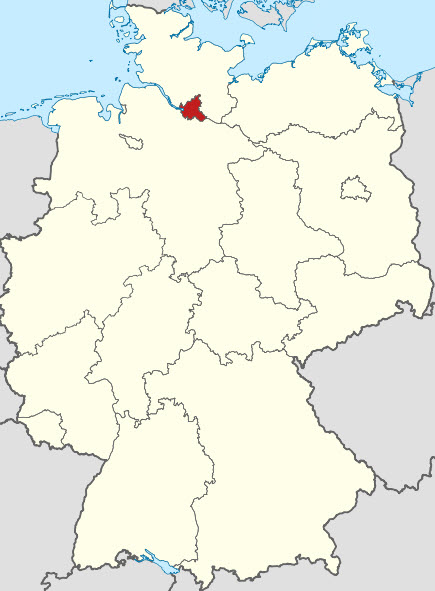
The special children's ward in Hamburg-Langenhorn, which was Hamburg's sole
state facility for the mentally ill during World War II, was one of two
special children's wards in the city of Hamburg. It became operational on
February 1, 1941, but how long it operated remained unclear for a long time
(see Benzenhöfer 2008, p. 91) until the medical dissertation by Dr. Marc
Burlon (2010) shed new light on the special children's ward.
Based on G. Aly's essay in 1984 (see below), it was believed that 12
children died in the special children's ward, which was considered not to
have been physically separated from other stations. Dr. Friedrich Knigge
(who is misidentified in G. Aly's essay as Hermann Knigge) was responsible
for the special children's ward. Until 1940, he had been medical resident,
but by 1943 he had ascended to the medical directorship. He died in 1947.
Criminal investigations against others for participating in "euthanasia"
crimes in Hamburg facilities were stopped by the state court in 1949, and a
further judicial review came to the same result.
Dr. Burlon's research shows that Dr. Knigge received instructions from
Hamburg's health senator Dr. Friedrich Ofterdinger, who was instrumental in
the nazification of health policy in Hamburg and the establishment of a
special children's ward, on 24 January 1941 to open the ward, but it did not
commence operation until February 1 (Burlon 2010, p. 63). The special
children's ward was in fact physically separated (Burlon 2010, p. 66 n. 254)
and located successively in pavillions F7, M10, and M6. Until the beginning
of 1941 Langenhorn had not admitted infants and small children; the presence
of these children must thus have stood out, at least administratively. The
chain of authority was unusual in that the special children's ward was
subordinate to Dr. Ofterdinger and his office. For example, Dr. Ofterdinger
signed the first death certificate of a child that had been killed (Burlon
2010, p. 67), and he might have considered the special children's ward his
pet project and means of controlling and supervising "euthanasia" and other
health measures (see Burlon 2013). Also unusual was that Langenhorn had not
accommodated ill children in the past, and that Dr. Knigge was not a
pediatrician.
The special children's ward operated until early July 1943 (Burlon 2010, p.
68), and the last children were admitted in early June. It might well have
been the heavy bombing attacks that led to the closure of the ward (see p.
68). A fanatical supporter of "racial hygiene" to the end, Dr. Ofterdinger
died in 1946.
According to Dr. Burlon, 69 children were admitted to the special children's
ward, of whom 22 died (pp. 146-147), 32 were discharged, and 15 were
transferred to other facilities: 6 to Rothenburgsort, who died there, 1 to
Leipzig; 4 to the Alsterdorfer facilities (of whom one was further
transferred to the Spiegelgrund/Vienna and died there); one to Lüneburg; and
3 to Meseritz-Obrawalde (which had come from Rothenburgsort and of whom one
died there). The first child died in March 1941; the last one, in June 1943
(p. 146).
In 1983, on occasion of a symposium commemorating the 40th anniversary of
the deportation of children from Alsterdorfen Anstalten, a documentation of
the "euthanasia" crimes in Hamburg was published, which also included
references to the Kinderfachabteilungen in Rothenburgsort
and Langenhorn. A group of historical researchers conducted a meeting under
the title "Healing and Killing in the Exemplary Gau Hamburg" (Heilen und
Vernichten im Mustergau Hamburg) with an exhibit in Hamburg in the same
year, and a book followed a year later. In it, publicist G. Aly presented
the first systematic investigation into the special children's wards in
Hamburg, including Langenhorn, which, however, was only briefly mentioned.
The efforts of working group attempting to address the fate of the mentally
ill in Langenhorn (thereafter the Allgemeine Krankenhaus Ochsenzoll, now
Asklepios Klinik Nord-Ochsenzoll), which included Klaus Böhme, a student of
Gerhard Schmidt (see Eglfing-Haar) and later director of the clinic
Ochsenzoll, resulted in some publications, including a book whose
publication coincided with the clinic's 100th anniversary, but it did not
address the children much.
A further initiative by the new director Dr. Claas-Hinrich Lammers and the
Stiftung Freudeskreis Ochsenzoll, a civic support group, as well as efforts
by members of Hamburg Christian Democrats in the suburb of Ochsenzoll on
occasion of the privatization of the clinic and the sale of clinic real
estate to establish a memorial site, resulted in the dedication of a
memorial stone on May 8, 2009.
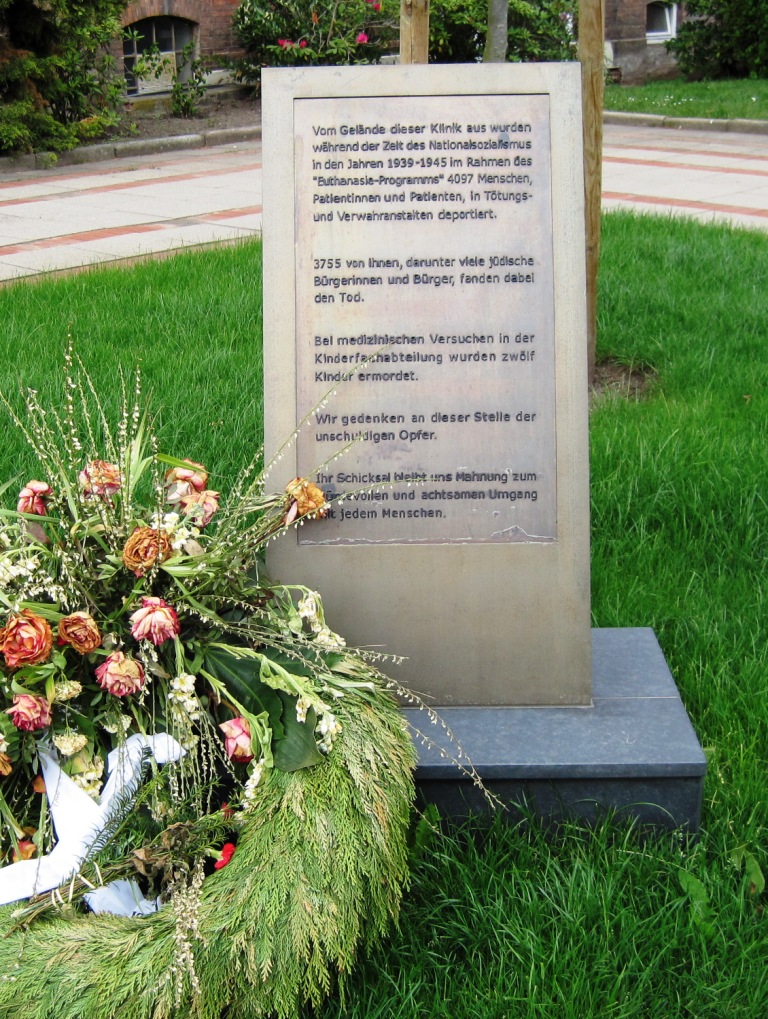
Source: author.
The inscription reads: "During the era of National Socialism in the
euthanasia program 4,097 patients were transported from the location of this
clinic to killing centers and facilities where they languished. 3,755 of
them, among them many Jewish fellow citizens, died in the process. In
medical trials in the Special Children's Ward twelve children were killed.
We commemorate the victims at this place. Their fate continues to admonish
us to treat every person with dignity and respect" (Vom Gelände dieser
Klinik aus wurden während der Zeit des Nationalsozialismus 4097 Patientinnen
und Patienten im Rahmen des nationalsozialistischen „Euthanasie-Programms“
in Tötungs- und Verwahranstalten abtransportiert. 3755 von Ihnen, darunter
viele jüdische Mitbürgerinnen und Mitbürger, fanden dabei den Tod. Bei
medizinischen Versuchen in der Kinderfachabteilung wurden zwölf Kinder
getötet. Wir gedenken an dieser Stelle der Opfer. Ihr Schicksal bleibt uns
Mahnung zum würdevollen und achtsamen Umgang mit jedem Menschen.) More
information about the dedication, which was attended by 150 persons, is here.
A commemoration in 2010 is addressed here.
Beyond the memorial stone, the Stiftung Freundeskreis Ochsenzoll planned to
establish a museum of the history of Hamburg psychiatry, with a section on
"euthanasia" crimes, in a project "Mad Worlds - House of Psychiatry"
(Verrückte Welten - Haus der Psychiatrie). More information about this
ambitious project was provided here, but the project has been abandoned.
The Internet site of the Asklepios clinic offered detailed information on the dedication of the memorial, but the
page and the materials have since been removed.
On 12 September 2012 the remains of 5 children discovered in the archive of
the neuropathological department (Archiv der Neuropathologischen Abteilung)
of the university clinic Hamburg-Eppendorf were buried at the cemetery (see
here). These
children died in the Kinderfachabteilungen Langenhorn and Rothenburgsort.
Their names are:
Gerda Behrmann (1939-1941)
Werner Hammerich (1940-1941)
Marianne Harms (1940-1941)
Dieter Kullak (1938-1942)
Agnes Erna Petersen (1938-1941)
A brief clip from an TV station is captured here
(source: NDR.de; educational use in the context of "fair use" only).
On occasion of the annual commemoration in 2013, Dr. Burlon gave a speech
that succinctly presents the current state of the knowledge about the
Kinderfachabteilung (here).
He noted, for example, that in 18 cases parents of the murdered children
were either maliciously misled, or not informed at all, or had their
objections disregarded.
The fate of Erwin Sänger, a Jewish child who died in the special children's
ward, is addressed here: http://www.uvm.edu/~lkaelber/bull2013-Kaelber1.pdf.
Additional information about the family is provided by the Hamburg
Stolpersteine website.
In early 2014 an exhibit addressed "children's euthanasia" in Hamburg. The
exhibit is entitled 'Euthanasia: The Murder of People with Disabilities and
Mental Illnesses in Hamburg during National Socialism" (Euthanasie. Die
Morde an Menschen mit Behinderungen und psychischen Erkrankungen in Hamburg
im Nationalsozialismus). The exhibit was accompanied by a series of
lectures and other activities. Information is provided in this flyer,
and there is an exhibit catalog (Diercks 2014). The exhibit includes a
section on "children's euthanasia" at Langenhorn. Among the children
admitted to it was Rita Ahrens, who is mentioned in the exhibit. In
2014 there was also an annual commemoration (see here).
A book on the occasion of the 125th anniversary of the Universitätsklinikum
Hamburg-Eppendorf in 2014 addressed the involvement of Hamburg's "special
children's wards" in medicine under National Socialism, as well as theses
crimes and National Socialism at the clinic and in Hamburg in general
(Bussche and Bottin 2014).
In 2015 "letters to silence," a dramatic enactment based on medical records
of patients at the asylum from 1941-1945, was performed (see here).
Literature
Benzenhöfer, Udo. 2003. "Genese und Struktur der
'NS-Kinder- und Jugendlicheneuthanasie.'" Monatsschrift
für Kinderheilkunde 151: 1012-1019.
———. 2008. Der Fall Leipzig Leipzig
(alias Fall "Kind Knauer") und die Planung der NS-"Kindereuthanasie."
Verlag : Klemm u. Oelschläger.
Burlon, Marc. 2010. "Die 'Euthanasie' an Kindern während des
Nationalsozialismus in den zwei Hamburger Kinderfachabteilungen." Medical
Dissertation, University of Hamburg. Available at http://www.sub.uni-hamburg.de/opus/volltexte/2010/4578/pdf/Kindereuthanasie_Hamburg.pdf
———. 2013. ""'Sie liefen blau an und nasenflügelten…': Die Tötung von
Kindern im Rahmen der 'Kindereuthanasie' in der Heil- und
Pflegeanstalt Langenhorn." Presentation on 8 May 2013. Available at http://www.beratungszentrum-alsterdorf.de/cont/Rede_8Mai__Ochsenzoll_Gedenktag_20130507.pdf
Bussche, Hendrik van den, and Angela Bottin. 2014. Die
Hamburger Universitätsmedizin im Nationalsozialismus: Forschung, Lehre,
Krankenversorgung. Berlin: Reimer.
Diercks, Herbert. 2014. "Euthanasie": Die
Morde an Menschen mit Behinderungen und psychischen Erkrankungen in
Hamburg in Nationalsozialismus. Hamburg: KZ-Gedenkstätte
Neuengamme.
Gewerkschaft Erziehung und Wissenschaft (GEW), LV Hamburg, et al., eds.
1983. Von der Aussonderung zur
Sonderbehandlung. Hamburg n.p.
Götz, Aly. 1984. "Der Mord an behinderten Hamburger Kindern zwischen 1939
und 1945." Pp. 147-55 in Heilen und
Vernichten im Mustergau Hamburg: Bevölkerungs- und Gesundheitspolitik im
Dritten Reich, edited by A. Ebbinghaus, H. Kaupen-Haas and K.-H.
Roth. Hamburg: Konkret Literatur Verlag.
Illiger, Horst. 2004. "Sprich nicht
drüber!": Der Leidensweg von Fritz Niemand. Neumünster: Paranus.
Kaelber, Lutz. 2013. "Jewish Children with Disabilities and Nazi
'Euthanasia' Crimes." Bulletin of the
Carolyn and Leonard Miller Center for Holocaust Studies 17.
Puvogel, Ulrike, and Martin Stankowski. 1996. Gedenkstätten
für die Opfer des Nationalsozialismus, vol. 1. 2d ed. Bonn:
Bundeszentrale für politische Bildung. Available at http://www.bpb.de/files/5JOYKJ.pdf.
Rönn, Peter von. 1991. "Auf der Suche nach einem anderen Paradigma:
Überlegungen zum Verlauf der. NS-'Euthanasie' am Beispiel der Anstalt
Langenhorn." Recht und Psychiatrie
9:50-56
Rönn,
Peter
von, Regina Marien-Lundeup, Michael Wunder, Eveline Sonn, Renate Otto, Marc
Billhardt, and Georg Dahmen. 1993. Wege
in den Tod: Hamburgs Anstalt Langenhorn und die Euthanasie in der Zeit des
Nationalsozialismus, edited by Klaus Böhme and Uwe Lohalm, eds.
Hamburg: Böhme & Lohalm.
Topp, Sascha. 2004. “Der ‘Reichsausschuss zur wissenschaftlichen Erfassung
erb- und anlagebedingter schwerer Leiden’: Zur Organisation der Ermordung
minderjähriger Kranker im Nationalsozialismus 1939-1945.” Pp. 17-54 in Kinder
in der NS-Psychiatrie, edited by Thomas Beddies and Kristina Hübener.
Berlin-Brandenburg: Be.bra Wissenschaft.
———. 2005. "Der 'Reichsausschuß zur wissenschaftlichen
Erfassung erb- und anlagebedingter schwerer Leiden': Die Ermordung
minderjähriger Kranker im Nationalsozialismus 1939-1945." Master's Thesis
in History, University of Berlin.
Wunder,
Michael, Ingrid Genkel, and Harald Jenner. 1988. Auf
dieser schiefen Ebene gibt es kein Halten mehr: Die Alsterdorfer
Anstalten im Nationalsozialismus. Hamburg: Agentur des Rauhen
Hauses.
Last updated on 5
March 2015