 This research
supported by a grant
from the National Science Foundation
This research
supported by a grant
from the National Science FoundationStudent Research with Nephila clavipes
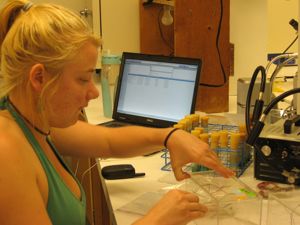
When I first started working with Nephila clavipes, nearly everything was done in the field or in "insectaries" - screen houses. I could only afford to take a few students to the field.
Now that I have developed inexpensive protocols for rearing these animals in the laboratory, many new opportunities for controlled experiments have arisen. Many of the research questions I investigate are appropriate for undergraduate involvement.
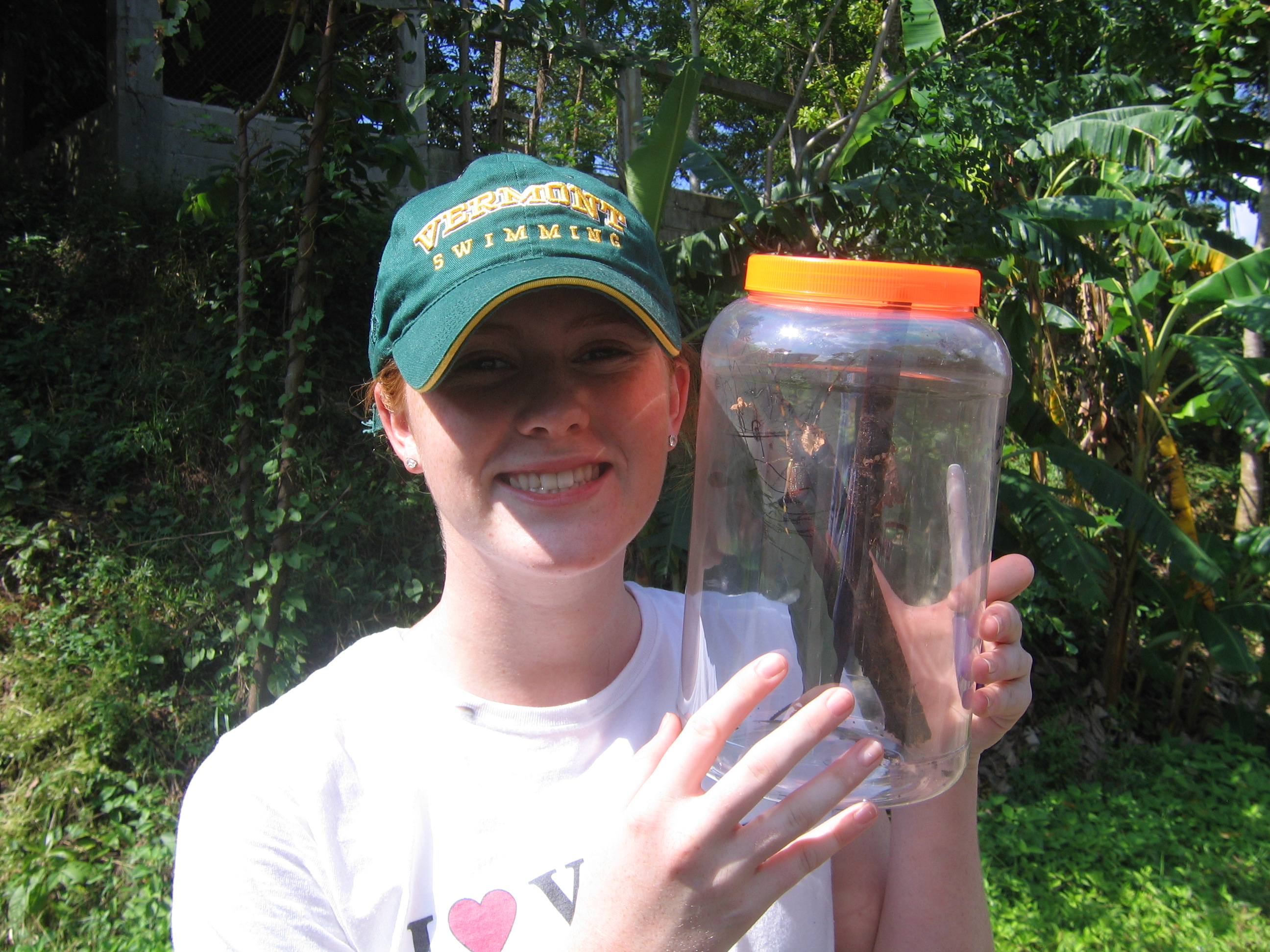
In 2006, my Mexican collaborators hosted two students collecting Nephila from several populations. These spiders are the ancestors of the animals reared in the laboratory in Vermont in 2007-2008.
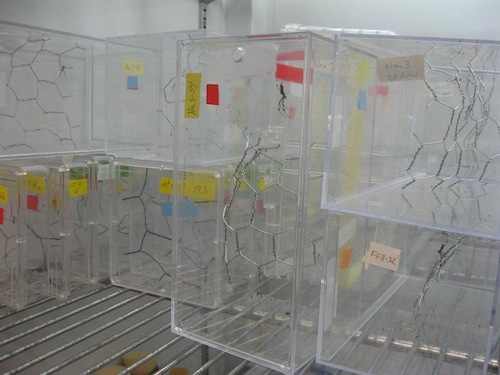 Feeding large numbers
of spiders requires many
hands, and
at the height of each rearing, 8-10 students work in the
lab. Each year
one or two students seeking a more in-depth experience in science
develop an independent research project.
Feeding large numbers
of spiders requires many
hands, and
at the height of each rearing, 8-10 students work in the
lab. Each year
one or two students seeking a more in-depth experience in science
develop an independent research project.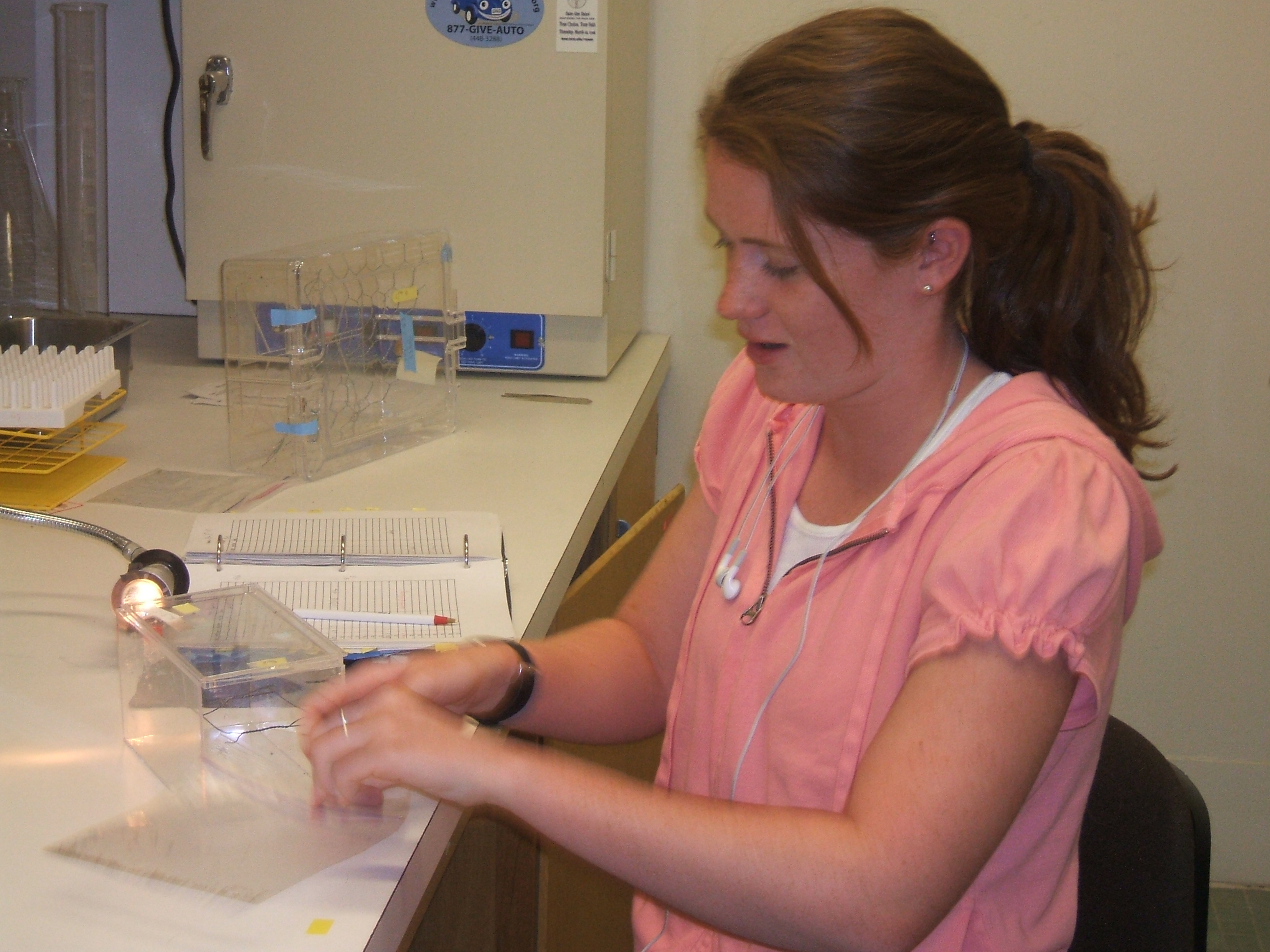
These independent projects are wide-ranging, reflecting the individual interests of the students and the material at hand. Undergraduate projects have included testing for juvenile hormone sensitivity, molecular genetics of diverse Nephila species, and behavioral responses to variation in food availability.