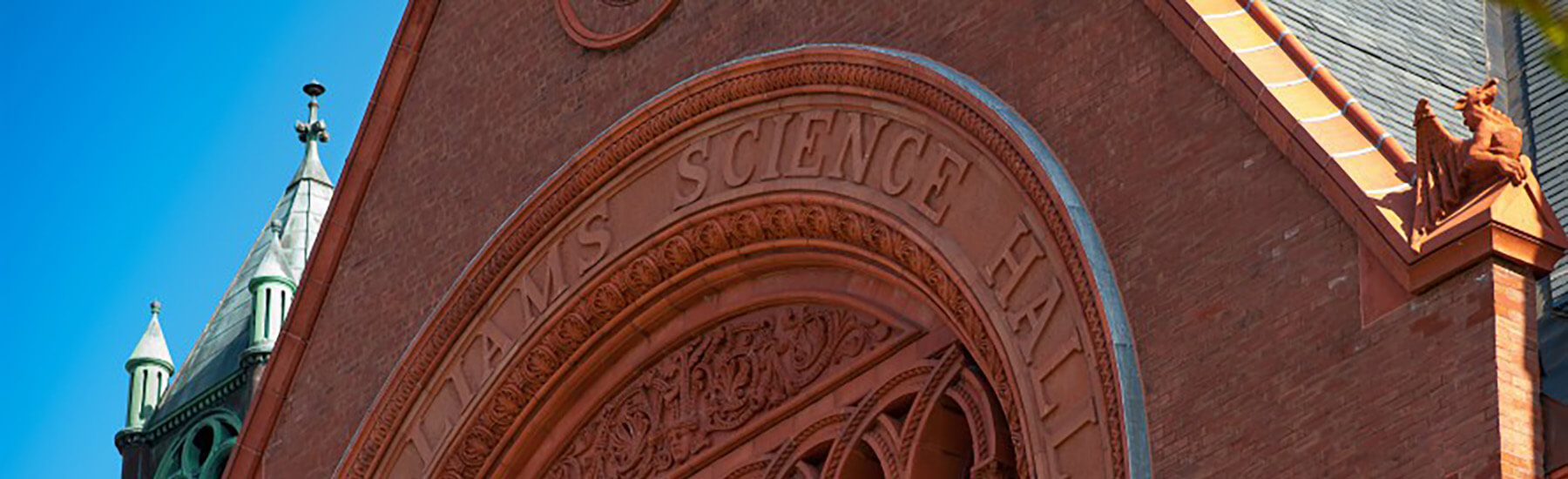
The Fairbanks Museum and Planetarium was constructed in 1890-91 and enlarged in 1894 to the design of architect Lambert Packard in the Richardsonian Romanesque style. This large, one-and-a-half story, U-shaped building is located on the south side on Main Street in St. Johnsbury, Vermont. The exterior walls of the museum are constructed of a reddish-brown sandstone probably quarried from East Longmeadow, Massachusetts. The coursed, quarry-faced, ashlar masonry rises from the rubble foundation to a double belt-course which is pick-finished. The walls above are random-ranged, quarry-faced ashlar with dressed, pick-finished and carved details. At each gable end, the ashlar masonry extends to up raked parapets which are topped with dressed capstones and surmounted by carved stone finials. The inside of the exterior walls is of brick.
Two towers rise from the inner corners on the north side of the museum. The large east tower was extensively repaired in 1979. A summary of the conditions and specifications for these repairs are included in reports submitted to the Fairbanks Museum by Brown, Bona, Inc., Consulting Engineers. The smaller westerly tower is in need of masonry repairs. A three-bay porch which forms the formal entrance to the museum runs along the west side of the north wing and intersects the based of the large tower.
Originally the museum was roofed with black Pennsylvania slate which quickly deteriorated and presumably leaked. The slate was replaced by asphalt shingles, which by 1979 were worn and leaking. Much of the original flashing apparently was kept through this period. In 1979, however, new mottled green and purple slate and copper flashings were installed. Unfortunately contractor difficulties resulted in an unsatisfactory installation of the flashing which caused significant leaking. Most of the flashings along the parapets and at the intersections with the towers and chimneys were replaced, therefore, in the late fall of 1990.