The University of Vermont

The Global and Regional Studies Program at UVM

Student_Highlights


Student Highlights


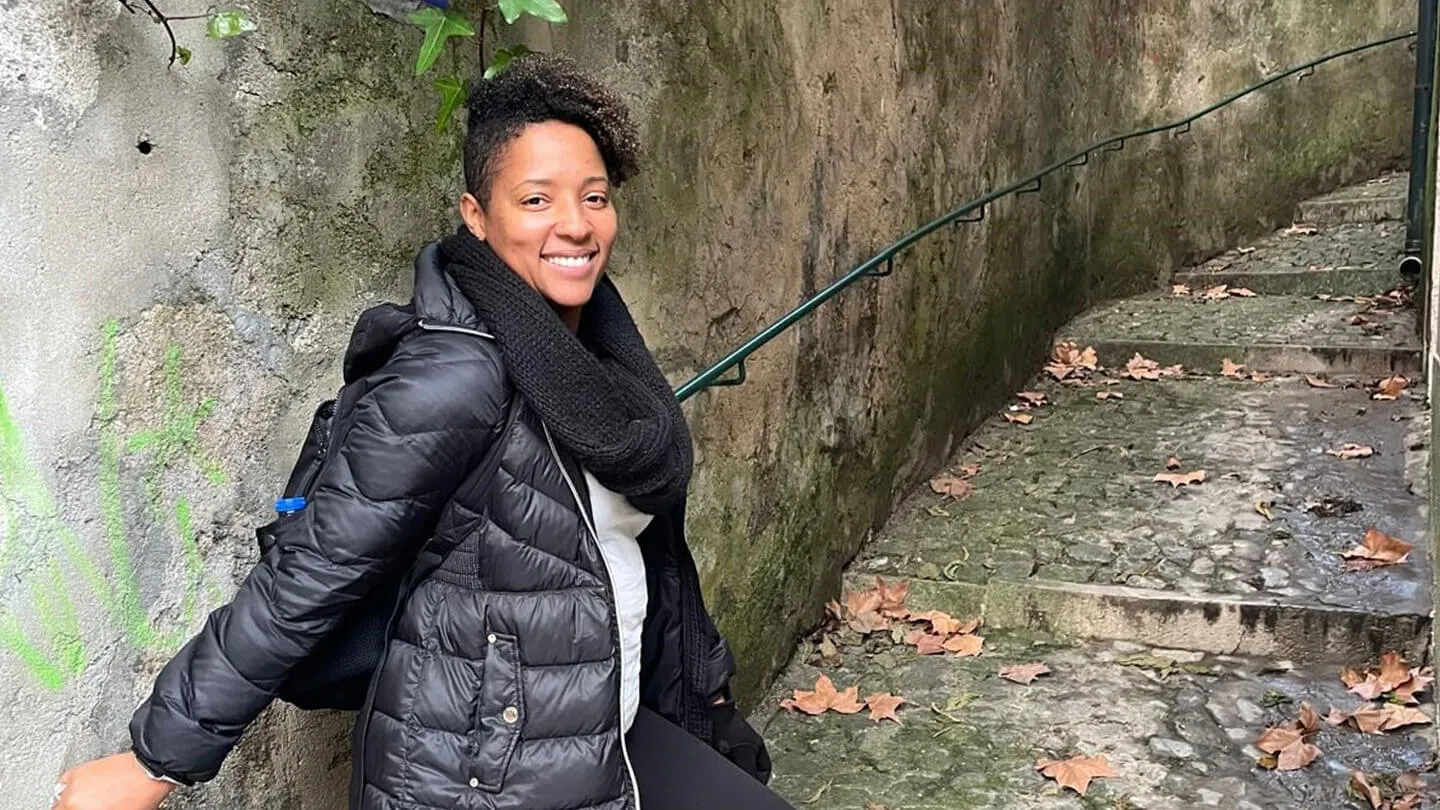
Kiira Anderson Abroad


Kiira Anderson
Class of 2007

Majors: Asian Studies and Studio Art

Experiences Studying Abroad in Fall 2006


My favorite memories from India are from the month I spent at a retreat house in a medieval neighborhood in New Delhi.  It was just a five-minute walk from the tomb (dargah) of Nizamuddin Aulia, one of the most revered saints of the 13th century!   I was learning the art of Urdu calligraphy, during which time I got a basic introduction to both the written and spoken forms of the language.  It was such a great opportunity to learn an art form that differs so much from the Western artistic tradition.  In my free time I was surrounded by a living Sufi tradition, and the time I spent at the dargah each night was very powerful.  

My semester abroad enriched and made more holistic my studies of South Asia, and through its challenges I learned a lot about myself, gained strength and was humbled—opportunities for growth that I would have missed in my comfort-zone back home.  All of my credits from India counted toward my Asian Studies major, and the best thing about the Area and International Studies Program, is that I never had to take a class that I didn’t want to just because it was a requirement.  The interdisciplinary nature of AIS concentrations enabled me to combine my two areas of interest—art and religion—with a focus on South Asia, and gave me the freedom to discover my passion for Asian Art History.  My classes at UVM prepared me for my semester in India and also helped me to form an independent study project that related to my previous studies and interests, ultimately enabling me to get the most out of my time there!


_____________________________________________________

Bill Petersen, Class of 2006

Bill Petersen, Class of 2006    


My name is Bill Pettersen and I graduated from the University of Vermont (UVM) in May of 2006 and am now in my first year at the University of Illinois College of Law.  I majored in Political Science and minored in Economics at UVM.  I also took many courses in the Russian Area Studies Program and I studied abroad at St. Petersburg University in St. Petersburg, Russia during the spring semester of 2005.  Although I had countless wonderful experiences during my four years at UVM, the semester that I spent in Russia was by far the best of my college career.

The amount I learned of the Russian language and culture during my semester abroad was even more than I had dreamed possible.  I had only taken three semesters of Russian language at UVM prior to leaving for Russia.  My professors at St. Petersburg University told me, however, that my Russian language skills were better than many of my peers from other universities, some of whom had taken a year more of Russian than I had.  This was a testament to the language courses that I took in the Russian Area Studies Program at UVM, which prepared me extremely well for my travel abroad.  My vast improvement in the Russian language was also due to the fact that I lived with a Russian family in St. Petersburg, who spoke no English at all.  Aside from cooking breakfast, lunch, and dinner for me, as well as cleaning my room every week, my host family took a very active role in teaching me the Russian language.  I personally recommend living with a host family, as opposed to a dormitory, when studying in Russia, as I learned an extraordinary amount about the language and culture of the country from my family.

Even more striking than the amount of language, history, and culture I learned from my semester in Russia was the amount of personal growth that I experienced during my stay.  Living in a county in which it is difficult at times for you to communicate is a very humbling experience.  It can be very difficult at first to do many of the things that you take for granted back home, such as grocery shopping and taking a bus or taxi somewhere.  Nonetheless, I found that these situations tested my strength and patience in a way that I had never felt before and were greatly rewarding in the end.  Everyday in Russia was better than the last.  As I began to understand more of the language, I was quickly able to converse more fluently with people on the street and in the club.  With each conversation that I had, I learned more about the Russian culture and people.  After these conversations I would often think about how much my language skills were improving, yet what I didn’t realize at the time was that, through my interaction with the Russian people, I was discovering a powerful new understanding of myself and my own country’s history and culture.

The great success that I found during my stay in St. Petersburg was due in most part to the preparation that I had done through the Russian Area Studies Program at UVM.  Not only was the training in the Russian language outstanding, but the professors in the program gave me a strong sense of the Russian life and culture through many different books, articles, and in-class discussions.  The immense knowledge and interest that the professors in the Russian Area Studies Program possess for Russian language, history, and culture prepared me extremely well for my semester abroad in St. Petersburg.  The semester that I spent in St. Petersburg was the time of my life, and I strongly recommend anyone and everyone who is interested to study abroad in Russia and to study at UVM in the Russian Area Studies Program.  
   

_____________________________________________________


University of Augsburg Campus Green

Anna Olson

Class of 2007

Making the Most of Regional Differences:

Studying Abroad in Augsburg, Germany


As a European Studies and German major, my junior year abroad in Augsburg, Germany was time well spent. Built in 1970 and located just outside the town center, the University of Augsburg is one of UVM’s official partner universities, as well as one of Germany’s few universities with a true campus. To an American exchange student with plenty of other concerns for settling in at the start of the school year, it was at least a relief to be able to find the offices and classrooms I needed in one compact space. The university might be modern, but Augsburg, a city of 276,000 inhabitants, is Germany’s second oldest city. It has a vibrant cultural scene and nightlife, and offers a less hectic, more neighborly alternative to the nearby metropolis of Munich.

I was enrolled in the Philological-Historical (Humanities) Faculty. My classes generally met once a week for two hours, and grading consisted of either a final comprehensive exam for introductory-level courses or an oral report and term paper for seminars. While lecturers and professors are not quite as attentive to students’ overall progress as in the States, they do appreciate when students make an extra effort to drop by during office hours to introduce themselves or ask questions. Instructors are used to working with international students; about 10% of the student body consists of foreigners. Though students come from all over the globe to study in Augsburg, the diversity of the student body most strongly reflects the open student exchange policies of the European Union.

During my yearlong stay in Augsburg, I took advantage of the extensive offerings in European history and language, such as a seminar on the local history of Bavaria-Swabia. In Germany, as in most of Europe, there are many small regions, each with its own distinct subculture, and it was interesting to see how many students my age were drawn to studying local history, as well as how much regional pride and awareness are embedded in German life. For language instruction, the university has a separate faculty that offers German courses for non-native speakers, in addition to instruction in other foreign languages for all students of the university. An informal way to improve your conversation ability, as well as to establish contacts with German students, is to seek out German “language tandem partners” to give you hints on vocabulary and grammar in return for advice on their English.

Like most foreign students, I made the most of my time abroad by doing a lot of traveling. Various student groups organize activities for foreign students, like city tours, weekly discussion tables, and very affordable, well-organized weekend excursions. In addition, Augsburg’s excellent location on major train and bus lines and its close proximity to the Munich airport made traveling convenient. However, as the year went on, my travel bug became less persistent as I became more interested in the subculture of my own host city. During my second semester, I was even able to divide my time at the university with an internship at the city tourism office. There, I learned about German business structure, event organization, and even how to answer the telephone “German-style.”

My study abroad experience was an ideal bridge between the little picture and the big picture; university life and regional culture contrasted with national culture and European unity. Identifying and appreciating these differences is as important to my time away as improving my German, adjusting to university bureaucracy of another color, learning to bag my own groceries, or maneuvering public transportation—all hefty challenges in their own right!


Last modified May 09 2008 03:02 PM

Contact UVM © 2009 The University of Vermont - Burlington, VT 05405 - (802) 656-3131