Economics is the study of how individuals and societies provide for material needs and wants. Economic thinking comes into play in a wide range of settings, from business decision-making to the argument of legal cases in the courts. A student majoring in Economics will have the opportunity to explore a broad array of economic issues which bear directly on human welfare, including economic growth and development, unemployment, the relationship between the environment and the economy, international trade, technological change, the role of race and gender in the economy, and poverty and the distribution of income.
The teaching mission of the Economics Department at the University of Vermont is to equip students to understand the modern economy and to critically evaluate the economic arguments they encounter, both in terms of their conceptual soundness and their ability to explain the factual record. The Department is distinctive in that it exposes students to the rich variety of schools of thought within economics, and, as a result, to the lively debates within the economics profession as well. Faculty members teach courses in areas in which they are actively engaged in research, so students benefit from working with faculty at the frontier of their discipline. For example, economics students can learn about the Vermont economy from a former Vermont state economist, and about challenges and progress towards gender equality from an advisor to the United Nations.
The Department offers students the chance to develop expertise in the complete mix of tools which are used in analyzing economic issues: quantitative empirical analysis and modeling; historical and institutional analysis; and conceptual analysis. The Department places particular emphasis on applying all of these tools to the evaluation of alternative policy solutions to current economic problems in such areas as controversies in the regulation of monopolies, gender and racial discrimination in labor and capital markets, and environmental protection. A recurring issue in all such discussions is the respective strengths and weaknesses of markets, firms, and governments in addressing economic problems.
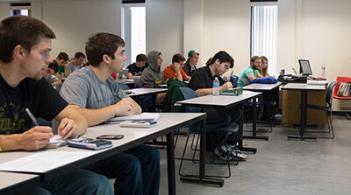
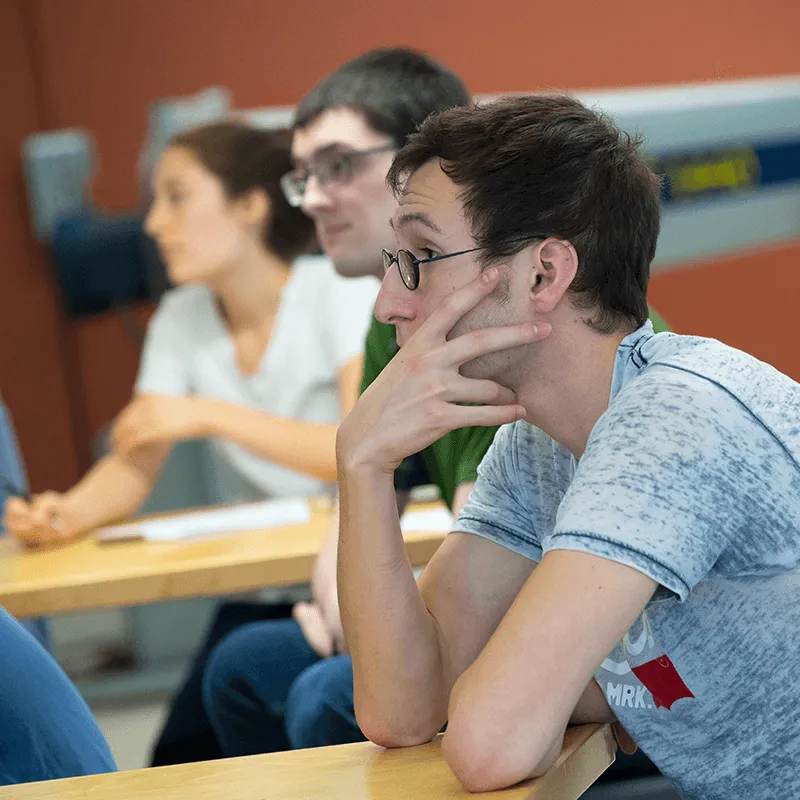
Economics majors at the University of Vermont enjoy easy access to their professors and have by-and-large small classes. All classes are taught by faculty members and not graduate students. While some introductory courses may be as large as 140 students, a number are in the range of 40 students. In addition, the Department offers several introductory seminars to first-year students, including one as part of the Integrated Social Sciences Program. Second-and third-year classes average 40 students. In their senior year, economics majors take small classes with 18 students, run as seminars with an independent or collaborative research project serving as the capstone of the student's undergraduate economics education and evidence of his or her accomplishments.
An economics major is well prepared for a broad range of career and post-graduate options. A number of economics majors from the University of Vermont have gone on to advanced study in economics, law, business, or public affairs. The majority of majors have directly entered the job market upon graduation and launched careers in such fields as financial services, general management, and marketing and research.
For more information about the Economics Department, you can visit our World Wide Web home page where you will find information about the requirements for a major or minor in economics, how to start the economics major, faculty background and research interests and special educational opportunities, such as internships, the Integrated Social Sciences Program and study abroad.
For Further Information contact:
Elaine McCrate, Chair
Department of Economics
237 Old Mill Building
802-656-0192
E-mail: elaine.mccrate@uvm.edu
http://www.uvm.edu/~econ
Last modified September 18 2007 03:43 PM