University of Vermont

College of Nursing and Health Sciences
Paula Deming

Paula Deming, Ph.D., M.T.

Assistant Professor of Medical Laboratory and Radiation Sciences,
Medical Laboratory Science Program Director

Paula DemingOffice: 302B Rowell
Phone: (802) 656-2506
Email: Paula.Deming@uvm.edu

Dr. Paula Deming received her B.S. and M.S. degrees in medical technology from the University of Vermont and earned a doctoral degree in pathology from the University of North Carolina at Chapel Hill. After doing a Postdoctoral Research Fellowship at Duke University, she returned to UVM to work with Dr. Alan Howe prior to joining the faculty of the Department of Medical Laboratory and Radiation Science in 2007. Dr. Deming has a passion for both research and teaching. She is currently an Assistant Professor and the Program Director for the Medical Laboratory Science program. She is actively involved with mentoring students in research and teaches a variety of courses in the biological and medical laboratory sciences.

Her interest in the molecular basis for disease began when she was a graduate student in the laboratory of Dr. William Kaufmann where she studied signaling mechanisms that preserve genomic integrity in replicating cells. Dr. Deming broadened her research interest as a Postdoctoral Fellow with Dr. Sally Kornbluth where she studied the process of apoptosis while researching a novel mechanism by which a human oncogene, the tyrosine kinase Bcr-Abl, evades programmed cell death. In Dr. Alan Howe's laboratory here at UVM, she investigated the roles of Protein Kinase A (PKA) and the non-receptor tyrosine kinase Abl during cellular migration. Since establishing her own research laboratory in 2008, her research has focused on elucidating the molecular mechanisms that connect PKA to growth factor receptor-mediated signaling with the goal of understanding how these mechanisms may be altered during diseases such as atherosclerosis and cancer.

Education

Postdoctoral Training, Duke University Department of Pharmacology and Cancer Biology
Ph.D., University of North Carolina-Chapel Hill, Pathology
M.S., University of Vermont, Medical Technology
B.S., University of Vermont, Medical Technology

Research Interests
  • Cell Signaling
  • Growth control pathways
  • Molecular Pathology
  • Cancer Biology

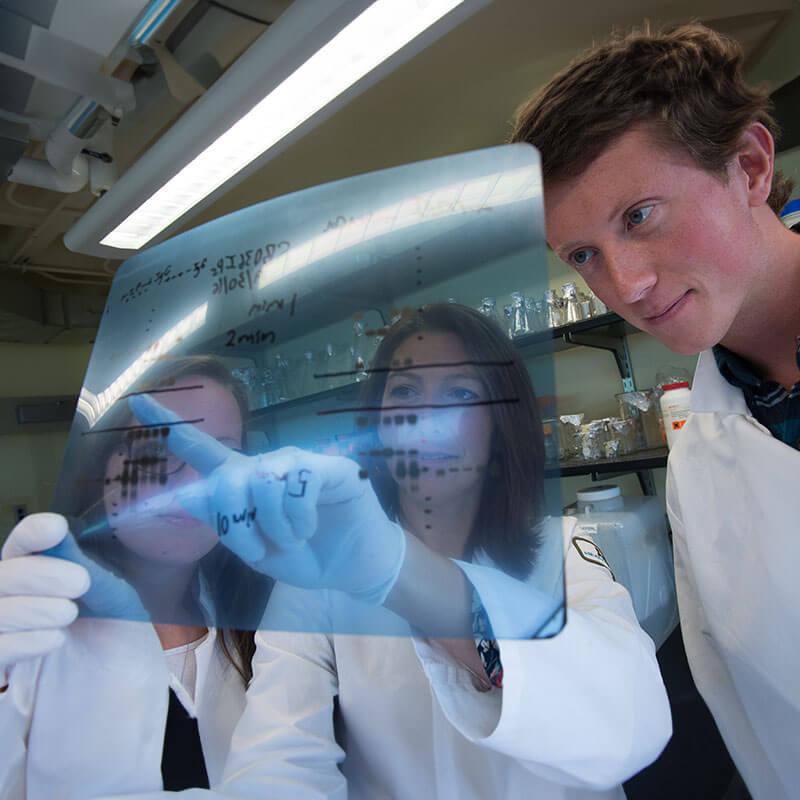
The Deming Laboratory uses cell biological, biochemical and molecular techniques to investigate how protein kinases signal to regulate normal cell growth, apoptosis and cell motility. The lab is currently focused on increasing our understanding of signaling that occurs downstream of growth factor receptor tyrosine kinases. Specifically, we are presently elucidating the mechanism/s that link the platelet derived growth factor receptor (PDGFR) to the serine-threonine protein kinase, cyclic AMP-dependent protein kinase A (PKA). We have identified a novel interaction between PDGFR and the catalytic subunit of PKA, which appears to regulate PKA function. Current work is focused on investigating whether this interaction influences growth factor mediated responses in fibroblasts and smooth muscle cells, two cell types found in the cardiovascular system. As deregulation of cellular signaling pathways is a characteristic of diseases such as cancer and atherosclerosis, we aim to reveal new mechanisms that may eventually be exploited to develop new therapeutic strategies and treatments.

    Funding
    The Deming Laboratory's research is currently funded in part by the American Heart Association. Projects have also been partially funded through a Vermont Cancer Center Pilot Award and College of Nursing and Health Sciences Incentive Grants.
Selected Publications

Kwolek, S and Deming, PB. "Warfarin-induced hypersensitivity due to gluten sensitive enteropathy: A case study", in press, Clinical Laboratory Science.

Caldwell, GB, Howe, AK, Nickl, CK, Dostmann, WG, Ballif, BA, Deming, PB. "Direct modulation of the protein kinase A catalytic subunit by growth factor receptor tyrosine kinases," in press, Journal of Cellular Biochemistry.

Deming Paula, Kornbluth Sally. Dismantling the Apoptotic Cell. Encyclopedia of Life Sciences (ELS). John Wiley&Sons, Ltd: Chichester, September 2009.

Deming PB, Campbell SC, Baldor LC, Howe AK. PKA regulates PDGF-induced membrane ruffling and phosphatidylinositol dynamics. The Journal of Biological Chemistry, October 2008. (Abstract)

Phalen T, Deming PB, Vikas A, Howe A, Jonsson T, Poole L, Neintz NH. Oxidation state governs structural transitions in peroxiredoxin II that correlate with cell cycle arrest and recovery. J. Cell Biol. 175:779-789. (Abstract)

Innes CL, Heinloth AN, Flores KG, Sieber SO, Deming PB, Bushel PR, Kaufmann WK, Paules RS. ATM Requirement in Gene Expression Responses to Ionizing Radiation in Human Lymphoblasts and Fibroblasts. Molecular Cancer Research. 2006; 4(3):197-207. (Abstract)

Deming PB, Rathmell JC. Mitochondria, cell death and B cell tolerance. Current Directions in Autoimmunity. 2006; 9:95-119. (Abstract)

Deming PB, Schafer ZT, Tashker JS, Potts MB, Deshmukh M, Kornbluth S. Bcr-Abl-mediated Protection from Apoposis Downstream of Mitochondrial Cytochrome C Release. Molecular and Cellular Biology. 2004; 24(23): 10289-10299. (Abstract)

Kaufmann WK, Campbell CB, Simpson DA, Deming PB, Filatov L., Galloway DA, Zhao XJ, Creighton AM, and Downes CS. Degradation of ATM-independent decatenation checkpoint function in human cells is secondary to inactivation of p53 and correlated with chromosomal destabilization. Cell Cycle, 1. 2002; 210-219. (Abstract)

Deming PB, Flores KG, Downes CS, Paules RS, and Kaufmann WK. ATR enforces the topoisomerase II-dependent G2 checkpoint through inhibition of Plk1 kinase. J.Biol.Chem.. 2002; 277, 36832-36838. (Abstract)

Deming PB, Cistulli CA, Zhao H, Graves PR, Piwnica-Worms H, Paules RS, Downes CS, and Kaufmann WK. The human decatenation checkpoint. Proc.Natl.Acad.Sci.U.S.A. 2001; 98, 12044-12049.

Boucher PM and Huot AE. The Effect of (NO) Induced Cytoprotection on TNF-induced Cytotoxicity. Biology of Nitric Oxide, Vol 5. Moncada, S, Stamler, J, Gross, S, and Hibbs, A. eds. 1997; Portland Press Ltd., London.

Last modified May 31 2012 11:59 AM