The University of Vermont

Undergraduate Chemistry Program

Chem Chair Message

Message from the Chair:

Why Pursue a Degree in Chemistry at the University of Vermont?

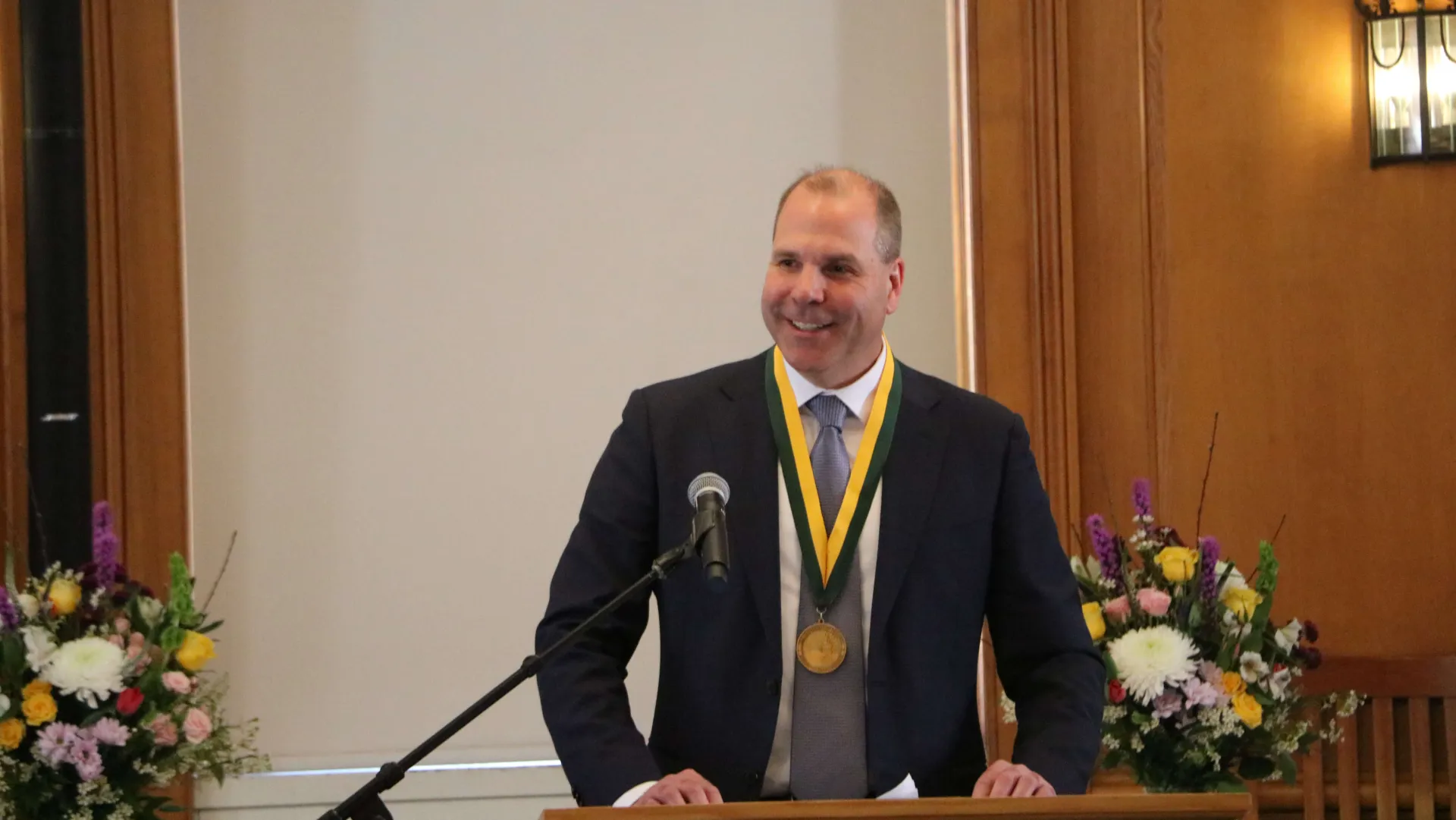
Prof. Matthews

Chemistry is the center of science

Chemists seek understanding of all aspects of the physical and biological worlds at the molecular level. Chemists have developed extremely powerful and sophisticated experimental and analytical techniques to probe the structure of molecules and chemical reactions. These techniques are critical and fundamental to solving sophisticated biological and biomedical problems. Developments in chemistry have provided the tools to address critical problems in materials science, in geology, and in the environmental sciences. Chemistry provides intellectual excitement with research that reaches into disciplines beyond chemistry.

The UVM Chemistry Department provides students with a sound in-depth education in chemistry

Chemistry students gain the intellectual skills and confidence to confront and solve difficult problems and develop a life-long commitment to learning. Through the Chemistry Department's active Ph.D. graduate degree program, faculty members and graduate students are engaged in cutting-edge research. They bring state-of-the-art perspectives to undergraduate teaching that can only be obtained at a modern research university.

Two different undergraduate degree programs are offered by the Chemistry Department:

The Bachelor of Science is for students plan to pursue chemistry as a career. This program is certified by the American Chemical Society. The Bachelor of Arts program allows students to pursue the study of chemistry within a broad-based Liberal Arts course of studies and to pursue studies in other scientific areas. For example, there are B.A. degree options for specialized concentrations in Biomolecular Chemistry and in Environmental Chemistry. We now have a Biochemistry B.S. degree that offers flexibility in biomolecular coursework across the UVM colleges. All degree choices are rigorous, and our students go on to the nation's best graduate schools (e.g. UC Berkeley, Harvard, Stanford, Northwestern) and enter a range of graduate programs from chemistry to medical school. All students easily find employment in the chemical and pharmaceutical industries.

Chemistry class sizes are modest for majors throughout all years at UVM with strong faculty-student interaction

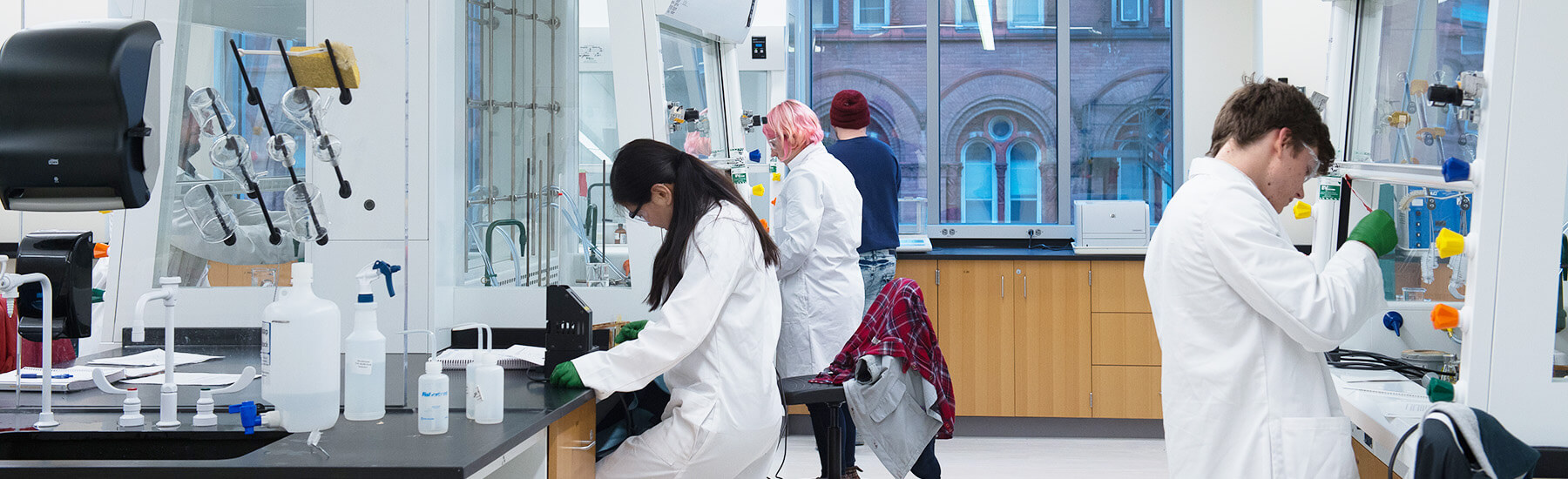
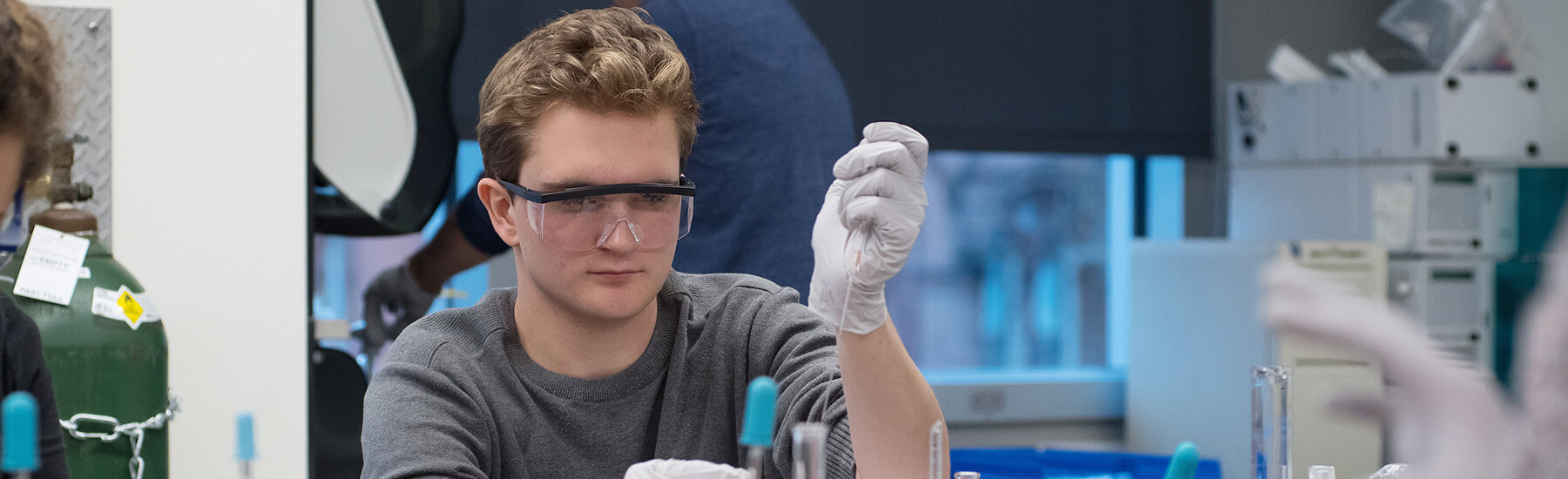
Entering majors take General Chemistry (CHEM 35 and 36), a two-semester sequence of lecture and laboratory where enrollment is capped at 40 or fewer students. First-year students with a strong high school chemistry background also have the opportunity to enroll in Introduction to Research (CHEM 39 and 40) where they can begin working with faculty in research. Low-enrollment courses continue for our majors through Organic Chemistry for Chemistry Majors (CHEM 143 and 144) and all other upper level courses. Faculty members function both as teachers and advisors to the students.

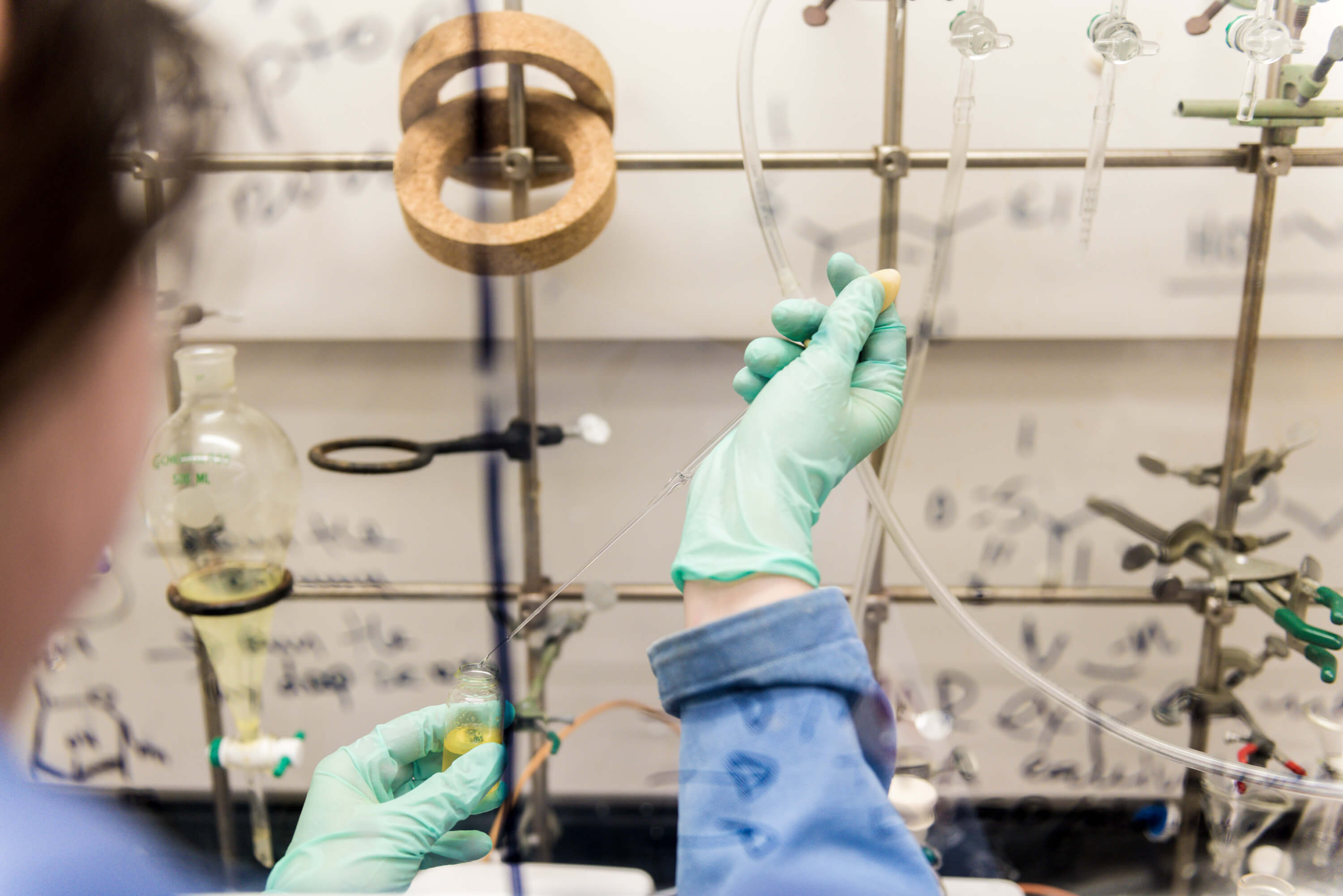
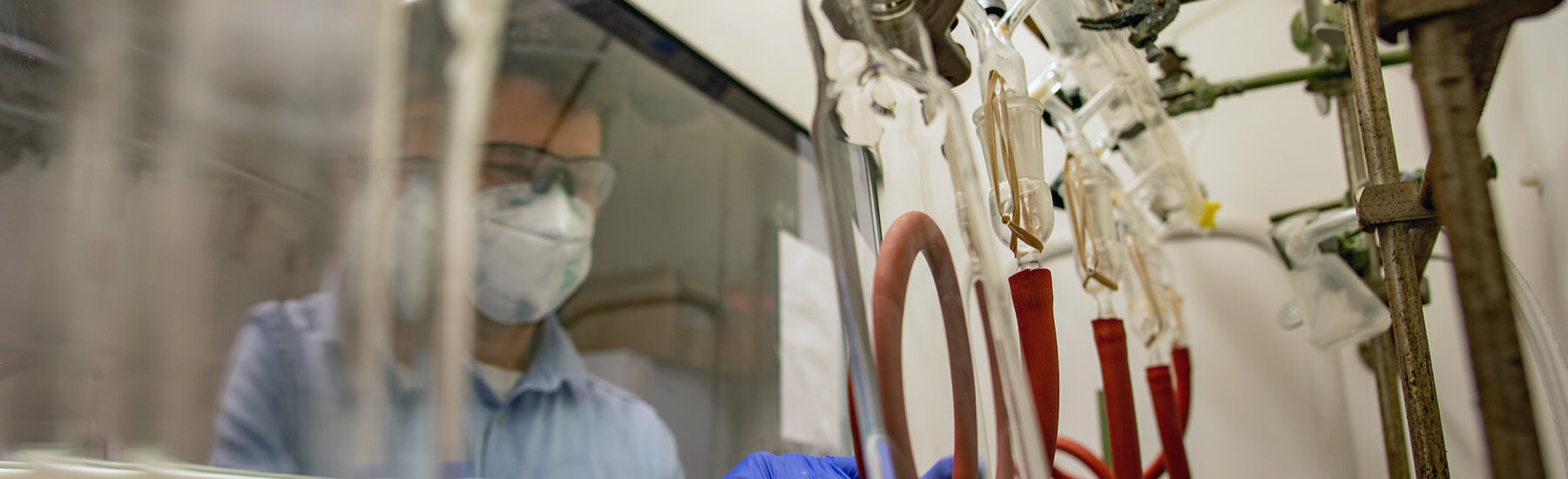
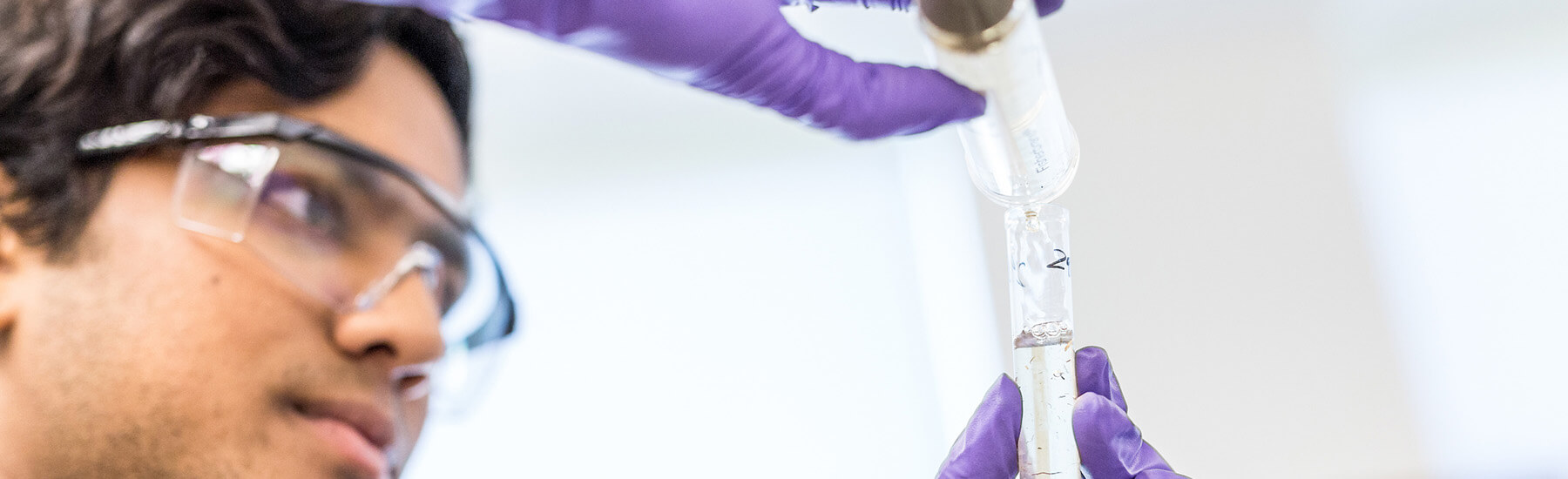
Undergraduate students have the opportunity to learn by doing and to generate new knowledge by pursuing research under the direction of internationally recognized scientists

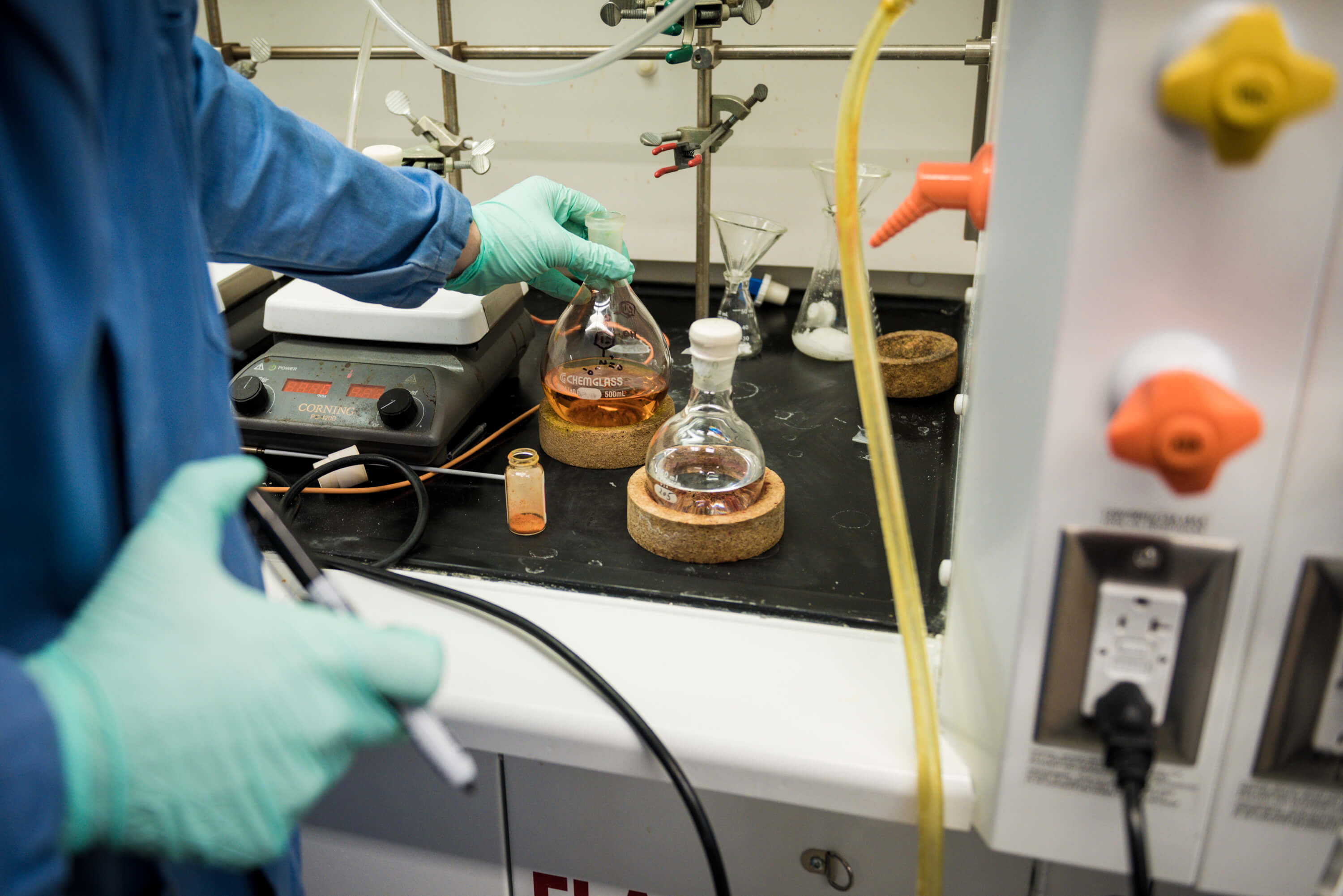
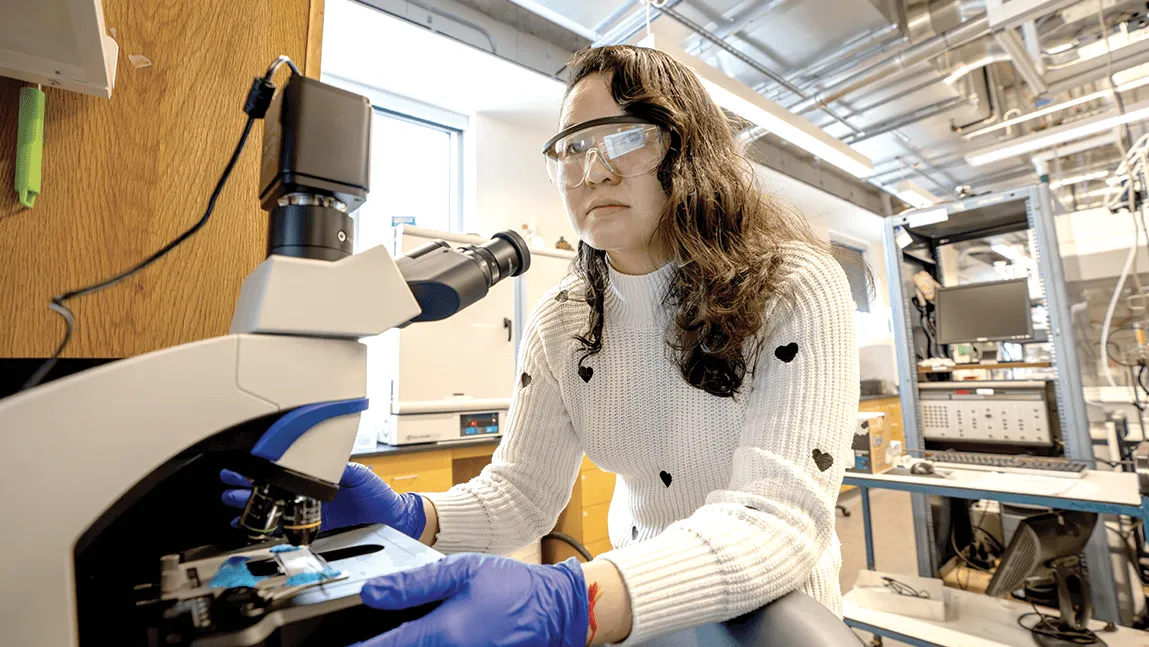
Faculty members are engaged in the synthesis of biologically active compounds, such as anti-cancer drugs, electrochemistry, materials science, and biomedical applications, such as proteomics. Undergraduate researchers have access to a wide range of state-of-the-art analytical instrumentation, including: high-field nuclear magnetic resonance (NMR) spectrometers, several mass spectrometers, ultraviolet, visible, and infrared spectrophotometers, X-ray diffraction equipment, electrochemical apparatus, and a variety of smaller instruments.

Samples of research publications involving UVM undergraduates (undergraduate co-author italicized):

  • C.W. Allen, R.F. Hayes, C.N. Myer, A.S. Freund, M.E. Kearney, "New Organofunctional Cyclophosphazene Derivatives" Phosphorous, Sulfur, Silicon 1996, 79: 109.
  • R. Rulkens, A.J. Lough, I. Manners, W. Geiger, S. Lovelace, C. Grant, "Linear Oligo(ferrocenyl)silanes: Electrochemical and Structural Models for High Polymers" J. Amer. Chem. Soc. 1996, 118: 12683.
  • M. MacLachlan, J. Zheng, A. Lough, I. Manners, W. Geiger, R. LeSuer, C. Mordas, "Ferrocenylsiloxane Chemistry: Synthesis and Characterization of Hexaferrocenyltrisiloxane" Organometallics 1999, 18: 1337.
  • M. MacLachlan, J. Zheng, D. Thieme, I. Manners, W. Geiger, C. Mordas, R. LeSuer, "Synthesis, Characterization and Ring-Opening Polymerization of Silaferrocenophane" Polyhedron 2000, 19: 275.
  • M. Bahadur, C.W. Allen, W.E. Geiger, A. Bridges, "Organophosphazenes 25. The Synthesis and Electrochemistry of Dicobalt Hexacarbonyl Complexes of Phenylethynylcyclophosphazenes" Can. J. Chem. 2002, 80: 1393.

Last modified February 18 2008 08:07 AM

Contact UVM © 2009 The University of Vermont - Burlington, VT 05405 - (802) 656-3131