Thomas S. Hughes |
|
Organic Materials and Physical Organic ChemistryAssistant ProfessorThomas.S.Hughes@uvm.edu |
| Dr. Hughes received his Ph.D. in 1999 from Cornell University, where he studied with Professor Barry Carpenter. He was a postdoctoral research associate at the University of Illinois at Urbana-Champaign, where he worked with Professors Jeffrey Moore and Peter Wolynes. He joined the faculty at the University of Vermont in 2002. |
|
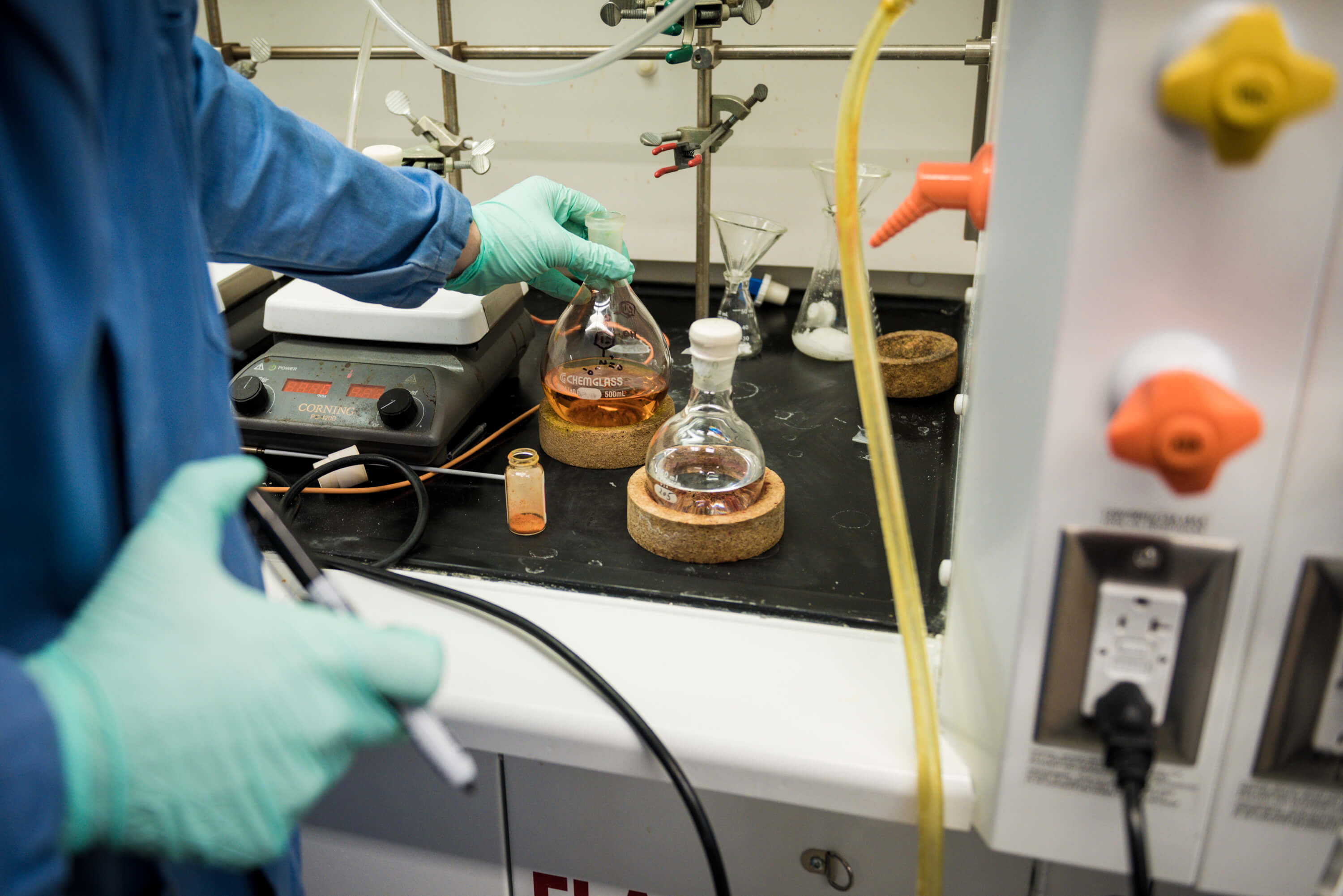
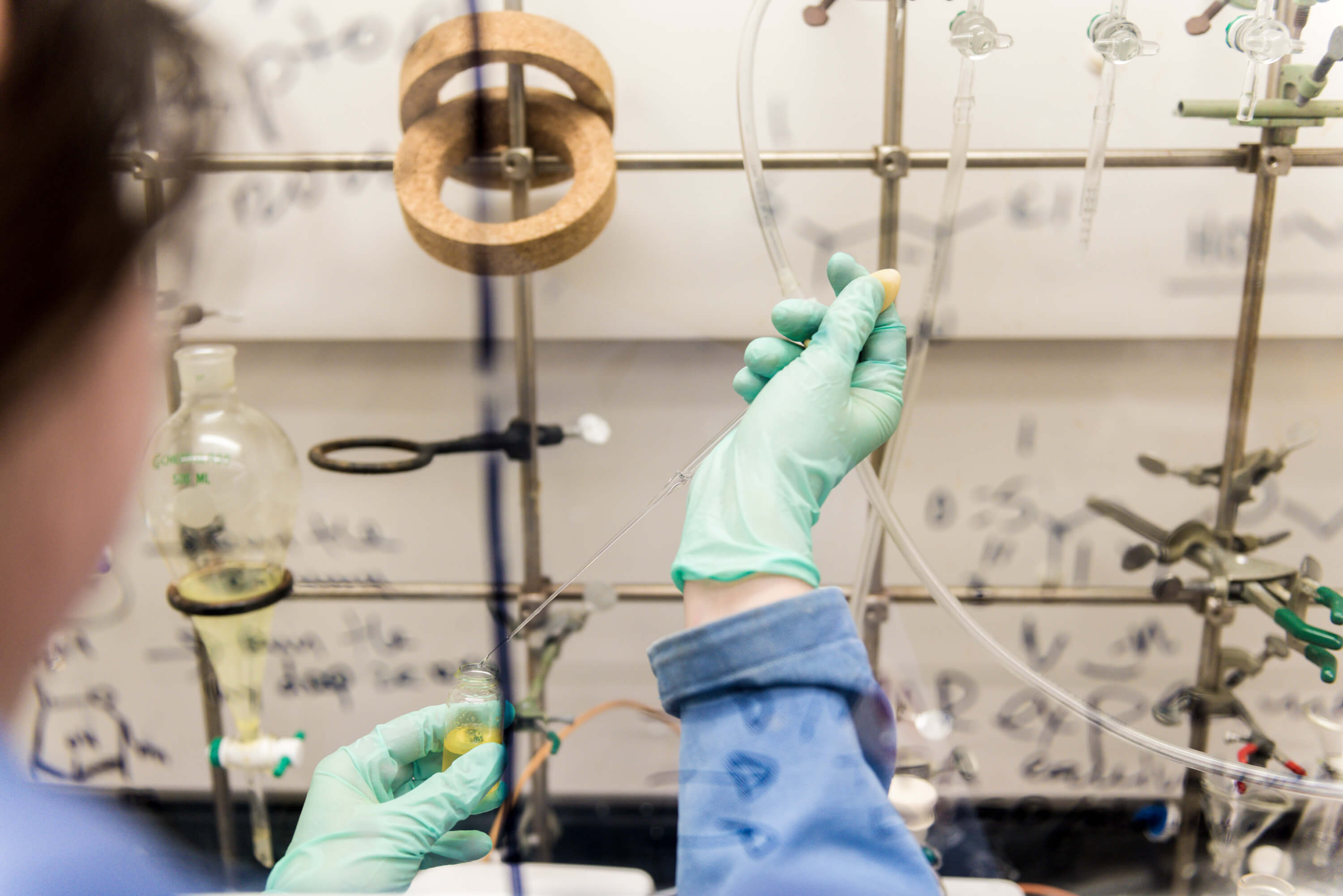
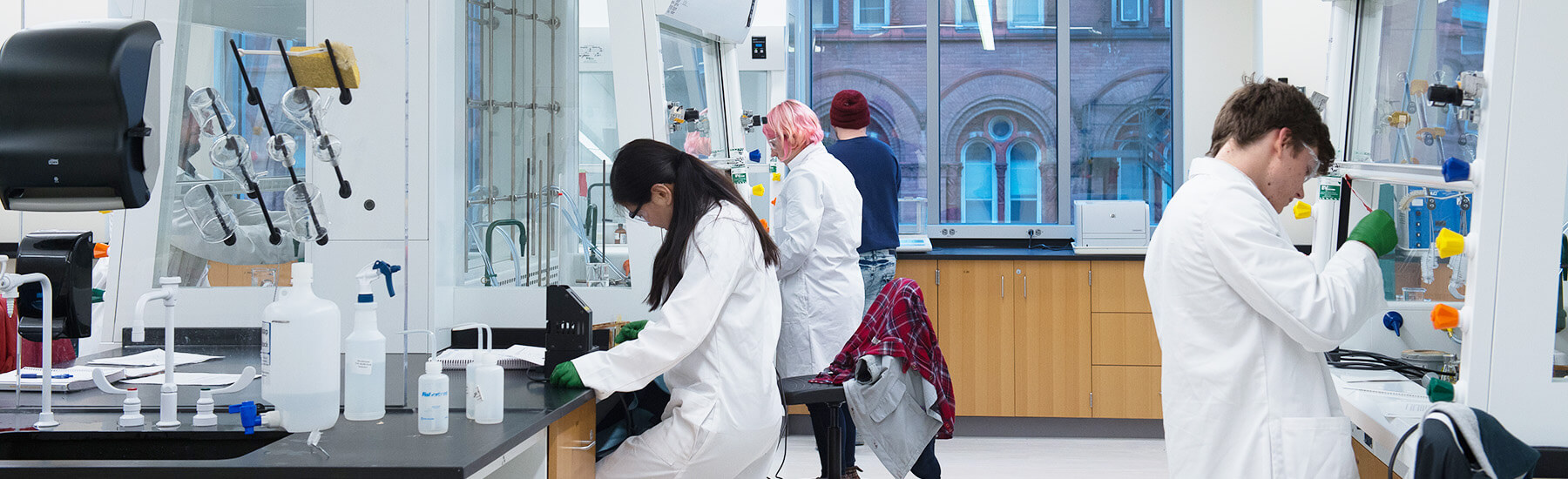
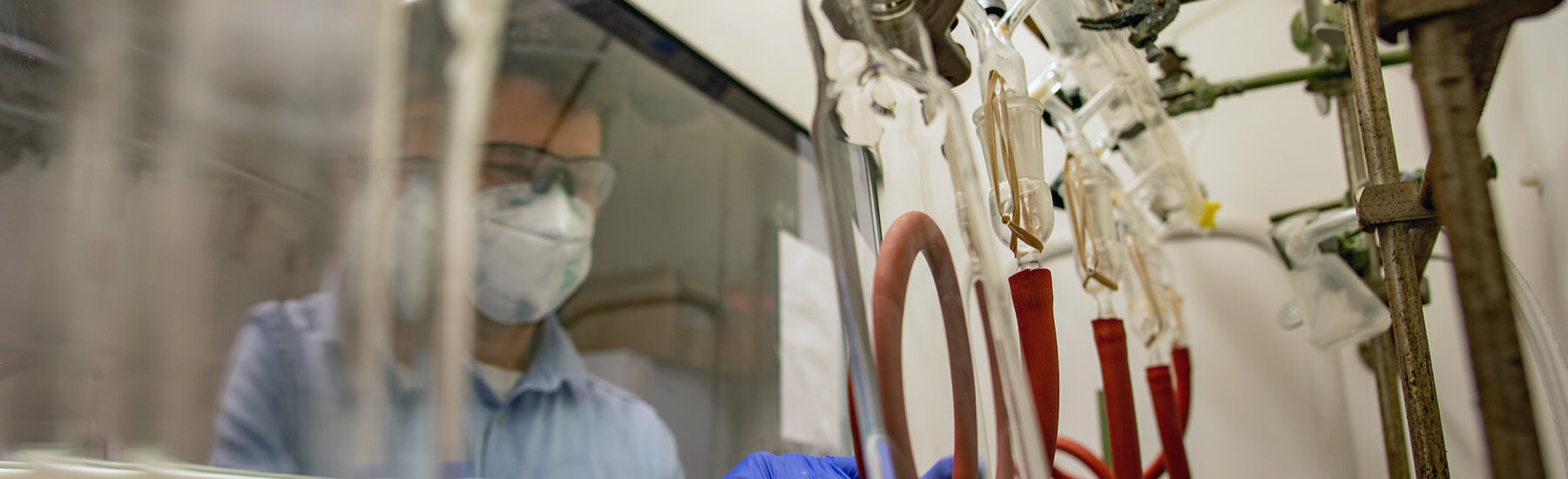
Organic chemists are beginning to make significant contributions to the field of materials chemistry. The ability to make discrete, diverse molecular structures is well suited for the fabrication of components of novel molecular materials. Broadly, research in our group involves applying the tools of physical organic chemistry to the problems of the fields of materials science and supramolecular chemistry. Research in our group is multidisciplinary, and we use techniques including organic synthesis, computational methods for screening molecular and materials properties, as well as both solution and solid phase structural analysis. We are interested in the construction of novel extended conjugated systems capable of being incorporated into useful opticoelectronic materials for such devices as heterojunction organic photovoltaics, conductive or semiconductive materials, and organic light-emitting diodes. Our synthetic approach involves easily synthesized oligomeric and macrocyclic precursors that can be reacted further to create polyaromatic networks. We would like to exploit the transfer of conformational information in an oligomeric precursor – a folded structure or a macrocycle for instance – to structural order of a different directionality in the product material. To translate the torus topology of relatively strainless macrocycle along a third dimension, we have synthesized a number of phenylene ethynylene macrocycles that are potential precursors of carbon single-walled nanotube segments, or nanobelts. We are pursuing other precursors that contain cyclopentadienone moieties, and also the Diels-Alder cycloadditions that will convert our macrocyclic precursors into phenylene belts. We are also interested in tandem cycloaromatizations that could transform oligo(o-phenylene ethynylene)s into soluble graphitic ribbons. To this end, we have developed a copper-mediated cycloaromatization and are currently exploring its scope and mechanism. Another project in our group involves determining the effects of placing substituents on acenes on their suitability for use as organic semiconductors. Placing substituents on a pentacene core can increase its otherwise poor solubility, but can also affect the intrinsic molecular properties and the crystal packing, both of which determine the conductivity of the resultant material. |
|
|
Selected PublicationsPotter, R. G.; Hughes, T. S. "Predicting the UV-VIS Spectra of Tetraarylcyclopentadienones: Using DFT Molecular Orbital Energies to Model Electronic Transitions" J. Org. Chem. 2008, 73, 2995. Cox, M. A.; Hughes, T. S.; Ellis-Monaghan, J. A.; Mondanaro. K. R. "Hydrocarbon links in an octet truss" J. Math. Chem. 2007, 43, 874. Korich, A. L.; Hughes, T. S. "A Facile, One-Pot Procedure for Forming Diarylimines from Nitroarenes and Benzaldehydes" Synlett, 2007, 2602. Potter, R. G.; Hughes, T. S. "Synthesis of poly(para-phenylene)(2-isocyano-2-tosylpropane-1,3-diyl), poly(para-phenylene)(2-oxopropane-1,3-diyl) and oligo(cyclopentadienones) via carbonylative coupling of α,α'-dibromoxylene" Chem. Commun. 2007, 4665. Potter, R.G.; Hughes, T.S. "Synthesis of Heterosubstituted Hexaarylbenzenes via Asymmetric Carbonylative Couplings of Benzyl Halides" Org. Lett. 2007, 9, 1187. Tanatani, A.; Hughes, T. S.; Moore, J. S. "Foldamers as Dynamic Receptors: Probing the Mechanism of Molecular Association Between Helical Oligomers and Rodlike Ligands," Angew. Chem. Int. Ed. 2001, 41, 325. Hill, D. J.; Mio, M. J.; Prince, R. B.; Hughes, T. S.; Moore, J. S. "A Field Guide to Foldamers," Chem. Rev. 2001, 101, 3893. |
Last modified September 06 2008 05:25 PM