
Supporting people with disabilities in accessing and thriving in their communities since 1974.
We believe in and work towards a diverse and vibrant future with, for, and by people with disabilities in Vermont.

Green Mountain Disability Stories
Featuring stories told by Vermonters with disabilities, about their experiences, opinions, and lives in Vermont -- the Green Mountain State.
APRIL 2024: Matthew LeFluer talks with Adrienne Miao about being a self-advocate with autism.
ACADEMICS
Make Disability Equity a Professional Priority
iThe Graduate Certificate in Disability Studies is an 18-credit online, asynchronous professional certificate for graduate students and professionals. Work at your own pace, then create a project that makes real change in your community.
RESEARCH
New Recommended Research: Video and Plain-Language Summaries for making research accessible
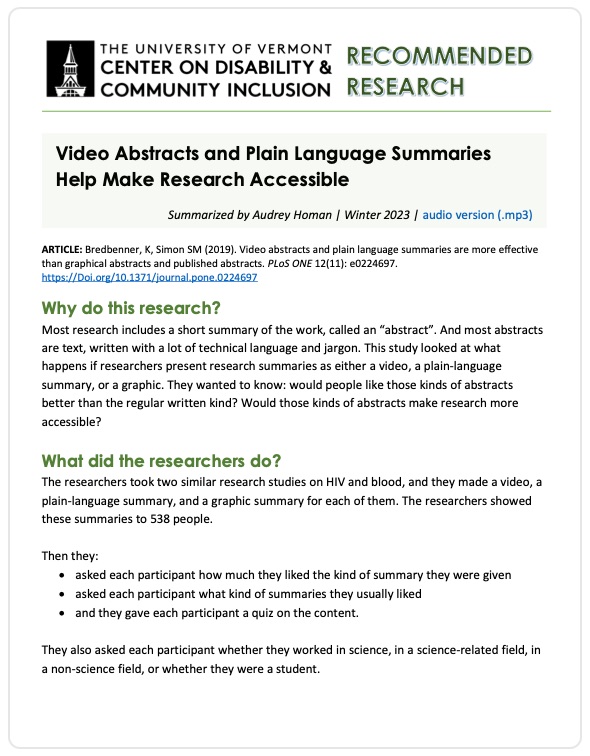
Looking at ways to make research findings more accessible.
SERVICES
NEW: Vermont I-Team Inclusive Schools Conference Series

Join the Vermont I-Team this November in Montpelier for the first of their Inclusive Schools Conference series. Featuring a keynote presentation by Shelley Moore and five different breakout sessions to choose from.