
Supporting people with disabilities in accessing and thriving in their communities since 1974.
We believe in and work towards a diverse and vibrant future with, for, and by people with disabilities in Vermont.

Green Mountain Disability Stories
Featuring stories told by Vermonters with disabilities, about their experiences, opinions, and lives in Vermont -- the Green Mountain State.
MARCH 2024: Ben Wimett shares stories from growing up in Vermont with cerebral palsy
ACADEMICS
Study Global Disabilities this summer with Dr. Sefakor Komabu-Pomeyie
Global Disability Studies is a 3-credit online, asynchronous course for students at all levels of study. Work at your own pace, then create a project that makes real change in your community.
RESEARCH
New Recommended Research: Video and Plain-Language Summaries for making research accessible
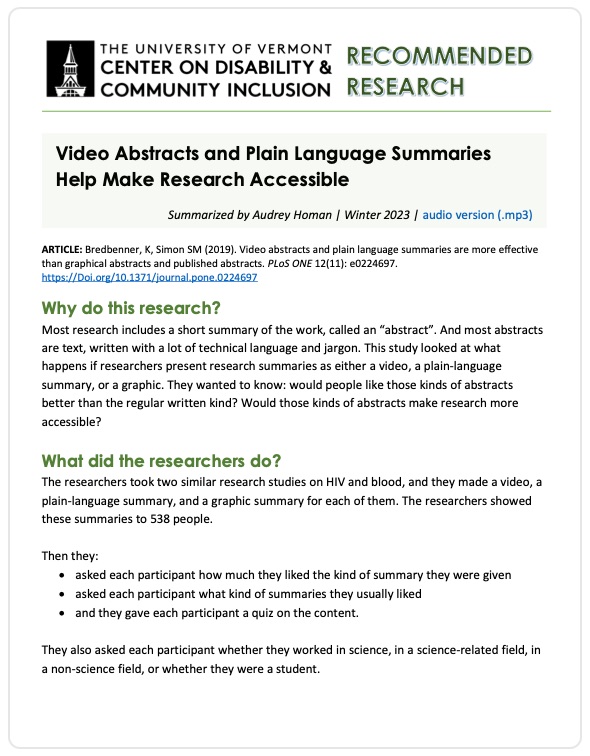
Looking at ways to make research findings more accessible.
SERVICES
How-to videos for educators working with students with hearing aids
The CDCI CARES Team works with school teams supporting students with hearing loss around Vermont. And they've compiled a set of the most frequently asked questions about troubleshooting hearing aid equipment, and why it matters.