Professional Art Education Courses:
Once you're admitted into the professional Licensure Art Ed Program (which begins yourjunior year), you will have to take all of the these courses, which follow a specific sequence.
Junior Year: Fall semester:
EDAR 177-Curriculum & Practicum in Elementary Art 4 credits
EDAR 178-Curriculum & Practicum in Middle/High School Art 4 credits
Observations (EDAR 177 and 178) Fall of Junior Year, 4 credits each.
EDAR 177 (Curriculum & Practicum in Elementary Art) and EDAR 178 (Curriculum & Practicum in Middle/High School Art) are currently offered in the fall of junioryear. They are both made up of two parts. Part one is a practicum and your first real classroom experience. Part two is a seminar class, which meets once a week. The courses are worth 4.0 credits each. What should you expect time-wise? Both EDAR 177 and 178 consist of a seminar class as well as 3 hours a week at a site. The practicumculminates in a lesson prepared and taught on site by the student intern.
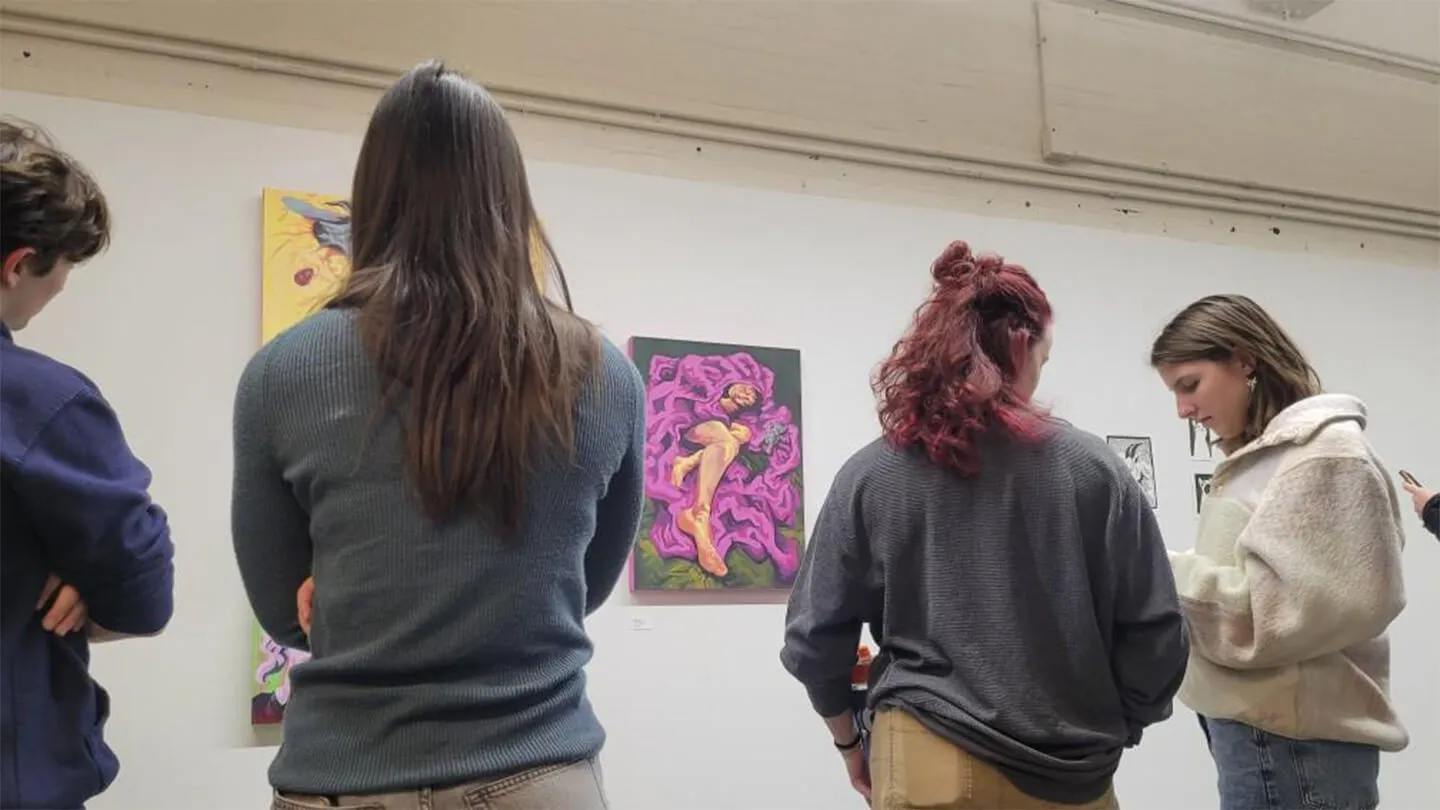
EDAR 177 has another component associated with the practicum and seminar. During the seminar, students are responsible for teaching the after school art program at the Fleming Museum for local school children. The UVM students design and write lesson plans for each lesson they teach, with their UVM instructor overseeing and mentoring their lesson plans, using the collections of the museum as inspiration. Depending onthe size of the UVM class, the students may teach solo or as a team, with the UVM instructor there to supervise and guide as needed. The goal of this experience is for the students to gain experience teaching art in the Museum setting, to realize the progression of their lesson plans from design through instruction and to receive meaningful feedback from their instructor. Through the Fleming classes, the instructoris able to directly illustrate for, and with the students, the various teaching methodologies that are discussed in the seminar (i.e. formative & summative assessment, classroom management techniques, teaching with various materials andeducational objectives, and teaching to accommodate various learning styles). Each session is celebrated at the completion with an Art Show of the children's work. Chris Fearon, who directs the children's programs at the Fleming will contribute to EDAR177 throughout the semester with helpful and informative teaching tips reflecting the role of the Museum in art education.
EDAR 178 is a class in which students develop lesson plans and hone skills inclassroom management. In this class students will complete observations in middleschool and high schools. They will compare and contrast curriculum, forms ofassessment, etc. A great deal of time is devoted to reporting observations from thevarious public school sites in which students are located.
Junior Year Spring semester
EDAR 283-Current Issues in Art & Education 3 credits
EDAR 284-Current Issues in Art & Education/Alternative Sites 3 credits
Senior Year: Fall or Spring semester (to be determined by Art Ed Director)
EDSC 226 Student Teaching Internship & Seminar 12 credits
Current Issues in Art & Education (EDAR 283)Spring of Junior Year, 3 credits This class is generally offered in the spring of junior year to art education majors. The class gives students a sense of the larger and broader issues in the field of arteducation, this upper-level seminar now examines the following: art education in a historical context; current debates in the field of art education; approaches in teaching art for diverse populations; policies and politics of assessment and funding of art education; and theoretical grounding and practical applications of diversity and social justice in art education. A large portion of the class is devoted to critical thinking on theoretical questions. This course does not have a field component, but it has a lot of reading and requires amajor research paper.
Alternative Sites of Art Education (EDAR 284)Spring of Junior Year, 3 credits
You will complete 90 hours of alternative art education internship. This may be either a volunteer or employed position. The goal of the course is to broaden the notion of locations in which art education can occur outside of the typical art classroom. Choose a site that relates to you. If you are terrified of nursing homes, don't pick a SeniorCenter. But do challenge yourself to try a new location. You may meet interesting new people and learn a great deal along the way. There is a seminar component to the course. The seminar is primarily used as a discussion time in which students share personal experiences. Guest lecturers include the heads of local programs that deal with alternative art education. This course should broaden the Art Education Major's understanding of job possibilities andlocations. This course also provides part of the Community Advocacy portion of the Student Teaching Licensure Portfolio. Community Advocacy is one of the 5 Vermont Standards that must be accounted for when applying for licensure (see section Standards for Vermont Educators).
Student Teaching Internship & Seminar (EDSC 226) Fall or Spring of Senior year, 12 credits
Art Education Student Teaching consists of two components:
a 15-week internship in a public school. You will go into an art classroom/artprogram and intern with a teacher (in some occasions two teachers). This teacher isreferred to as the Cooperating Teacher. You will also have a UVM Supervisor. She/hewill come observe at your school site on a regular basis (once every 10 teaching days).The choice of school, grade level of students (elementary, middle, or high school), andCooperating Teacher is one that you will make with assistance from the Art EducationProgram Director and your advisor. You will be licensed for grades PreK-12, even though you will not be student teaching at all of those levels.
a weekly seminar with your UVM Supervisor. In the seminar, you discuss issues in thefield with your supervisor and other student teachers, and you also work on yourLicensure Portfolio (more info on this follows).
Last modified June 04 2008 11:19 AM