Agroecology and Rural Livelihoods Group
International Research & Projects
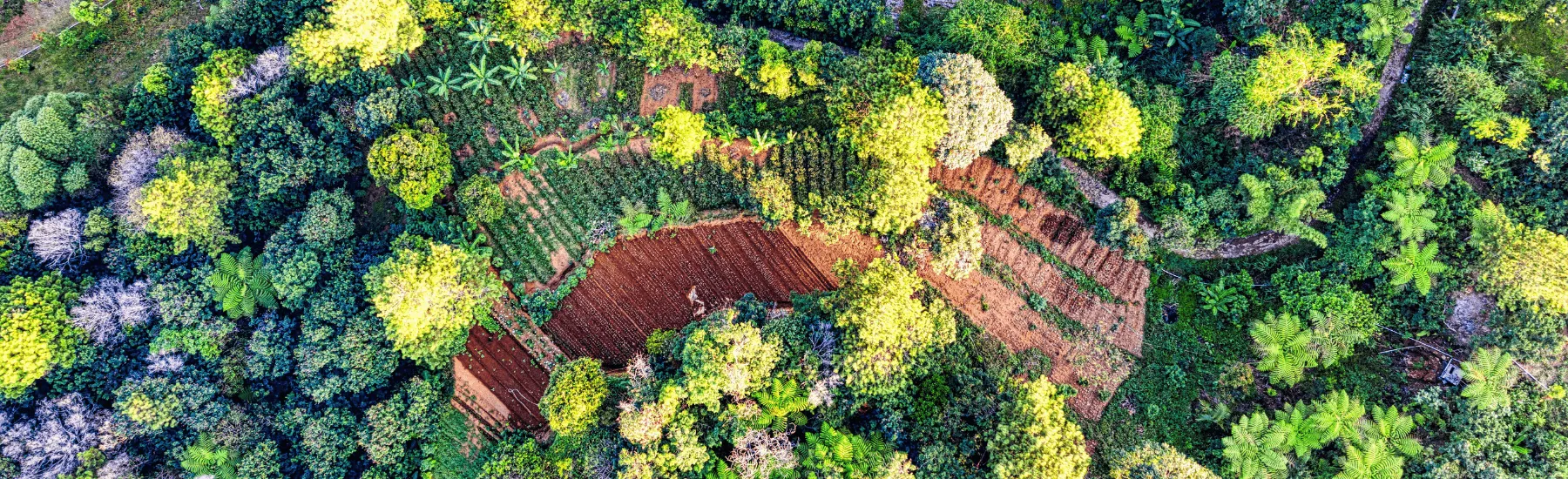
The bulk of international research from the ARLG lab represents work in communities of smallholder coffee farmers across Mesoamerica. Our projects integrate research, teaching and outreach to address and resolve socioeconomic and environmental challenges faced by farmers and rural communities. We utilize transdisciplinary approaches and methods to analyze the social and ecological impacts and benefits that are generated when agriculture, people’s livelihoods, and nature co-exist.
Sustainable nutrient management in conventional coffee farming systems - Tarrazú County, Costa Rica (Sebastian Castro)
Conventional coffee agriculture relies on high nutrient inputs (Nitrogen, Phosphorus, Potassium). These nutrients are generally supplied through the intensive use of inorganic fertilizers, which may lead to increased water pollution and soil acidification. Phd student Sebastian Castro is identifying environmental and farm management factors associated with an efficient use of Nitrogen-based fertilizers. Preliminary results show that: increased soil exchangeable calcium correlates with higher use efficiency of nitrogen-based fertilizers; factors constraining coffee yields include pressure from fungal disease, plant pruning practices and mean annual temperature, and famers were applying excessive nutrients, not accounting for crop requirements and site characteristics. Results of this research informs farmers' management practices, leading to an average reduction in fertilizer inputs of 180 kg/ha/yr, or the equivalent of $100 ha/yr, without negatively impacting yields.
Changes in shade tree biodiversity and above-ground carbon stocks in a smallholder coffee cooperative - Tacuba, El Salvador (Meryl Olson)
Agroforestry systems have been noted for their potential to conserve native tree diversity and sequester carbon for climate change mitigation, but little research has investigated the temporal stability of species diversity and carbon stocks in these systems, which strongly depends on farmer management. PhD candidate Meryl Olson is measuring the changes in shade tree diversity and above ground carbon stocks in a 35 hectare small holder coffee cooperative over nine years and is analyzing the relationships between species diversity and carbon stocks. Preliminary results show that: above ground carbon in woody shade species nearly doubled (from 13.0 to 24.4 Mg/ha) in the nine years between sampling, a total storage of 11.4 Mg C/ha over nine years, or 1.3 Mg C/ha/yr, species diversity was positively correlated with carbon sequestration, and shade tree species diversity did not change significantly over the study period. This research supports the potential for long-term biodiversity conservation and carbon sequestration in smallholder agroforestry systems, and the inclusion of smallholder farmers in biodiversity conservation and climate change mitigation schemes.
Agrobiodiversity and food security in coffee cooperatives of Nicaragua - Matagalpa, Nicaragua (Marcela Pino)
Seasonal hunger is a regular event for smallholder farmers in coffee communities around the globe, during the period of time between harvests when basic grain stocks have dwindled and food prices are high. Master's student Marcela Pino is studying the causes of seasonal food insecurity to understand the relationships and effects of farm agrobiodiversity on coffee-producing families and food security. Preliminary results show that one of the main causes of food insecurity is that farmers are unable to grow or keep enough basic grains to cover the yearly consumption needs of the household, families report an average of 3.5 months of yearly household crisis that can effect food security, and to cope with difficult months 61% of households report going into debt and 30.5% report trying to find work outside the farm. This research has been conducted in coordination with CECOCAFEN, a coffee cooperative that seeks to improve members' livelihoods. The study gives the organization more tools to understand and address causes of food insecurity in their communities
Food security and environmental conservation in a Salvadoran organic coffee cooperative - Tacuba, El Salvador (Katlyn Stillings Morris)
Many small-scale coffee farmers experience periods of hunger each year despite their efforts to balance household food production with cash crop production. Katlyn Stillings Morris, who recently earned her PhD, focused her research on determining the causes of seasonal food insecurity and identifying opportunities to increase food security and ensure environmental sustainability. Her results showed that 97% of coffee-producing households were seasonally food insecure, half of farmers were losing money on food crop production due to their expenditures on chemical inputs, and causes of food insecurity included insufficient subsistence production, low income from coffee sales and lack of rural employment. This research has led farmers to seek more environmentally and economically sustainable food crop management, including transitioning to lower-input organic practices.
Farmer management decision-making and biodiversity in coffee agroecosystems - Matagalpa, Nicaragua (Katie Goodall)
Coffee systems have been called refuges of biodiversity for their potential to mimic natural habitats, though little attention has been paid to smallholder farmers and the influence of local cooperatives on their management decisions. Phd candidate Katie Goodall's research objectives are to determine the distribution and diversity of bird and tree species within coffee cooperatives, and understand how patterns of biodiversity correlate with farmer management decisions. Preliminary results show different patterns of bird diversity and distribution emerging across four coffee cooperatives, farmer interviews indicate a multi-scalar decision-making process, drawing on advice from the household level up to the level of the coffee cooperative. This research aims to create bird lists and illustrated guides for local cooperatives to improve on-going ecotourism projects. Locally hired field assistants also gained experience in research techniques during data collection.
Exploring agrobiodiversity, food sovereignty and climate change with smallholder coffee farmers in Mesoamerica - Chiapas, Mexico and Northern Nicaragua (Margarita Fernandez)
In recent years a wide range of actors – from academics to development organizations to research institutions and social movement actors – have argued that high levels of agrobiodiversity are positively correlated with household food security, as well as increased capacity to mitigate and adapt to social and environmental change, including climate change. However, there remains little empirical data to support this. PhD candidate Margarita Fernandez is exploring the relationship between agrobiodiversity, food sovereignty and climate change by collecting quantitative and qualitative socio-ecological data among small farmers who balance subsistence and coffee production in Chiapas, Mexico, and northern Nicaragua. Preliminary data from Mexico shows that farmers who have greater diversity of edible plant and livestock species experience decreased seasonal food shortages and have higher levels of dietary diversity. The results of Margarita’s research will identify best practices for food security and food sovereignty in order to assist farmers, coffee cooperatives and development organizations in designing future development strategies. These strategies will be based on diversified practices that are locally successful, locally appropriate and contribute to agrobiodiversity conservation and resilience to climate change.
Last modified February 06 2013 02:48 PM