![]() |
HP 306 Architectural Conservation I
Spring 2013
Lecture and Lab: Mondays, 12:50 PM to 5:20 PM, Wheeler 101 or as noted
Instructor: Prof. Thomas
Visser, 207 Wheeler House, Thomas.Visser@uvm.edu
Office hours: Mondays 5:30 to 6:30, Tuesdays 10:00 to 12:00
For appointments or to confirm availability, please contact in advance at Thomas.Visser@uvm.edu
The goal of this course is to provide an overview of the study of architectural conservation through an examination of historic uses and physical properties of common historic building materials and finishes. We will explore the composition and pathology of building materials and examine strategies for conservation treatments and rehabilitation.
We recognize that the professional preservationist should have a broad understanding of basic analytical and research skills, including a knowledge of historic construction techniques and the abilities:
to date components of historic structures and to assess their significance, to identify architectural materials, to assess the condition of architectural elements, to diagnose the causes and mechanisms of deterioration, to collect, present, and critically review findings and,
to offer professional recommendations for appropriate conservation treatments of historic architectural materials.
Another goal of this architectural conservation course is to provide a background for preservationists who will be working with architects, engineers, building trades workers, contractors, conservators, architectural historians, preservation advocates, grant recipients, developers, property owners, review boards and others.
A final goal of the course is to help prepare students for professional positions in preservation that require the review of conservation treatment proposals, architectural designs, and preservation grant applications. This is the first of a two-part sequence of courses with HP 307 Architectural Conservation II following next semester.
1/14 Wheeler 101 |
|
|
1/21 |
MARTIN LUTHER KING HOLIDAY | No Class |
1/28 Lab Delehanty 101 12:50 to 5:00 PM |
Mortar analysis report format Using mortar analysis template |
|
2/4 Lecture & Lab Meet: Wheeler 101 Lab: Wheeler 103 & 106
|
|
|
2/11 Lecture Wheeler 101 & 106 |
|
GSA - Removing Dirt From Stone Masonry By Power Washing Case study: Masonry Cleaning of Philadelphia City Hall Wear suitable outdoor clothing and footwear for site visits |
2/18 |
|
No Class |
2/25 Lecture & Lab Wheeler 101 & 106 |
|
|
| 3/4 - 3/8 |
|
No Class |
3/11 Lecture & Lab Wheeler 101 & 106 |
|
Due: Lab Project 3 (brick analysis) Weaver, Chapter 8 |
3/18 Lecture & Lab Wheeler 101 & 106 |
Quiz 1 Plaster Flat plaster Lab: Project 5 introduction (plaster) |
|
3/25 Lecture& Lab Wheeler 101 & 103 |
Wood Wood species identification and use Lab: Wood species identification |
Wood Identification Study Guide for Forest Technology Students Wood Identification for Hardwood and Softwood Species Native to Tennessee (pdf) |
4/1 Lecture Wheeler 101 & 106 |
|
PB
26: Repair of Historic Log Buildings |
4/8 Lecture Wheeler 101 |
Paint finishing systems
|
Due: Lab Project 6 (wood
conservation) The Home Decorator (Sherwin Williams, 1936) PB 28: Painting Historic Interiors
EPA Lead in Paint, Dust and Soil Lead Poisoning Prevention Fact Sheets
|
4/15 Lecture & Lab Wheeler 101 & 103 |
|
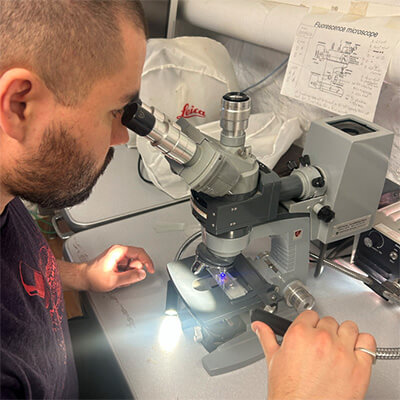
Munsell Color System - Wikipedia Architectural Finishes Analysis & UV fluorescence microscopy PPT Frank G. Matero; Joel C. Snodgrass, "Understanding Regional Painting Traditions: The New Orleans Exterior Finishes Study" APT Bulletin Vol. 24 No. 1/2 (1992) 35-52 / JSTOR*
|
4/22 Lecture & Lab Wheeler 101 |
|
US EPA Lead in Paint, Dust, and Soil US EPA- Lead Paint & Renovation Rules and Regulations Lead Safe Vermont Essential Maintenance Practices |
4/29 Lecture & Lab Wheeler 101 & 106 |
|
Due: Lab Project 8 (paint condition survey and treatments) Clothing protection is recommended. |
1a. Mortar sampling |
Photograph the mortar on the building before sampling. Note color, texture, and tooling marks. Record this information for inclusion in the mortar project report submitted at the conclusion of part c. Remove two samples of the same type of mortar from separate nearby locations, each between 5 and 10 grams (about the size of a thumbnail or a pat of butter). Place each sample in a separate sealable poly bag and label with the following information: your name, sample number, building name, building location, sample location, date of sampling. Bring your samples to the lab class for part b. |
1b. Basic mortar analysis |
Perform a basic mortar analysis on one sample from your building. Save your second sample for future reference. Determine the proportions of aggregate, binder and fines by weight. Analyze the aggregate through microscopic analysis and sieving. Record the results
of your analysis for a professional report submitted along with part c with text, graphs
and images that characterize the mortars with sufficient detail
to enable a mason to duplicate the samples. The particle size
distribution of the aggregate should be presented as a graph. |
| 1c. Producing appropriate mortars | Based on your analysis from lab part b, reproduce a mortar that matches your remaining mortar sample from part a and has a hardness appropriate for the location conditions of the sample. Present an illustrated bound written report that summarizes your findings from part b and part c. Include a discussion of the existing conditions and characteristics of the mortar, describe the procedures and observations made through your analysis. Mention any considerations that should be observed by anyone planning to produce appropriate matching mortars for the building area sampled. Submit both an original sample and your cured reproduced mortar in labeled sealed poly bags attached to the report. |
2. Concrete, terrazzo |
Select an area of concrete or terrazzo in a UVM building or other suitable building or structure. Document its composition and condition. Provide treatment recommendations for its maintenance and conservation. Submit your findings in a written report with illustrations. |
| 3. Bricks | Select two bricks for analysis from the collection provided. Analyze the bricks and report your findings with sufficient detail so that similar bricks could be procured that match the color range, surface texture, size, and surface absorbency. |
| 4. Moisture, humidity, and rising damp | Survey an interior exposed masonry surface of at least 30 square feet in Wheeler House or other historic campus building. Record the temperature of the surfaces using an infrared thermometer and the temperature and relative humidity of the air using a psychrometer. Record the fluctuations in temperature and relative humidity in the space over a 24 hour period using a digital data logger. Download this information using the HOBOware application and save it as a pdf file (Print>Save as pdf…) that can be included in your report. Survey the surface area visually and note evidence of rising damp or condensation. Record your findings on a grid map elevation of the area. Survey the relative subsurface moisture levels of the area with an RF moisture meter. Record your findings on a second grid map elevation of the area. Diagnose and report the sources of any rising damp or condensing moisture. Present your findings in a short professional report with separate grid map overlays for the visual evidence and for the subsurface moisture meter findings. |
| 5. Plaster and parging | Select an area of flat or ornamental plaster or parging in or on a UVM building or other suitable building. Assess and document its condition. Provide treatment recommendations for its maintenance and conservation. Submit your findings in a written report with illustrations. |
| 6. Wood | Assess the condition of the sample of deteriorated wood, including a determination of its moisture content and whether there is any evidence of deterioration from fungal or insect activity. After preparing an area for treatment, use appropriate consolidants and/or fillers or patches to conserve a section of deteriorated wood. Submit your conserved sample with a conservation treatment report that documents the initial conditions and the treatments and materials that were applied. |
| 7a. Paint sampling | Select an historic building with some historic finishes in fair condition. Obtain permission from the owner to take several small paint samples in obscure areas. Remove two paint samples from different locations, each between 1/8 inch and 1/4 inch square. Be sure the samples go entirely to the substrate. Place each sample in a sealable poly bag and label with the following information: sample number, building name, building location, sample location, date of sampling, your name. |
| 7b. Finishes analysis | Mount small pieces of the paint samples in a petri dish filled with paraffin. Perform a microscopic analysis of the cross sections of each sample to determine the number of layers of finishes. Submit a finishes analysis report that for each finish layer, describes the color and the closest Munsell color match as observed. Also, for each finish layer, provide a match to your approximation of the original color as applied (extrapolating from the observed appearance for the effects of age) with a commercial paint color currently available. (List the commercial brand, line, color number and color name.) Also note the type of coating for each layer. |
| 8. Paint conditions and treatments | Select an historic building with some historic finishes in poor condition that have failed down to the substrates. Document the patterns of deterioration and identify the various conditions that may have contributed to the deterioration. Develop recommendations for treatment that address the intrinsic and extrinsic factors that have caused the deterioration. Provide specific recommendations for paint removal (if appropriate), substrate surface preparation, priming systems, and finishing techniques. List the specific products, colors and treatment techniques to be used. |
Students are expected to attend all classes unless excused by in advance. There will be no incomplete course grades for HP 306, except with the Graduate College Dean's approval for reasons beyond a student's control. Cellphones should be turned off during all classes and computers should only be used for class-related business during lectures and labs. Web browsing, texting, e-mailing, messaging, and other potentially disruptive activities should not be done during class lectures. All writing must be authored directly by each student and all sources of information and ideas that are not common knowledge must be identified through attributions in the text or citations using notes. Plagiarism is not tolerated. For guidance on this see and Plagiarism: What It is and How to Recognize and Avoid It at http://www.indiana.edu/~wts/pamphlets/plagiarism.shtml Please also review the University of Vermont's Code of Academic Integrity at http://www.uvm.edu/~uvmppg/ppg/student/acadintegrity.pdf and the UVM Student Handbook at http://www.uvm.edu/~dos/handbook/
Lab safety is of utmost importance. Eye protection is required for all lab work. Clothing protection is recommended for all labs and field assignments. All students must complete UVM's online Chemical Safety in the Laboratory and Laboratory Ventilation and Chemical Fume Hoods courses.
For safety and security reasons, all HP 306 apparatus, chemicals and instruments must be stored in the appropriate places after use. Student should remove all their samples after use. Storage space for these will be provided in room 100 in Wheeler House. Hands should be washed after handling building materials and after lab assignments. The consumption of food or beverages is not permitted in the labs, including Wheeler 103, Wheeler 106, and Wheeler 100.
The six computers in Wheeler 103 with extended keyboards are connected to digital microscopes and are equipped with special applications for architectural conservation research. These computers require a special password for student use that will be shared in class. No personal files should be saved on these computers. Any such files will be deleted without notice.
All assignments are due at the beginning of class on the date specified in the class schedule. Late assignments will automatically drop at least one half-letter grade unless excused in advance by permission of the instructor for reasons beyond a student's control. Grades for the lab assignments and the quizzes will be weighed as follows:
Materials from readings (books and web-based), class lectures, and labs will be included in the quizzes.
All written submissions should reflect a professional level of standards, being well-organized, prepared on a computer, spell-checked, proof-read, and durably bound with a cover. All sources should be properly cited following the Chicago Manual of Style format. Grades will be reduced if professional writing standards are not met. Please allow sufficient preparation time for proofreading and correcting errors.
Since we have a large amount of information to cover, the text and web-based reading assignments are very important parts of the course. It is your responsibility to keep up with these assignments. The following texts will be used for both HP 306 and HP 307.
Weaver, Martin. Conserving Buildings. New York: John Wiley, 1997.
The Secretary of the Interior's Standards for Rehabilitation & Illustrated Guidelines for Rehabilitating Historic Buildings,National Park Service.
Giorgio Torraco, Lectures in Materials Science for Architectural Conservation, Getty Conservation Institute, 2009
Various Internet web sites including the National Park Service Preservation Briefs are listed in the syllabus below.
A bibliography of additional course references is listed below. These may be very useful when preparing the assignments. Students are strongly encouraged to assemble files on various conservation topics with photocopies of articles from such publications as the Association for Preservation Technology (APT) Bulletin and other sources.
It is recommended that each graduate student should acquire or have access to the following equipment and supplies to assist with course project assignments:
(Most are available at UVM Library or "on reserve" in Wheeler 103 or Wheeler 100.)
Periodicals
Bulletin, Association for Preservation Technology (At UVM Library, v 1 - v. 8 in Microforms, v. 9 - current issues in Periodicals)
Traditional Building
Old House Journal
- Books
- A Guide to Vermont Architecture. Montpelier: Vermont Division for Historic Preservation, 1991.
Ashurst, John & Nicola. Practical Building Conservation. New York: Halsted Press, 1988. Vol. 1-5.
Feilden, Bernard. Conservation of Historic Buildings. Oxford: Architectural Press, 2003.
Fram, Mark. Well-preserved, Erin, Ontario: Boston Post Mills, 1988.
Harris, Cyril, ed. Dictionary of Architecture and Construction. New York: McGraw Hill, 1975.
Harris, Samuel Y. Building Pathology: Deterioration, Diagnostics, and Intervention. Wiley. 2001.
Hoadley, Bruce. Understanding Wood. Newtown, Conn.: Tauton Press, 1980.
Huges, Helen, ed. Layers of Understanding, Setting Standards for Architectural Paint Research, Donhead, 2002.
McAlester, V. & L. A Field Guide to American Houses. New York: Knopf, 1988.
McKee, Harley. Introduction to Early American Masonry. Washington: National Trust for Historic Preservation, 1973.
Mitchell, Eleanor. Emergency Repairs for Historic Buildings. London: English Heritage, 1988.
Nylander, Richard C. et al. Wallpaper in New England. Boston: SPNEA, 1986.
Phillips, M. W. & Selwyn, J. E. Epoxies for Wood Repairs in Historic Buildings. Washington: US Dept. of Interior, 1978.
Poore, Patricia, ed. The Old-House Journal Guide to Restoration, Dutton, 1992.
Preservation &Conservation. Washington: National Trust for Historic Preservation, 1976.
Recording Historic Structures. Washington: AIA Press, 1988.
Repairing Old and Historic Windows. Washington, DC: Preservation Press, 1992.
Residential Building Systems Inspection. Washington: APT Foundation, 1986.
Respectful Rehabilitation. Washington: National Trust for Historic Preservation, 1982.
Slate Roofs. National Slate Ass'n., 1925. (Reprints from Vermont Structural Slate, Fairhaven, VT)
Structural Assessment. Washington: APT Foundation, 1986.
Technology of Historic American Buildings. Washington: APT Foundation, 1983.
Wilson, Forrest. Building Materials Evaluation Handbook. New York: Van Nostrand, 1984.
Young, Robert A. Historic Preservation Technology. Wiley, 2008.Other historic preservation resources
- PB 35: Understanding Old Buildings
- PB 17: Architectural Character: Identifying the Visual Aspects of Historic Buildings as an Aid to Preserving Their Character
Association for Preservation Technology