Why envisioning?
The ESDA network
The ESDA conference
The vision so far
S&D America, 2100
What's a future search?
Resources
Join us!
Credits
|
How do we disseminate the vision?
Creating a vision is a very first step towards creating a sustainable and desirable future. If the vision is sufficiently
representative of the goals and desires of the majority of Americans, then it has the potential to become a shared vision. And
only a shared vision will create the political will and inspire the participation of an informed and energized civil society that will
be necessary to implement the vision.
Sharing the vision however requires that people be made aware of its existence, and this presents a serious challenge. No one single
approach to spreading the vision will be sufficient. Different people respond to different messages and different formats, and we must translate the
vision into as many of these formats as possible. Broad
dissemination of the vision is essential.
The question is, how to proceed? We offer the following suggestions, and as always, solicit your feedback, via
e-mail, or the discussion board.
There are a number of possible steps we can take, including:
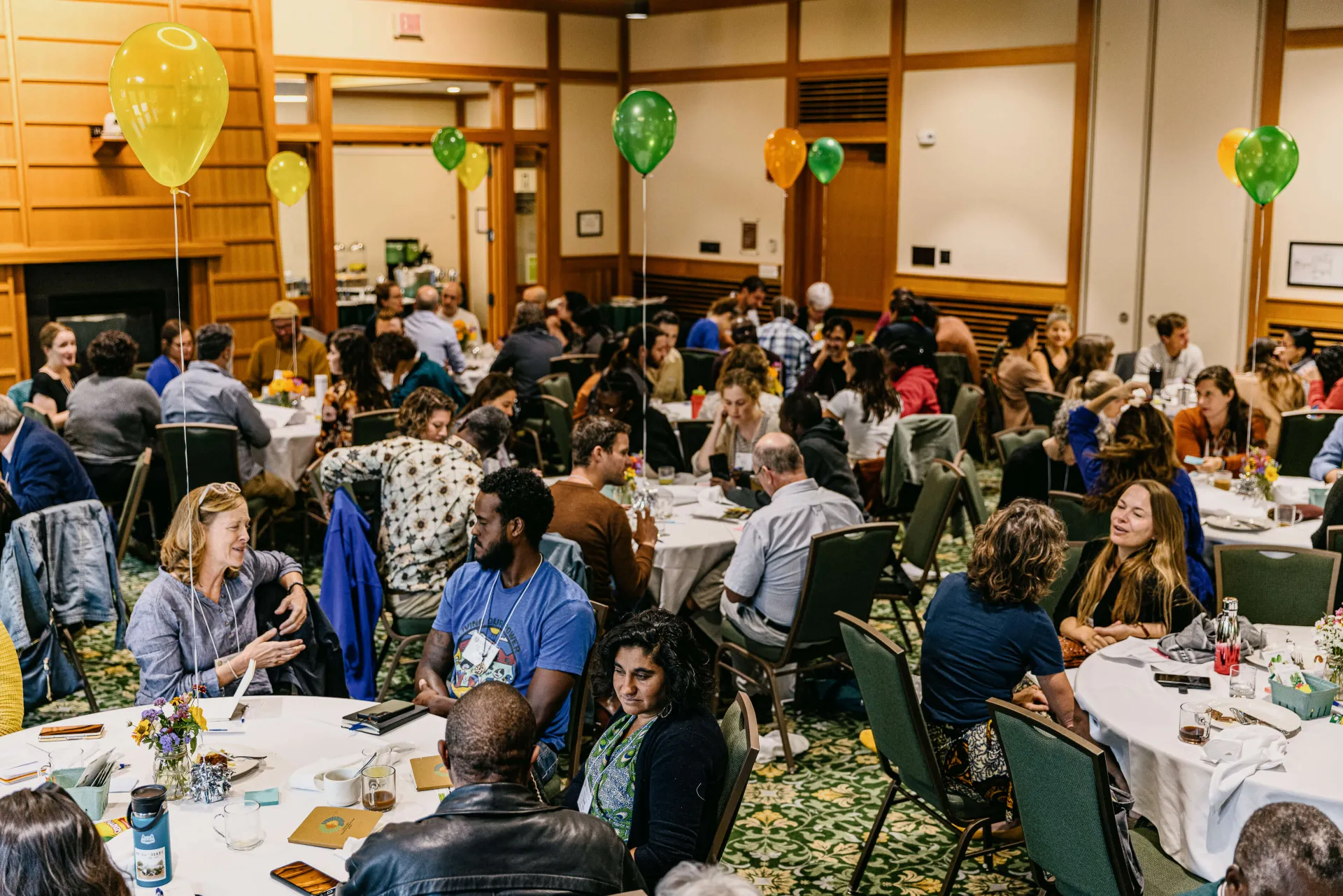
- Developing the ESDA network: The ESDA Network began with a group of 42 participants at the first ESDA conference. Since then,
a number of others have joined, volunteering their services in the organization of future ESDA conferences.
- Developing and maintaining the current website: the Web site is designed to serve as a central communication point for those
interested in developing and disseminating a vision of a sustainable and desirable future.
- Publishing the vision in journals and periodicals, in formats ranging from popular magazines and academic journals to electronic newsletters: the vision
so far has been published in 5 issues of Rachel's Environment and Health News. I learned
from someone interested in the vision that it has also been published in a Duluth newspaper. We have submitted an article for
publication in the journal Ecological Economics, and are putting the final touches on a submission to
YES! the Journal of Positive Futures. We will continue to write summaries of the vision for
publication in other journals.
- Publishing books based on the vision: We intend to publish a book on the vision written by participants in ESDA conferences,
where each chapter describes a personal vision of what it would be like to live in this future. We hope in the future to excite the
interest of well established author to use the vision as the setting for a novel.
- Media coverage: We are happy to start small and work our way up. Initially we will work to have the vision discussed on local radio and
NPR. As the vision spreads, we will turn our sights to mainstream newscasts or television journals.
- Congressional Briefings: As we develop the vision in more detail and begin to disseminate it widely, we will work to hold a congressional
briefing, in which we will present the vision as a national mandate for change.
- Report to the President: By the time the next administration takes office in 2005, we expect to have a sufficiently detailed and disseminated
vision that it will attract the attention of major politicans. If the vision is truly representative of the cross spectrum of Americans,
politicians will have much to gain from signing on.
- Hollywood movies: Eventually we hope to excite the interest of the movie industry. A popular movie would go a long ways towards creating
the critical mass to begin large scale implementation of the vision. Blending cinema with reality, we believe the movie set could
be turned into a working community based on the principles laid out in the vision. Compared to the costs of a feature length movie, building
a community is not excessive, and the media interest such a village might generate would justify any additional cost.
If you were not part of the original ESDA conference, then our initial steps have already born some fruit.
Finally, we recognize that many people will think our goals a naive utopian pipe dream. No doubt the people who first proposed
democracy in a world ruled by kings, or who first proposed free society in the face of a millenial tradition of slavery were confronted
with the same skepticism. Yet these ideas took hold because they promised a better future for the majority. The ideas we present here
are no more radical than democracy. In fact, we look to a strong, participatory democracy as the best means of implementing this vision.
|