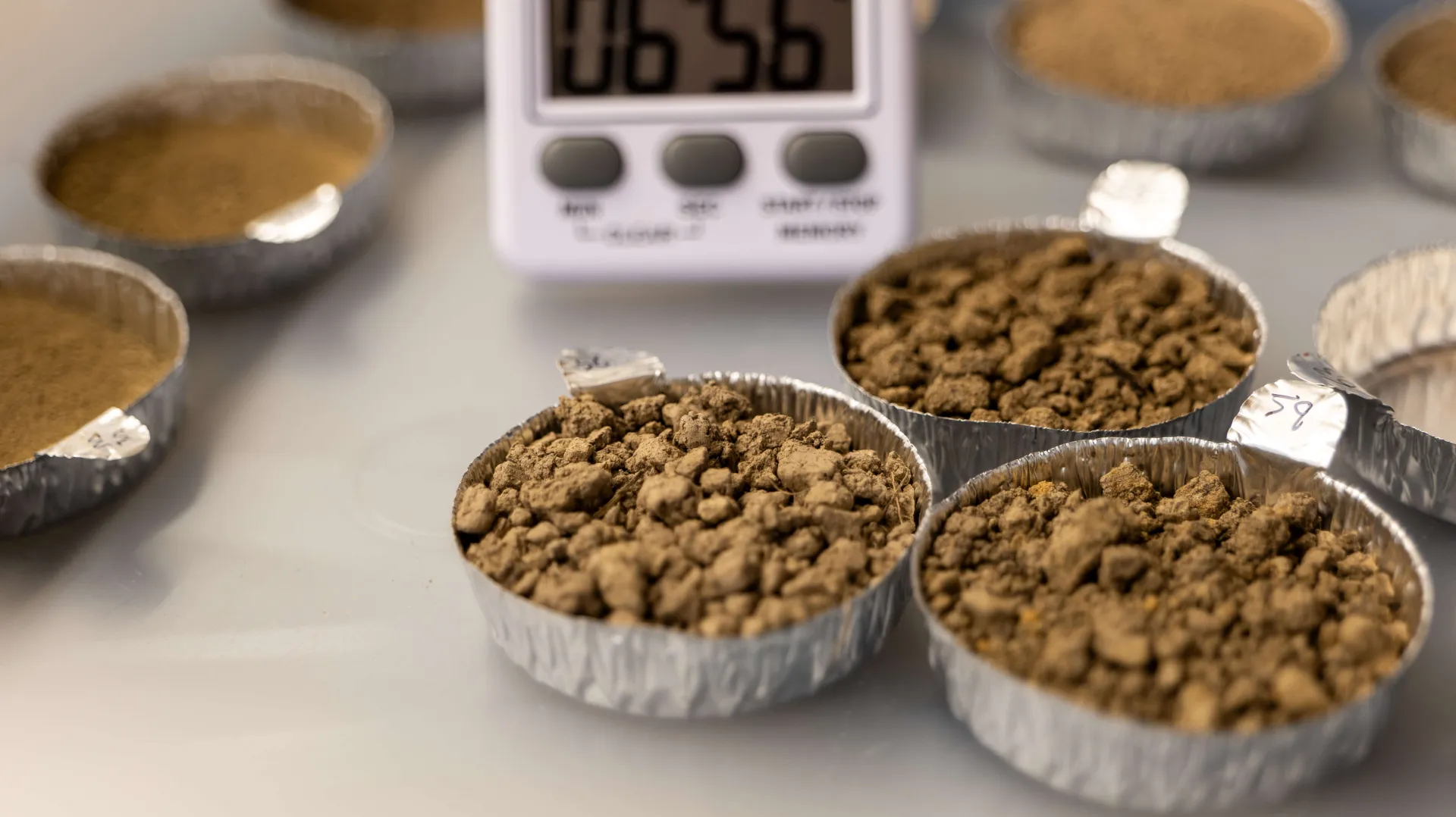
In its first year, the lab processed 719 soil samples from producers across New England.
SHREC is building a robust repository of soil health data to better understand and protect agricultural soils. The UVM Extension NWCS team has supported this effort by collecting hundreds of samples statewide from farms with a range of crops and soil management practices.

The USDA Natural Resources Conservation Service (NRCS) highlights four key principles of soil health:
- Minimize disturbance
- Maximize biodiversity
- Maximize soil cover
- Maximize living roots
SHREC helps farmers put these principles into practice by providing soil health testing, guidance, and recommendations.
The lab currently offers five soil health tests:
- Permanganate Oxidizable Carbon (POXC)
- ACE Protein
- Total Carbon and Nitrogen
- Wet Aggregate Stability
- Soil Respiration
Phospholipid Fatty Acid (PLFA) analysis coming soon! SHREC is also now equipped to process USDA-NRCS CEMA 216 soil health samples.

Farmer groups, including the Farmer Soil Health Innovator Network (FSHIN), have toured the SHREC lab to learn about the tests offered and how results can inform management practices in the field.
Soil health is more important than ever as weather patterns become increasingly unpredictable. Healthy soils are more resilient to extreme weather events, including the flooding across the state in July 2023, 2024, and 2025. In July 2023, an average of 9.72 inches fell across the state. In a survey by the Vermont Agency of Agriculture, 264 farms reported $16 million in financial losses and more than 27,000 acres impacted. When fields flood this way, crops are destroyed or damaged, essential topsoil is lost, and remaining soil is contaminated. The Soil Health Research and Extension Center (SHREC) aims to support farmers with research-based guidance and resources that strengthen soil health across the state, helping protect farms and improve overall agricultural resilience.
“I can’t believe we are already entering our second full year of SHREC,” said Joshua Faulkner, SHREC Director. “It feels great to know that more and more farmers and researchers are becoming aware of the soil health testing services we are providing right here in Vermont.”

Learn more about SHREC and connect with the team at upcoming agricultural events, including the Annual Crops and Soils Field Day at Borderview Research Farm in Alburgh, VT, on Thursday, July 23.