James P. Hoffmann

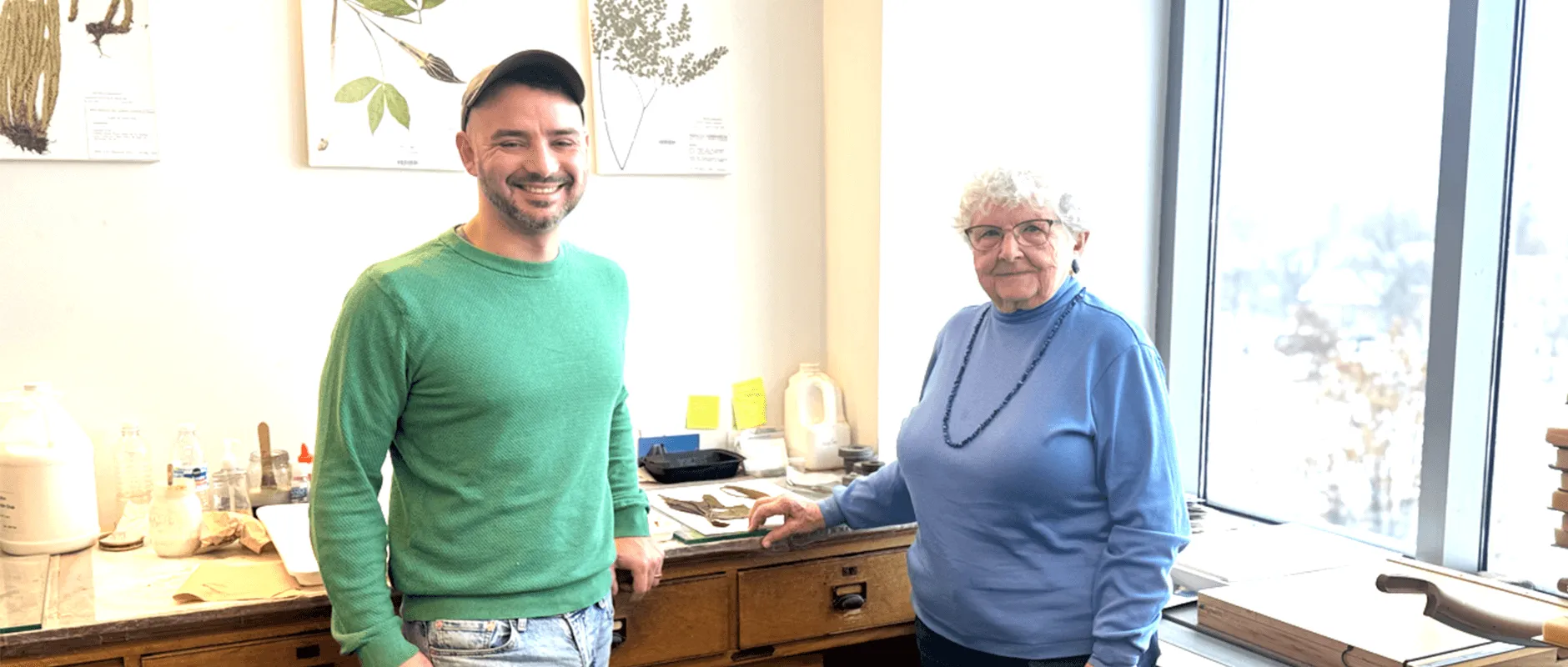
Headshot of Jim Hoffmann.Associate Professor of Plant Biology
Associate Professor of Computer Science

Ph.D. 1981, University of Wisconsin-Madison

Email: James.Hoffmann@uvm.edu

Phone: 802-656-0429

Office: 230A Marsh Life Science Building

Research Area: Ecological Modeling via Evolutionary Computation, Aquatic Ecology

Courses Taught: Evolutionary Computation (CS 295); Ecology and Evolution (BCOR 102); The Green World (PBIO 6); Plant Ecology (PBIO 160); Algae and Aquatic Plants of the Lake Champlain Basin (PBIO 295)

Summary of Research Program

(1) Evolutionary Computation

My laboratory is fully engaged in ecological modeling. We are interested in using mechanistic-based models to make transparent the complex "black-box" models of ecological systems. Ultimately, our goal is to better understand causality. We feel that adopting optimally-specified models of correct structure is critical to making progress towards this goal. Therefore, our initial efforts have been focused on model selection accomplished with a combination of information theory and various computational biology tools, especially modified evolutionary algorithms that orchestrate a competition among a community of models. We are currently applying this new approach to modeling the dynamics of invasive species and aquatic systems.

Please visit this page for more information: Model Selection with Evolutionary Computation

(2) Algal Physiological Ecology

My formal training focused on the physiological ecology of algae and aquatic plants, with an emphasis on the influence of physicochemical factors, and their interactions, on growth and reproduction.

My emphasis has been on the ecology and physiology of attached algae (also known as periphyton or algal biofilms) of lakes and streams. My work has incorporated aspects of basic science, in which attached algal communities have been used as experimental systems to test ecological theory; as well as applied science, to explore the potential use of attached algae as living filters to treat wastewater. Research projects in my laboratory have ranged from the organismal scale - looking at cellular uptake kinetics of phosphorus and carbon by individual species; to the population scale- looking at demographics and resource dynamics in the context of resource competition models; to the community scale - looking at taxonomic structure and species succession as well as primary production and nutrient dynamics. A common theme throughout these projects has been the influence of hydrodynamics on the ecology and physiology of these organisms.

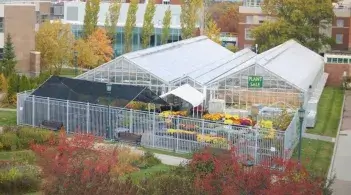
Two completed projects incorporated aspects of both basic and applied science and addressed phosphorus dynamics in aquatic systems. Phosphorus is a pollutant of great concern in Vermont and these projects were designed to improve our ability to understand and control the extent of this pollution. One project focused on understanding the role of periphyton in the uptake, storage and transformations of phosphorus in a river typical of the Lake Champlain basin. The other project attempted to maximize the uptake and removal of phosphorus by an algal biofilm growing on wastewater in an experimental greenhouse.

For more information about the wastewater project you can visit my previous homepage.

A PDF of my complete CV can be downloaded here: Hoffmann

Selected Publications